Monoclonal Antibodies
KO Validated Anti-Von Hippel Lindau/VHL Rabbit Monoclonal Antibody for WB, ELISA - P40337
Item Number : CM0006749
Price varies based on specs and customizations
- Application
- WB, ELISA
- Cross Reactivity
- Human, Mouse, Rat
- Protein Weight
- 24kDa

Shipping:
Contact us to get shipping details Enjoy On-time Dispatch Guarantee.
Why Choose Us
Easy ordering process, quality products, and dedicated support for your business success.
Core Product Specifications and Parameters
| Parameter | Value |
|---|---|
| Product Name | [KO Validated] Von Hippel Lindau/VHL Rabbit mAb |
| Remarks/Alias | RCA1; VHL1; pVHL; HRCA1; Von Hippel Lindau/VHL |
| Species | Human |
| GeneID | 7428 |
| Immunogen | Recombinant fusion protein containing a sequence corresponding to amino acids 100-200 of human Von Hippel Lindau/VHL (NP_000542.1) |
| Source | Rabbit |
| Category | Monoclonal Antibodies |
| Application | WB, ELISA |
| Cross Reactivity | Human, Mouse, Rat |
| SWISS | P40337 |
| Protein Weight | 24kDa |
| Shipping | Ice bag |
Biological Background: Von Hippel Lindau/VHL Function and Localization
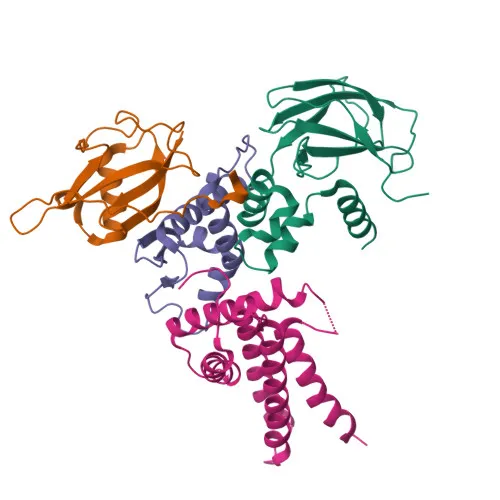
- pVHL is a substrate recognition component of the VCB-Cul2 E3 ubiquitin ligase complex, mediating oxygen-dependent ubiquitination of target proteins for proteasomal degradation.
- It specifically ubiquitinates hypoxia-inducible factor alpha subunits (HIF1A, HIF2A) under normoxia, leading to HIF degradation and repression of hypoxia-responsive genes. Related references: PMID:10944113, PMID:17981124
- VHL also modulates mTORC1 signaling by promoting ubiquitination and degradation of RPTOR, and regulates adrenergic receptor ADRB2 degradation in an oxygen-dependent manner. Related references: PMID:19584355, PMID:34290272
- Subcellularly, VHL localizes to the cytoplasm, cell membrane, endoplasmic reticulum, and nucleus, consistent with its roles in protein degradation and transcriptional control.
- The protein is expressed in the adult and fetal brain and kidney, with disease-associated mutations linked to von Hippel-Lindau syndrome, congenital erythrocytosis, and cancer.
- Keywords: Tumor suppressor, alternative initiation, alternative splicing, disease variant.
Experimental Guidance and Technical Tips
- For Western blot, consider using a reducing SDS-PAGE and transfer to PVDF or nitrocellulose membrane. The predicted molecular weight is approximately 24 kDa, so use a 10–12% gel for optimal resolution.
- Validate antibody specificity using VHL knockout cell lines or siRNA-mediated knockdown samples in human, mouse, or rat cells, given the cross-reactivity.
- For ELISA, this antibody can be used as a capture or detection reagent; pairing with a monoclonal antibody of a different clonality may enhance sensitivity in sandwich ELISA formats.
- Optimize antibody dilution in the relevant assay system; typical starting dilutions for WB are 1:500–1:2000, but empirical titration is recommended.
CamelBio: Your One-Stop Sourcing Bridge
CamelBio provides diagnostic manufacturers, labs, and research institutes with one-stop access to IVD raw materials, covering every stage from concept to clinic. For VHL-related research and assay development, we offer validated antibody pairs, optimized monoclonal/polyclonal antibodies, bulk ancillary reagents, and rare target raw-material sourcing. Our integrated technical services and consulting help accelerate your VHL-targeted IVD projects from biomarker discovery to final product deployment.
Product Datasheet
KO Validated Anti-Von Hippel Lindau/VHL Rabbit Monoclonal Antibody for WB, ELISA - P40337
REQUEST A QUOTE
Our professional team will reply to you within one business day. Please feel free to contact us!