Monoclonal Antibodies
KO Validated Anti-Src Monoclonal Antibody for WB, IP, IF/ICC, IHC-P, ELISA - P12931
Item Number : CM0003352
Price varies based on specs and customizations
- Application
- WB, IP, IF/ICC, IHC-P, ELISA
- Cross Reactivity
- Human, Mouse, Rat
- Protein Weight
- 60kDa

Shipping:
Contact us to get shipping details Enjoy On-time Dispatch Guarantee.
Why Choose Us
Easy ordering process, quality products, and dedicated support for your business success.
Core Product Specifications and Parameters
| Parameter | Value |
|---|---|
| Product Name | [KO Validated] Src Rabbit mAb |
| Remarks/Alias | ASV; SRC1; THC6; c-SRC; p60-Src; rc |
| Species | Human |
| GeneID (Human) | 6714 |
| GeneID | 6714 |
| Immunogen | Synthetic Peptide: A synthetic peptide corresponding to a sequence within amino acids 1-100 of human Src (P12931). |
| Source | Rabbit |
| Category | Monoclonal Antibodies |
| Application | WB, IP, IF/ICC, IHC-P, ELISA |
| Cross Reactivity | Human, Mouse, Rat |
| SWISS | P12931 |
| Protein Weight | 60kDa |
| Shipping | Ice bag |
Biological Background: Src Function and Localization
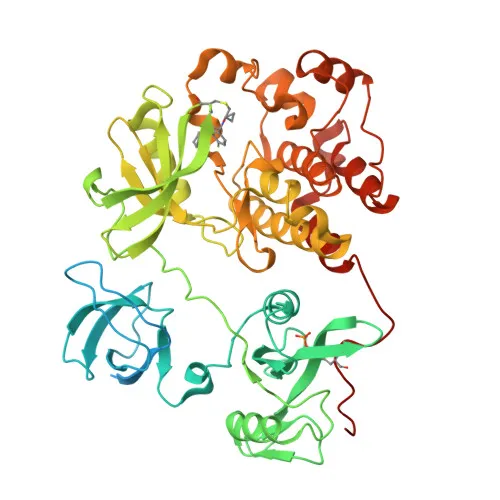
- Proto-oncogene Src (c-Src) is a non-receptor tyrosine kinase that integrates signals from diverse receptors (immune, integrin, RTK, GPCR) to regulate gene transcription, cell cycle, adhesion, and migration.
- Src phosphorylates focal adhesion proteins (e.g., PTK2/FAK1, paxillin) and cortactin to orchestrate cytoskeletal dynamics. Related references: PMID:21411625
- At cell junctions, Src phosphorylates beta-catenin, connexin-43, and desmosomal PKP3, influencing cell-cell communication and adhesion. Related references: PMID:25501895
- Src is essential for osteoclast-mediated bone resorption via complex formation with PTK2B/PYK2 and CBL phosphorylation pathway. Related references: PMID:14585963, PMID:8755529
- The kinase shuttles between plasma membrane, focal adhesions, cytoplasm, nucleus, and mitochondrion; myristoylation anchors it to membranes.
- Alternative splicing produces isoforms with higher basal activity (e.g., neuron-specific isoforms 2/3) that regulate neurite elongation and show distinct substrate specificity.
- Src activity is tightly regulated by autophosphorylation (Tyr-419) and negative-regulatory C-terminal tail phosphorylation.
Experimental Guidance and Technical Tips
- The immunogen sequence (aa 1-100) resides in the N-terminal unique domain, which is less conserved among Src family kinases, potentially contributing to Src specificity.
- For Western blot, expect a band at ~60 kDa; use appropriate controls (e.g., Src knockout lysate) to confirm specificity.
- The antibody is suitable for immunoprecipitation; consider using mild lysis buffers to preserve protein interactions if studying signaling complexes.
- For immunofluorescence and IHC, endogenous Src may be detected at the plasma membrane, focal adhesions, and perinuclear region; optimize fixation and permeabilization conditions.
CamelBio: Your One-Stop Sourcing Bridge
CamelBio supports diagnostic manufacturers and research laboratories with comprehensive access to IVD raw materials, including validated monoclonal antibodies like this anti-Src clone for Src signaling studies in cancer and bone biology. Our portfolio includes matched antibody pairs, optimized recombinant antibodies, and bulk reagent supply to streamline your assay development. Reach out for customized sourcing of rare targets or technical consulting.
REQUEST A QUOTE
Our professional team will reply to you within one business day. Please feel free to contact us!