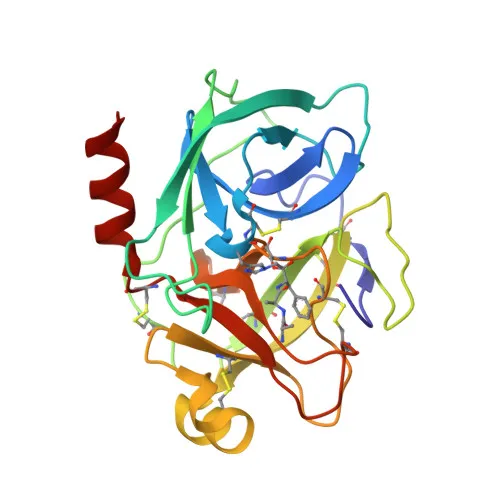
Polyclonal Antibodies
KLK7 Rabbit Polyclonal Antibody for WB and ELISA - P49862
Item Number : CM0026786
Price varies based on specs and customizations
- Application
- WB, ELISA
- Cross Reactivity
- Human, Mouse
- Protein Weight
- 28kDa

Shipping:
Contact us to get shipping details Enjoy On-time Dispatch Guarantee.
Why Choose Us
Easy ordering process, quality products, and dedicated support for your business success.
Core Product Specifications and Parameters
| Parameter | Value |
|---|---|
| Product Name | KLK7 Rabbit pAb |
| Remarks/Alias | hK7; SCCE; PRSS6; KLK7 |
| Species | Human |
| Gene ID (Human) | 5650 |
| Gene ID | 5650 |
| Immunogen | Recombinant fusion protein containing a sequence corresponding to amino acids 30-253 of human KLK7 (NP_644806.1) |
| Source | Rabbit |
| Category | Polyclonal Antibodies |
| Application | WB, ELISA |
| Cross Reactivity | Human, Mouse |
| SWISS | P49862 |
| Protein Weight | 28kDa |
| Shipping | Ice bag |
Biological Background: Kallikrein-7 (KLK7) Function and Localization
- Kallikrein-7 (KLK7) is a secreted serine protease, also known as stratum corneum chymotryptic enzyme (hSCCE) or serine protease 6, belonging to the tissue kallikrein family.
- It plays a key role in skin desquamation by degrading intercellular cohesive structures in the cornified layer, facilitating continuous shedding of superficial skin cells.
- KLK7 exhibits chymotryptic-like substrate specificity, preferentially cleaving peptide bonds after aromatic residues such as tyrosine and phenylalanine, as shown by insulin chain cleavage patterns.
- Beyond desquamation, it may contribute to inflammatory processes by activating precursors to inflammatory cytokines.
- Subcellularly, KLK7 is secreted into the extracellular space, consistent with its function in extracellular matrix remodeling.
- The protein is highly expressed in the epidermis by keratinocytes, with additional expression in brain, mammary gland, cerebellum, spinal cord, and kidney; it is notably up‑regulated in ovarian carcinoma at the protein level.
- Post‑translational modifications include disulfide bonds and glycosylation, and the enzyme is synthesized as a zymogen requiring proteolytic activation.
Experimental Guidance and Technical Tips
- The immunogen (amino acids 30–253) corresponds to the mature catalytic domain; the resulting polyclonal antibody may recognize both the pro‑form and active enzyme. Validate in your specific sample system.
- For Western blot, a band at approximately 28 kDa is expected under reducing conditions. Use lysates from human keratinocytes or ovarian carcinoma cell lines as positive controls.
- The antibody cross‑reacts with mouse KLK7, likely due to conserved epitopes; it can be employed in mouse models of skin biology or cancer, but confirm reactivity in your model.
- In ELISA, the polyclonal nature provides high sensitivity. Consider optimizing coating concentrations and pairing with a matched detection antibody if developing a sandwich ELISA.
- Always include appropriate negative controls (e.g., KLK7‑knockout cell lysates or tissues with low endogenous expression) to confirm specificity.
CamelBio: Your One-Stop Sourcing Bridge
CamelBio streamlines IVD raw material procurement by offering validated antibodies, recombinant proteins, and bulk ancillary reagents for protease and oncology research. Whether you need optimized antibody pairs, KLK7 monoclonal alternatives, or custom rare‑target sourcing, our integrated supply chain supports your entire development workflow—from concept to clinic. We invite diagnostic manufacturers and laboratories to leverage our one‑stop platform for efficient, high‑quality material sourcing.
REQUEST A QUOTE
Our professional team will reply to you within one business day. Please feel free to contact us!