Polyclonal Antibodies
Human TLR3 Rabbit pAb - O15455
Item Number : CM0022877
Price varies based on specs and customizations
- Application
- WB, IF/ICC, ELISA
- Cross Reactivity
- Human
- Protein Weight
- 72kDa/103kDa

Shipping:
Contact us to get shipping details Enjoy On-time Dispatch Guarantee.
Why Choose Us
Easy ordering process, quality products, and dedicated support for your business success.
Core Product Specifications and Parameters
| Parameter | Value |
|---|---|
| Product Name | Human TLR3 Rabbit pAb |
| Remarks/Alias | TLR3; CD283; IIAE2; toll-like receptor 3; Human TLR3 |
| Species | Human |
| Gene ID (Human) | 7098 |
| Gene ID | 7098 |
| Immunogen | Recombinant protein corresponding to a sequence within amino acids 24-339 of human TLR3 (NP_003256.1). |
| Source | Rabbit |
| Category | Polyclonal Antibodies |
| Application | WB, IF/ICC, ELISA |
| Cross Reactivity | Human |
| SWISS | O15455 |
| Protein Weight | 72kDa/103kDa |
| Shipping | Ice bag |
Biological Background: TLR3 Function and Localization
- TLR3 is a member of the toll-like receptor (TLR) family, key components of innate and adaptive immunity.
- It functions as a nucleotide-sensing receptor that recognizes double-stranded RNA (dsRNA), a molecular pattern indicative of viral infection.
- Upon activation by dsRNA, TLR3 signals through the adaptor protein TRIF/TICAM1, leading to NF-kappa-B activation and IRF3 nuclear translocation, resulting in cytokine secretion and inflammatory responses.
- The protein is localized to the endoplasmic reticulum membrane, endosome membrane, and early endosomes where it encounters viral RNA.
- TLR3 is expressed at high levels in the placenta and pancreas, and is predominantly found in dendritic cells among leukocytes; it is also highly expressed in the brain, particularly in astrocytes, glia, and neurons.
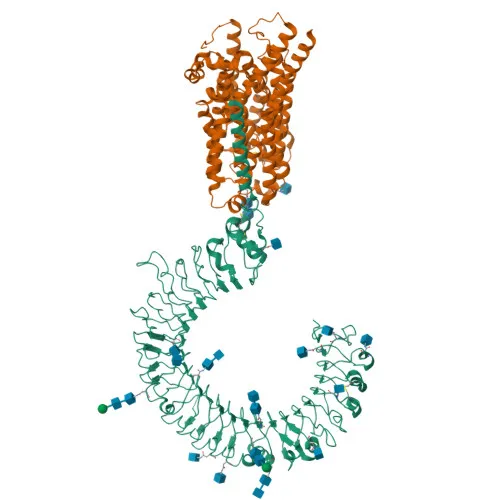
- Structurally, TLR3 contains an extracellular domain with leucine-rich repeats (LRRs), a transmembrane helix, and a cytoplasmic TIR domain, with a signal peptide for membrane targeting.
- The gene undergoes alternative splicing, and the protein is subject to post-translational modifications including glycosylation, disulfide bond formation, and phosphorylation.
Experimental Guidance and Technical Tips
- The immunogen used for this antibody corresponds to the extracellular domain (amino acids 24-339) of human TLR3, which is expected to recognize native TLR3.
- For Western blot (WB) analysis, consider that TLR3 may migrate at approximately 103 kDa (full-length glycosylated form) or 72 kDa (potentially an isoform or cleavage product). Validate with appropriate controls.
- For immunofluorescence (IF/ICC), fixation and permeabilization conditions should be optimized, as TLR3 localizes primarily in endosomal compartments.
- ELISA applications may be used to detect TLR3 in cell lysates or purified protein samples; include non-immune rabbit IgG as a negative control.
- Since cross-reactivity is reported for human, validation in other species is not guaranteed; perform species-specific sequence alignment if needed.
CamelBio: Your One-Stop Sourcing Bridge
CamelBio offers a comprehensive range of IVD raw materials, including validated antibody pairs, optimized monoclonal and polyclonal antibodies, and bulk ancillary reagents. Leverage our expertise to source high-quality Toll-like receptor antibodies and related innate immunity reagents for your diagnostic and research needs. From concept to clinic, we provide one-stop technical services and consulting to accelerate your development.
REQUEST A QUOTE
Our professional team will reply to you within one business day. Please feel free to contact us!