Polyclonal Antibodies
HTATSF1 Rabbit pAb - O43719
Item Number : CM0029709
Price varies based on specs and customizations
- Application
- WB, IHC-P, IF/ICC, ELISA
- Cross Reactivity
- Human, Mouse, Rat
- Protein Weight
- 86kDa

Shipping:
Contact us to get shipping details Enjoy On-time Dispatch Guarantee.
Why Choose Us
Easy ordering process, quality products, and dedicated support for your business success.
Core Product Specifications and Parameters
| Parameter | Value |
|---|---|
| Product Name | HTATSF1 Rabbit pAb |
| Remarks/Alias | TATSF1; TAT-SF1; dJ196E23.2; HTATSF1 |
| Species | Human |
| GeneID (Human) | 27336 |
| GeneID | 27336 |
| Immunogen | Recombinant fusion protein containing a sequence corresponding to amino acids 1-270 of human HTATSF1 (NP_055315.2). |
| Source | Rabbit |
| Category | Polyclonal Antibodies |
| Application | WB, IHC-P, IF/ICC, ELISA |
| Cross Reactivity | Human, Mouse, Rat |
| SWISS | O43719 |
| Protein Weight | 86kDa |
| Shipping | Ice bag |
Biological Background: HTATSF1 Function and Localization
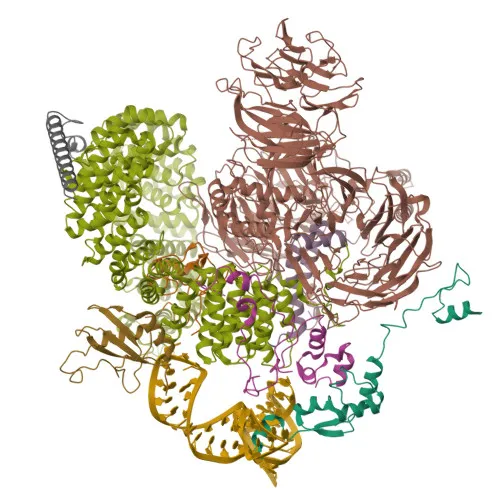
- HTATSF1 (HIV Tat-specific factor 1) is a component of the 17S U2 SnRNP complex of the spliceosome, a large ribonucleoprotein complex that removes introns from pre-mRNAs. Related references: PMID:30567737, PMID:32494006, PMID:34822310
- Within the 17S U2 SnRNP, HTATSF1 stabilizes the branchpoint-interacting stem loop and is required for early spliceosome assembly and recognition of the intron branch site adenosine. It is displaced before stable addition of the 17S U2 SnRNP to the spliceosome, allowing branch site probing. Related references: PMID:32494006, PMID:34822310
- HTATSF1 also functions as a regulator of transcriptional elongation, mediating the reciprocal stimulatory effect of splicing on transcription. Related references: PMID:10454543, PMID:10913173, PMID:11780068
- Involved in DNA double-strand break repair via homologous recombination: recruited to damage sites in S-phase via interaction with poly-ADP-ribosylated RPA1, phosphorylated by CK2, and promotes TOPBP1 recruitment, facilitating RAD51 filament formation. Related references: PMID:35597237
- During HIV-1 infection, HTATSF1 is up-regulated by NEF and gp120 and acts as a cofactor for Tat-enhanced viral transcription.
- Localized predominantly in the nucleus and on chromosomes, consistent with its roles in splicing, transcription, and DNA repair.
- Widely expressed across tissues.
- Post-translationally modified by acetylation and phosphorylation, which may regulate its activity.
Experimental Guidance and Technical Tips
- For western blot analysis, consider using nuclear extracts to enrich for HTATSF1, as it is a nuclear protein. Validate detection in cell lines known to express HTATSF1.
- In immunohistochemistry (IHC-P), optimize antigen retrieval protocols suitable for nuclear antigens; validate with appropriate positive and negative tissue controls.
- The immunogen corresponds to the N-terminal region (amino acids 1-270) of human HTATSF1; confirm that the antibody detects the full-length protein (~86 kDa) and any potential isoforms in your sample system.
- Given cross-reactivity with mouse and rat, this antibody can be employed in animal model studies; verify species-specific reactivity in your experimental context.
- For ELISA, determine optimal coating concentrations and detection conditions empirically, using recombinant HTATSF1 protein as a standard.
CamelBio: Your One-Stop Sourcing Bridge
CamelBio is a dedicated sourcing partner for IVD raw materials, connecting diagnostic developers with high-performance reagents like this HTATSF1 polyclonal antibody for splicing and transcription research. Our extensive catalog includes validated antibody pairs, optimized monoclonal/polyclonal antibodies, bulk ancillary reagents, and custom sourcing for rare targets—streamlining your path from concept to clinical application.
REQUEST A QUOTE
Our professional team will reply to you within one business day. Please feel free to contact us!