Polyclonal Antibodies
HLA-G Rabbit Polyclonal Antibody for WB, ELISA - P17693
Item Number : CM0029110
Price varies based on specs and customizations
- Application
- WB, ELISA
- Cross Reactivity
- Human, Mouse, Rat
- Protein Weight
- 38kDa

Shipping:
Contact us to get shipping details Enjoy On-time Dispatch Guarantee.
Why Choose Us
Easy ordering process, quality products, and dedicated support for your business success.
Core Product Specifications and Parameters
| Parameter | Value |
|---|---|
| Product Name | HLA-G Rabbit pAb |
| Remarks/Alias | MHC-G; HLA-G |
| Species | Human |
| GeneID (Human) | 3135 |
| GeneID | 3135 |
| Immunogen | Recombinant protein; Recombinant fusion protein containing a sequence corresponding to amino acids 20-230 of human HLA-G (NP_002118.1) |
| Source | Rabbit |
| Category | Polyclonal Antibodies |
| Application | WB, ELISA |
| Cross Reactivity | Human, Mouse, Rat |
| SWISS | P17693 |
| Protein Weight | 38kDa |
| Shipping | Ice bag |
Biological Background: HLA-G Function and Localization
- HLA-G (MHC-G) is a non-classical MHC class Ib molecule expressed at immune-privileged sites including the placenta, amniotic membrane, and anterior chamber of the eye, where it mediates maternal-fetal immune tolerance. Related references: PMID:19304799, PMID:23184984, PMID:29262349
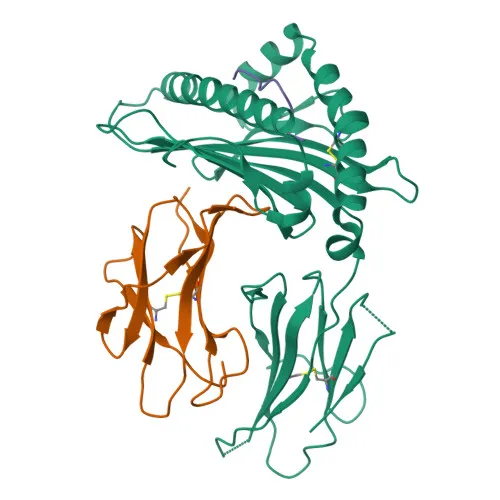
- In complex with beta-2-microglobulin (B2M), HLA-G binds a limited repertoire of nonamer self-peptides derived from intracellular proteins, including histones and ribosomal proteins. Related references: PMID:7584149, PMID:8805247
- The peptide-bound HLA-G‑B2M complex serves as a ligand for the inhibitory/activating receptors KIR2DL4, LILRB1, and LILRB2 on uterine immune cells, promoting fetal development while maintaining maternal-fetal tolerance. Related references: PMID:16366734, PMID:19304799, PMID:20448110
- Upon interaction with KIR2DL4 and LILRB1 on decidual NK cells, HLA-G triggers a senescence-associated secretory phenotype that acts as a molecular switch to promote vascular remodeling and fetal growth in early pregnancy. Related references: PMID:16366734, PMID:19304799, PMID:23184984
- Through LILRB2 receptor engagement, HLA-G induces differentiation of type 1 regulatory T cells and myeloid-derived suppressor cells, both of which actively maintain maternal-fetal tolerance. Related references: PMID:20448110, PMID:27859042
- HLA-G reprograms B cells toward an immune suppressive phenotype via LILRB1. Related references: PMID:24453251
- It may also control angiogenesis in immune-privileged sites by interacting with the inhibitory receptor CD160 on endothelial cells. Related references: PMID:16809620
- Alternative splicing generates multiple isoforms; membrane-bound forms (e.g., HLA-G1) and soluble forms (e.g., HLA-G5, -G6, -G7) are involved in immune tolerance, while other isoforms (e.g., HLA-G2, -G3, -G4) likely do not bind B2M and negatively regulate NK and CD8+ T cell cytotoxicity. Related references: PMID:11290782
Experimental Guidance and Technical Tips
- For Western blot analysis, consider using reducing sample buffer to disrupt disulfide bonds; the predicted molecular weight is 38 kDa, but glycosylation may result in a higher observed band.
- In ELISA applications, coating with recombinant HLA-G protein or the immunogen may be effective; validate the assay with positive control samples such as placental lysates or recombinant protein.
- Given the polyclonal nature of this antibody, multiple epitopes are recognized; cross-reactivity with mouse and rat orthologs has been indicated, but it is advisable to verify performance in the relevant species and tissue context.
- Recommended to include appropriate positive (e.g., JEG-3, 721.221-G transfectants) and negative controls to validate specificity in your experimental system.
CamelBio: Your One-Stop Sourcing Bridge
CamelBio offers a comprehensive one-stop platform for diagnostic manufacturers, laboratories, and research institutes, providing access to a wide range of IVD raw materials, technical support, and consulting services from concept to clinic. This HLA-G rabbit polyclonal antibody is suitable for research into reproductive immunology, immune tolerance, and immune checkpoint pathways, and CamelBio can further assist with sourcing validated antibody pairs, optimized monoclonal/polyclonal formats, bulk ancillary reagents, and rare target raw materials to accelerate your diagnostic development projects.
REQUEST A QUOTE
Our professional team will reply to you within one business day. Please feel free to contact us!