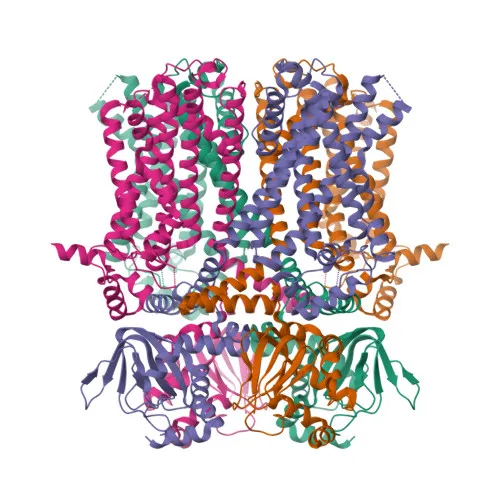
Polyclonal Antibodies
HCN1 Rabbit Polyclonal Antibody for WB, IF/ICC, ELISA - O60741
Item Number : CM0021537
Price varies based on specs and customizations
- Application
- WB, IF/ICC, ELISA
- Cross Reactivity
- Human, Mouse
- Protein Weight
- 99kDa

Shipping:
Contact us to get shipping details Enjoy On-time Dispatch Guarantee.
Why Choose Us
Easy ordering process, quality products, and dedicated support for your business success.
Core Product Specifications and Parameters
| Parameter | Value |
|---|---|
| Product Name | HCN1 Rabbit pAb |
| Remarks/Alias | BCNG1; DEE24; HAC-2; BCNG-1; EIEE24; GEFSP10; HCN1 |
| Species | Human |
| Gene ID | 348980 |
| Immunogen | A synthetic peptide corresponding to a sequence within amino acids 791-890 of human HCN1 (NP_066550.2) |
| Source | Rabbit |
| Category | Polyclonal Antibodies |
| Application | WB, IF/ICC, ELISA |
| Cross Reactivity | Human, Mouse |
| SWISS | O60741 |
| Protein Weight | 99kDa |
| Shipping | Ice bag |
Biological Background: HCN1 Function and Localization
-
HCN1, or potassium/sodium hyperpolarization-activated cyclic nucleotide-gated channel 1 (also known as BCNG-1), is a hyperpolarization-activated ion channel permeable to both sodium and potassium ions (PubMed:15351778). It displays lower selectivity for K(+) over Na(+) ions (PubMed:28086084).
Related references: PMID:15351778 PMID:28086084 -
This channel generates the hyperpolarization-activated current (I(h)) that modulates neuronal excitability and contributes to native pacemaker currents (If) in the heart (PubMed:29936235, PubMed:30351409).
Related references: PMID:29936235 PMID:30351409 -
HCN1 participates in cerebellar mechanisms of motor learning, as suggested by sequence similarity with other species.
-
The channel may mediate responses to sour taste stimuli, based on evidence from related model organisms.
-
Subcellularly, HCN1 localizes to the cell membrane and features multiple transmembrane domains, a cyclic nucleotide-binding domain sensitive to cAMP, and a voltage-sensing module.
-
Expression is predominantly detected in the brain, with the highest levels in the amygdala and hippocampus, while other brain regions (caudate nucleus, corpus callosum, substantia nigra, subthalamic nucleus, thalamus) and peripheral tissues (muscle, pancreas) show very low or undetectable expression.
-
The protein undergoes N-linked glycosylation, and pathogenic variants in HCN1 are associated with epileptic disorders, including early infantile epileptic encephalopathy (EIEE24) and developmental and epileptic encephalopathy (DEE24).
Experimental Guidance and Technical Tips
- The antibody was generated against a synthetic peptide from the C-terminal region (aa 791–890) of human HCN1; consider this when assessing epitope accessibility.
- For Western blotting, a band of approximately 99 kDa (predicted molecular weight) is expected; validate the signal in lysates from HCN1-expressing tissues such as brain.
- In immunofluorescence/ICC, membrane staining patterns may be observed; include appropriate controls to confirm specific labeling.
- Cross-reactivity has been reported for human and mouse; validate in the relevant sample system if using other species.
- Not tested for IHC or other applications; users should perform in-house validation for non-listed techniques.
CamelBio: Your One-Stop Sourcing Bridge
CamelBio provides diagnostic manufacturers, labs, and research institutes with one-stop access to IVD raw materials, technical services, and consulting—covering every stage from concept to clinic. For ion channel studies and neurological disease research, we offer validated antibody pairs, optimized polyclonal antibodies like this HCN1 pAb, bulk ancillary reagents, and rare target raw-material sourcing. Partner with us to streamline your assay development workflow.
REQUEST A QUOTE
Our professional team will reply to you within one business day. Please feel free to contact us!