Polyclonal Antibodies
GBP1 Rabbit Polyclonal Antibody for WB, ELISA - P32455
Item Number : CM0026679
Price varies based on specs and customizations
- Application
- WB, ELISA
- Cross Reactivity
- Human
- Protein Weight
- 68kDa

Shipping:
Contact us to get shipping details Enjoy On-time Dispatch Guarantee.
Why Choose Us
Easy ordering process, quality products, and dedicated support for your business success.
Core Product Specifications and Parameters
| Parameter | Value |
|---|---|
| Product Name | GBP1 Rabbit pAb |
| Remarks/Alias | GBP1 |
| Species | Human |
| GeneID (Human) | 2633 |
| GeneID | 2633 |
| Immunogen | Recombinant protein; Recombinant fusion protein containing a sequence corresponding to amino acids 383-592 of human GBP1 (NP_002044.2) |
| Source | Rabbit |
| Category | Polyclonal Antibodies |
| Application | WB, ELISA |
| Cross Reactivity | Human |
| SWISS | P32455 |
| Protein Weight | 68kDa |
| Shipping | Ice bag |
Biological Background: GBP1 Function and Localization
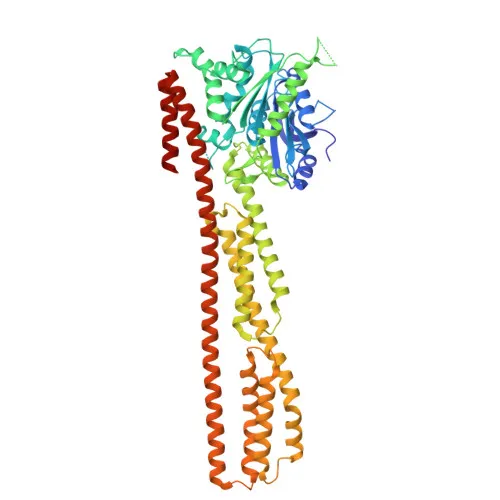
- Guanylate-binding protein 1 (GBP1), also referred to as GTP-binding protein 1 (GBP-1) or interferon-induced guanylate-binding protein 1 (hGBP1), is an interferon (IFN)-inducible GTPase encoded by the GBP1 gene in humans.
- GBP1 hydrolyzes GTP to GMP in two sequential cleavage reactions: GTP is first converted to GDP and then further to GMP in a processive manner. Related references: PMID:16511497, PMID:32510692, PMID:7512561
- It plays critical roles in innate immunity by conferring protection against a broad spectrum of pathogens, including bacterial (L. monocytogenes, M. bovis BCG), viral (influenza virus), and protozoan (T. gondii) infections. Related references: PMID:16511497, PMID:22106366, PMID:29144452
- GBP1 acts as a positive regulator of inflammasome assembly: upon pathogen release into the cytosol, it forms a GTPase-dependent protein coat that encapsulates bacteria, directly binds to lipopolysaccharide (LPS), disrupts the O-antigen barrier, and promotes detection by the non-canonical caspase-4/11 inflammasome. Related references: PMID:32510692, PMID:32581219, PMID:31268602
- It participates in autophagy by interacting with the ubiquitin-binding protein SQSTM1, delivering monoubiquitinated proteins to autolysosomes for the generation of bacteriolytic peptides.
- Subcellularly, GBP1 is found on cytoplasmic vesicle membranes, Golgi apparatus membranes, the cell membrane, in the cytosol, and can be secreted.
- Post-translational modifications include prenylation (isoprenylation) for membrane targeting, phosphorylation, and ubiquitination (Ubl conjugation).
Experimental Guidance and Technical Tips
- The immunogen corresponds to the C-terminal region (amino acids 383–592) of human GBP1; therefore, reactivity with full-length GBP1 is expected, but cross-reactivity with closely related GBP family members should be validated experimentally.
- For Western blot, consider using interferon-stimulated cell lysates (e.g., IFN-γ-treated HeLa or A549 cells) where endogenous GBP1 expression is strongly upregulated, and optimize antibody dilution to achieve a clear band at ~68 kDa.
- In ELISA applications, the recombinant immunogen can be used as a positive coating control to establish standard curves and assay sensitivity; validate performance with native protein in biological samples.
CamelBio: Your One-Stop Sourcing Bridge
CamelBio provides a comprehensive selection of IVD raw materials, including validated antibody pairs, optimized monoclonal and polyclonal antibodies, and bulk ancillary reagents, supporting diagnostic manufacturers and researchers from concept to clinic. This GBP1 antibody targets human guanylate-binding protein 1, a key mediator of innate immunity, making it a valuable tool for infectious disease and inflammation research. For custom sourcing of rare-target raw materials or project-specific technical consulting, our team is ready to assist.
REQUEST A QUOTE
Our professional team will reply to you within one business day. Please feel free to contact us!