Monoclonal Antibodies
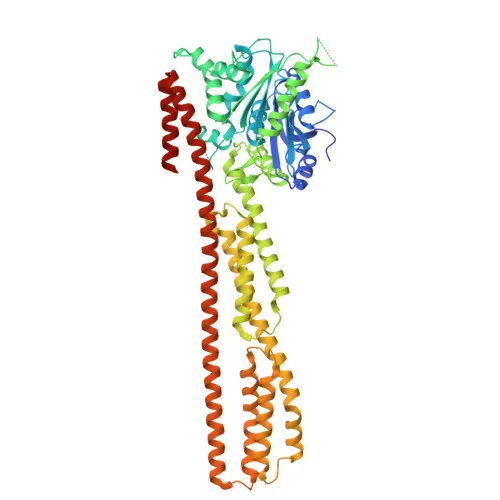
GBP1 Rabbit Monoclonal Antibody for WB, IHC-P, ELISA - P32455
Item Number : CM0003204
Price varies based on specs and customizations
- Application
- WB, IHC-P, ELISA
- Cross Reactivity
- Human, Mouse, Rat
- Protein Weight
- 68 kDa

Shipping:
Contact us to get shipping details Enjoy On-time Dispatch Guarantee.
Why Choose Us
Easy ordering process, quality products, and dedicated support for your business success.
Core Product Specifications and Parameters
| Parameter | Value |
|---|---|
| Product Name | GBP1 Rabbit mAb |
| Remarks/Alias | GBP1; guanylate-binding protein 1 |
| Species | Human |
| GeneID (Human) | 2633 |
| GeneID | 2633 |
| Immunogen | Synthetic Peptide|A synthetic peptide corresponding to a sequence within amino acids 493-592 of human GBP1 (P32455). |
| Source | Rabbit |
| Category | Monoclonal Antibodies |
| Application | WB, IHC-P, ELISA |
| Cross Reactivity | Human, Mouse, Rat |
| SWISS | P32455 |
| Protein Weight | 68 kDa |
| Shipping | Ice bag |
Biological Background: GBP1 Function and Localization
- GBP1 is an interferon-inducible GTPase that plays critical roles in innate immunity through GTP hydrolysis and broad-spectrum antimicrobial activity against bacterial, viral, and protozoan pathogens. Related references: PMID:16511497, PMID:22106366, PMID:29144452, PMID:32510692, PMID:7512561
- Upon infection, GBP1 is recruited to pathogen-containing vacuoles and promotes lysis of these vacuoles, releasing pathogens into the cytosol. Related references: PMID:29144452, PMID:31268602
- In the cytosol, GBP1 assembles into a GTPase-dependent protein coat that encapsulates pathogens, facilitating the detection of pathogen ligands by pattern recognition receptors. Related references: PMID:32510692, PMID:32581219
- During Gram-negative bacterial infection, GBP1 directly binds to lipopolysaccharide (LPS), disrupting the O-antigen barrier and unmasking lipid A, which activates the non-canonical inflammasome via CASP4/CASP11. Related references: PMID:32510692, PMID:32581219
- GBP1 also promotes AIM2 inflammasome activation by mediating bacterial cytolysis and release of double-stranded DNA. Related references: PMID:31268602
- GBP1 regulates autophagy through interaction with SQSTM1, delivering ubiquitinated proteins to autolysosomes for bacteriolytic peptide generation.
- Subcellularly, GBP1 localizes to cytoplasmic vesicles, Golgi apparatus, cell membrane, cytosol, and is secreted. Post-translational modifications include isoprenylation, methylation, phosphorylation, and ubiquitin-like conjugation.
Experimental Guidance and Technical Tips
- The immunogen is a peptide from the C-terminal region (aa 493-592), which may allow detection of full-length GBP1 and potentially isoforms sharing this epitope; validate specificity in your model.
- For Western blot, the predicted molecular weight is approximately 68 kDa. Consider using appropriate loading controls and verify the band size in your sample lysates.
- For immunohistochemistry (IHC-P), antigen retrieval conditions may need optimization for GBP1 detection in paraffin-embedded tissues.
- For ELISA, this antibody can be used as a capture or detection reagent; pairing with another antibody may be required for sandwich ELISA.
- Cross-reactivity has been reported with human, mouse, and rat; verify performance in your relevant species.
CamelBio: Your One-Stop Sourcing Bridge
CamelBio provides diagnostic manufacturers and research institutes with comprehensive access to high-quality IVD raw materials. This GBP1 antibody supports research in innate immunity, autophagy, and infectious disease. Complementing our GBP1 antibody, we offer validated antibody pairs, bulk reagents, and custom sourcing for rare targets to streamline your development pipeline.
REQUEST A QUOTE
Our professional team will reply to you within one business day. Please feel free to contact us!