Polyclonal Antibodies
FOXP3 Rabbit pAb for WB, ELISA - Q9BZS1
Item Number : CM0028946
Price varies based on specs and customizations
- Application
- WB, ELISA
- Cross Reactivity
- Human, Mouse, Rat
- Protein Weight
- 47kDa

Shipping:
Contact us to get shipping details Enjoy On-time Dispatch Guarantee.
Why Choose Us
Easy ordering process, quality products, and dedicated support for your business success.
Core Product Specifications and Parameters
| Parameter | Value |
|---|---|
| Product Name | FOXP3 Rabbit pAb |
| Remarks/Alias | JM2; AIID; IPEX; PIDX; XPID; DIETER; FOXP3 |
| Species | Human |
| GeneID | 50943 |
| Immunogen | Recombinant fusion protein containing a sequence corresponding to amino acids 206-300 of human FOXP3 (NP_054728.2) |
| Source | Rabbit |
| Category | Polyclonal Antibodies |
| Application | WB, ELISA |
| Cross Reactivity | Human, Mouse, Rat |
| SWISS | Q9BZS1 |
| Protein Weight | 47kDa |
| Shipping | Ice bag |
Biological Background: FOXP3 Function and Localization
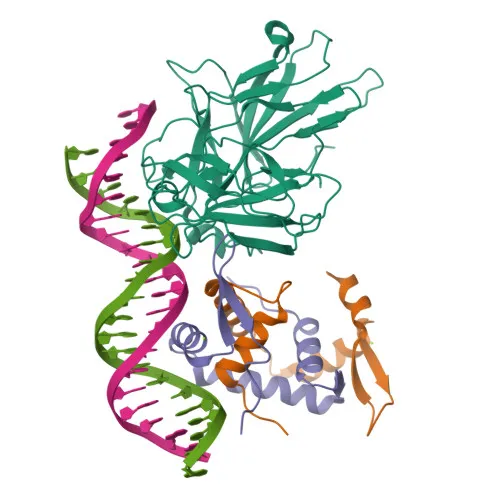
- Forkhead box protein P3 (FOXP3), also known as Scurfin, is a transcriptional regulator crucial for regulatory T-cell (Treg) development and suppressive function. Related references: PMID:17377532, PMID:21458306, PMID:23947341
- FOXP3 maintains immune homeostasis by ensuring Treg lineage stability and directly modulating conventional T-cell expansion and function. Related references: PMID:23169781
- It can act as a transcriptional repressor or activator depending on its interactions with histone acetylases and deacetylases. Related references: PMID:17377532, PMID:21458306, PMID:23947341
- The suppressive activity of Treg involves coordinate activation of genes like CTLA4 and TNFRSF18, and repression of cytokines IL2 and IFNG through associations with KAT5, HDAC7, and RUNX1. Related references: PMID:17377532, PMID:21458306, PMID:23947341, PMID:17360565
- FOXP3 inhibits differentiation of IL17-producing helper T-cells (Th17) by antagonizing RORC and represses the transcriptional activator activity of RORA, favoring Treg development. Related references: PMID:18368049, PMID:18354202
- The protein localizes to both the nucleus and cytoplasm.
- FOXP3 undergoes post-translational modifications including acetylation, phosphorylation, and ubiquitination, and features a zinc-finger DNA-binding domain.
- Mutations in the FOXP3 gene are linked to the autoimmune disease IPEX (Immune dysregulation, Polyendocrinopathy, Enteropathy, X-linked).
Experimental Guidance and Technical Tips
- The immunogen (amino acids 206–300) targets the central region of FOXP3, which may detect multiple isoforms and splice variants.
- For Western blotting, the predicted molecular weight is ~47 kDa; validate with Treg cell lysates or FOXP3-overexpressing cells.
- For ELISA applications, consider pairing with a detection antibody against a non-overlapping epitope to minimize steric interference.
- FOXP3 expression is predominantly in Tregs; ensure appropriate cell enrichment and stimulation protocols for optimal signal.
CamelBio: Your One-Stop Sourcing Bridge
CamelBio provides diagnostic manufacturers, laboratories, and research institutes with one-stop access to IVD raw materials, from early R&D to clinical application. This anti-FOXP3 polyclonal antibody supports immunological studies and can be integrated into broader assay development. Beyond individual antibodies, we offer validated antibody pairs, bulk ancillary reagents, and customized sourcing for rare targets, ensuring a reliable supply chain for your diagnostic projects.
REQUEST A QUOTE
Our professional team will reply to you within one business day. Please feel free to contact us!