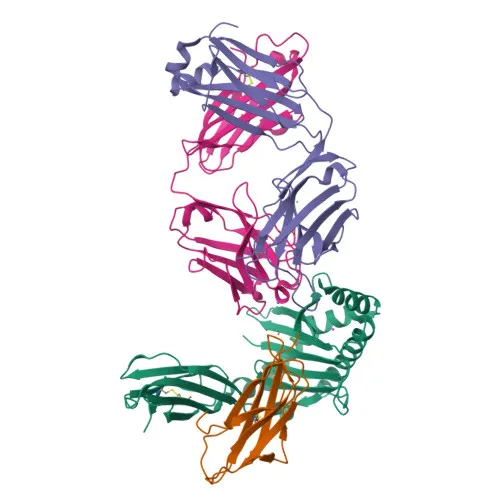
Polyclonal Antibodies
FCGRT Rabbit Polyclonal Antibody for WB, IF/ICC, ELISA - P55899
Item Number : CM0025764
Price varies based on specs and customizations
- Application
- WB, IF/ICC, ELISA
- Cross Reactivity
- Human, Mouse, Rat
- Protein Weight
- 40kDa

Shipping:
Contact us to get shipping details Enjoy On-time Dispatch Guarantee.
Why Choose Us
Easy ordering process, quality products, and dedicated support for your business success.
Core Product Specifications and Parameters
| Parameter | Value |
|---|---|
| Product Name | FCGRT Rabbit pAb |
| Remarks/Alias | FCRN; FcgammaRn; alpha-chain; FCGRT |
| Species | Human |
| Gene ID (Human) | 2217 |
| Gene ID | 2217 |
| Immunogen | Recombinant fusion protein containing a sequence corresponding to amino acids 27-290 of human FcRn (NP_004098.1) |
| Source | Rabbit |
| Category | Polyclonal Antibodies |
| Application | WB, IF/ICC, ELISA |
| Cross Reactivity | Human, Mouse, Rat |
| SWISS | P55899 |
| Protein Weight | 40kDa |
| Shipping | Ice bag |
Biological Background: FCGRT Function and Localization
- FCGRT encodes the neonatal Fc receptor (FcRn), a transmembrane glycoprotein that binds monomeric IgG and mediates transplacental passive immunity and selective uptake from milk, then transcytoses IgG across intestinal epithelium into neonatal circulation. Related references: PMID:10933786, PMID:7964511
- FcRn constitutively recycles IgG in endothelial and hematopoietic cells, extending antibody half-life by binding IgG in acidic endosomes and releasing it at neutral cell surface pH. Related references: PMID:10998088
- In addition to IgG, FCGRT regulates homeostasis of the most abundant circulating protein albumin (ALB), protecting it from lysosomal degradation. Related references: PMID:24469444, PMID:28330995
- Acts as a cellular uncoating receptor for multiple echoviruses (including Echo 5, 6, 7, 9, 11, 13, 25, and 29), facilitating viral entry and infection.
- Subcellularly, it is localized to the cell membrane and endosome membrane, consistent with its role in ligand binding and intracellular trafficking.
- Widely expressed in full-term placenta, heart, lung, liver, muscle, kidney, pancreas, and both fetal and adult small intestine.
- The mature protein undergoes disulfide bond formation, glycosylation, and phosphorylation, with structural features including an immunoglobulin domain, a signal peptide, and a single transmembrane helix.
Experimental Guidance and Technical Tips
- The immunogen covers the extracellular domain (aa 27–290), suggesting recognition of native and recombinant FcRn; epitopes are likely in the ligand-binding region.
- For Western blotting, expect a band near 40 kDa (mature protein weight 40 kDa), though glycosylation may cause slight mobility shifts; consider using reducing conditions.
- In IF/ICC, co-localization with endosomal markers is expected; permeabilization is required to detect intracellular pools.
- Validate antibody performance in biologically relevant samples such as human placenta, liver, or small intestine tissues, as well as in transfected cell lines.
- Due to cross-reactivity with mouse and rat, this antibody may be suitable for rodent studies; however, confirm species-specific binding profiles in your experimental model.
CamelBio: Your One-Stop Sourcing Bridge
CamelBio stands as a comprehensive IVD raw-material partner for diagnostic manufacturers and research laboratories, offering one-stop access to antibodies, antigens, and ancillary reagents. For FcRn-related immunoassay and functional studies, our portfolio includes validated antibody pairs, optimized polyclonal antibodies like this anti-FCGRT pAb, and bulk reagent supply to streamline your development from concept to clinic. Leverage our sourcing expertise to secure even rare-target raw materials, ensuring your project stays on track.
REQUEST A QUOTE
Our professional team will reply to you within one business day. Please feel free to contact us!