Monoclonal Antibodies
ESRα Rabbit mAb for WB - P03372
Item Number : CM0004061
Price varies based on specs and customizations
- Application
- WB, IP, ELISA, ChIP, FC (intra)
- Cross Reactivity
- Human
- Protein Weight
- 66kDa

Shipping:
Contact us to get shipping details Enjoy On-time Dispatch Guarantee.
Why Choose Us
Easy ordering process, quality products, and dedicated support for your business success.
Core Product Specifications and Parameters
| Parameter | Value |
|---|---|
| Product Name | ESRα Rabbit mAb |
| Remarks/Alias | ER; ESRα |
| Species | Human |
| Gene ID (Human) | 2099 |
| Immunogen | Synthetic peptide corresponding to amino acids 495-595 of human ESRα (NP_000116.2) |
| Source | Rabbit |
| Category | Monoclonal Antibodies |
| Application | WB, IP, ELISA, ChIP, FC (intra) |
| Cross Reactivity | Human |
| SWISS | P03372 |
| Protein Weight | 66kDa |
| Shipping | Ice bag |
Biological Background: Estrogen Receptor Function and Localization
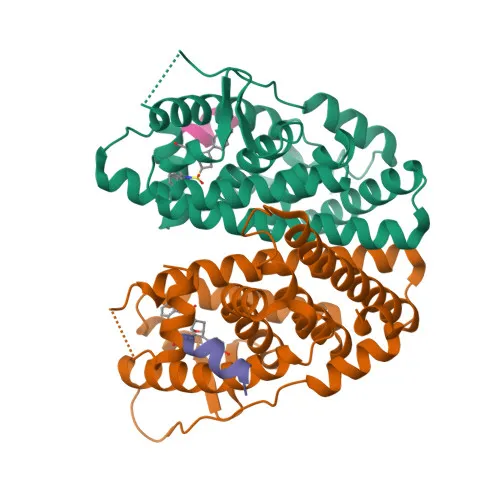
- Estrogen receptor alpha (ERα), also known as ER-alpha, estradiol receptor, and nuclear receptor subfamily 3 group A member 1 (NR3A1), is encoded by the ESR1 gene and belongs to the nuclear hormone receptor superfamily.
- Alternative splicing generates multiple isoforms, some lacking functional domains, which can modulate the transcriptional activity of the full-length receptor through competitive ligand or DNA binding and heterodimerization. Related references: PMID:10970861
- Upon binding 17β-estradiol, ERα undergoes a conformational change that promotes homodimerization and direct binding to estrogen response elements (ERE) in target gene promoters, or it associates with other transcription factors (e.g., AP-1, Sp1, NF-κB) to regulate ERE-independent transcription.
- ERα also mediates rapid membrane-initiated estrogen signaling, activating various kinase cascades, and is essential for MTA1-mediated transcriptional regulation of BRCA1 and BCAS3. Related references: PMID:17922032
- Involved in the activation of NOS3 and endothelial nitric oxide production, contributing to vascular homeostasis. Related references: PMID:21937726
- Predominantly localizes to the nucleus, but also found in the cytoplasm, cell membrane, and Golgi apparatus; its subcellular distribution is dynamically regulated by ligand binding and post-translational modifications.
- Post-translational modifications include phosphorylation, palmitoylation, methylation, ubiquitination, and glycosylation, which influence receptor stability, localization, and transcriptional activity.
- Widely expressed in many tissues, but notably absent in the pituitary gland. Related references: PMID:10970861
Experimental Guidance and Technical Tips
- The immunogen corresponds to residues 495–595 in the C-terminal region of human ESRα. This region may be present in multiple isoforms, but consider verifying isoform specificity using cell lines expressing distinct splice variants.
- For Western blot (WB), the predicted molecular weight is 66 kDa; use pre-stained markers for size confirmation and optimize blocking conditions to reduce nonspecific binding.
- When performing immunoprecipitation (IP), prepare fresh lysates with appropriate protease and phosphatase inhibitors to maintain ERα stability.
- For chromatin immunoprecipitation (ChIP), carefully optimize crosslinking and sonication parameters, as ERα chromatin interactions can be transient and dependent on ligand stimulation.
- In flow cytometry (intracellular staining), include an isotype control and validate permeabilization protocols suitable for nuclear antigens.
- For ELISA, titrate the antibody as a capture or detection reagent against recombinant ERα protein to establish optimal working concentrations.
- All applications have been validated with human samples; reactivity with other species should be experimentally confirmed.
CamelBio: Your One-Stop Sourcing Bridge
CamelBio supplies comprehensive IVD raw materials, including validated antibody pairs, optimized monoclonal/polyclonal antibodies, bulk ancillary reagents, and custom sourcing for rare targets. For estrogen receptor research and associated diagnostic development, we bridge the gap from concept to clinic with reliable, high-performance reagents backed by technical and regulatory support.
REQUEST A QUOTE
Our professional team will reply to you within one business day. Please feel free to contact us!