Monoclonal Antibodies
eEF2 Rabbit mAb - P13639
Item Number : CM0006228
Price varies based on specs and customizations
- Application
- WB, IHC-P, IF/ICC, ELISA
- Cross Reactivity
- Human, Mouse, Rat
- Protein Weight
- 95kDa

Shipping:
Contact us to get shipping details Enjoy On-time Dispatch Guarantee.
Why Choose Us
Easy ordering process, quality products, and dedicated support for your business success.
Core Product Specifications and Parameters
| Parameter | Value |
|---|---|
| Product Name | eEF2 Rabbit mAb |
| Remarks/Alias | EF2; EF-2; EEF-2; SCA26; eEF2 |
| Species | Human |
| GeneID (Human) | 1938 |
| GeneID | 1938 |
| Immunogen | A synthetic peptide corresponding to a sequence within amino acids 759-858 of human eEF2 (P13639). |
| Source | Rabbit |
| Category | Monoclonal Antibodies |
| Application | WB, IHC-P, IF/ICC, ELISA |
| Cross Reactivity | Human, Mouse, Rat |
| SWISS | P13639 |
| Protein Weight | 95kDa |
| Shipping | Ice bag |
Biological Background: eEF2 Function and Localization
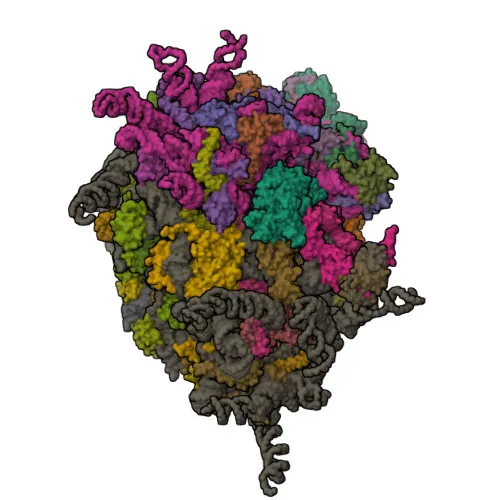
- Catalyzes the GTP-dependent ribosomal translocation step during translation elongation. During this step, the ribosome changes from the pre-translocational (PRE) to the post-translocational (POST) state as the newly formed A-site-bound peptidyl-tRNA and P-site-bound deacylated tRNA move to the P and E sites, respectively, accompanied by mRNA movement and conformational changes in the ribosome. Related references: PMID:26593721
- eEF2 is a highly conserved 95 kDa GTP-binding protein belonging to the elongation factor-G family, essential for protein biosynthesis.
- Primarily localizes in the cytoplasm, where it exerts its canonical function, but is also detected in the nucleus, hinting at extratranslational roles.
- Post-translational modifications, including phosphorylation, acetylation, ADP-ribosylation, methylation, and ubiquitin-like conjugation, regulate eEF2 activity and stability in response to cellular signals.
- Mutations in the EEF2 gene cause spinocerebellar ataxia type 26 (SCA26), a neurodegenerative disorder characterized by progressive motor incoordination.
- Structural studies reveal conserved nucleotide-binding domains and dynamic conformations critical for ribosome binding and translocation.
Experimental Guidance and Technical Tips
- The immunogen targets the C-terminal region (aa 759-858), which may facilitate detection of full-length eEF2 and potential cleavage products; verify band size at approximately 95 kDa in representative lysates.
- For Western blotting, use a standard SDS-PAGE gel (e.g., 8-10%) and PVDF or nitrocellulose membrane; consider optimizing blocking conditions (e.g., 5% non-fat milk or BSA) to reduce background.
- In IHC-P and IF/ICC, antigen retrieval (citrate or EDTA buffer) and permeabilization may be required; test fixation protocols (formalin vs. methanol) to balance morphology preservation and epitope accessibility.
- ELISA performance depends on the assay format; as a monoclonal antibody, it may serve as a detection or capture reagent; validate linearity and sensitivity using recombinant eEF2 or cell lysates.
- Cross-reactivity with mouse and rat enables translational research in common model organisms; confirm specificity by siRNA knockdown or knockout controls in your experimental system.
CamelBio: Your One-Stop Sourcing Bridge
CamelBio offers diagnostic manufacturers and research laboratories a streamlined, single-source procurement solution for high-quality IVD raw materials, including validated antibody pairs and optimized recombinant antibodies like this anti-eEF2 monoclonal antibody. For assays targeting translation elongation or eEF2-linked neurodegeneration, we provide bulk ancillary reagents, custom antibody development, and rare-target sourcing to accelerate your kit development. Our rigorous supply chain management and technical support ensure consistent, scalable performance from concept to clinic.
REQUEST A QUOTE
Our professional team will reply to you within one business day. Please feel free to contact us!