Methylated Antibodies
DiMethyl-Histone H3-K9 Rabbit Polyclonal Antibody (Q16695/P68431) for Epigenetic Research | WB, ChIP, IF/ICC
Item Number : CM0000390
Price varies based on specs and customizations
- Application
- WB, DB, IHC-P, IF/ICC, ELISA, ChIP, ChIP-seq
- Cross Reactivity
- Human, Mouse, Rat, Other (Wide Range Predicted)
- Protein Weight
- 15 kDa

Shipping:
Contact us to get shipping details Enjoy On-time Dispatch Guarantee.
Why Choose Us
Easy ordering process, quality products, and dedicated support for your business success.
Core Product Specifications and Parameters
| Parameter | Value |
|---|---|
| Product Name | DiMethyl-Histone H3-K9 Rabbit pAb |
| Remarks/Alias | H3t; H3.4; H3/g; H3FT; H3C16; HIST3H3; DiMethyl-Histone H3-K9 |
| Species | Human |
| GeneID (Human) | H3 |
| GeneID | 8290/8350 |
| Immunogen | Synthetic peptide: A synthetic peptide corresponding to a sequence within amino acids 1-100 of human histone H3 (NP_003520.1) |
| Source | Rabbit |
| Category | Methylated Antibodies |
| Application | WB, DB, IHC-P, IF/ICC, ELISA, ChIP, ChIP-seq |
| Cross Reactivity | Human, Mouse, Rat, Other (Wide Range Predicted) |
| SWISS | Q16695/P68431 |
| Protein Weight | 15 kDa |
| Shipping | Ice bag |
Biological Background: Histone H3 Function and Localization
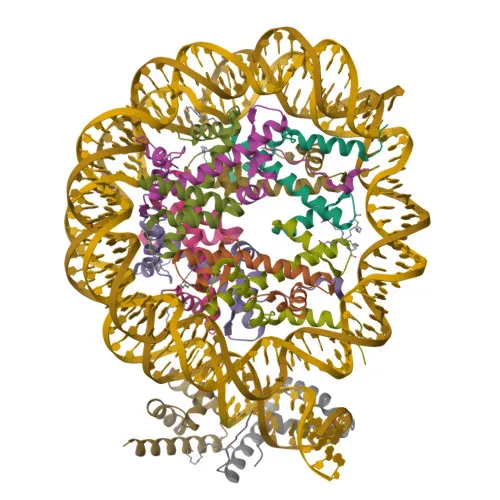
Histone H3 is a core component of the nucleosome, which wraps and compacts DNA into chromatin, thereby regulating DNA accessibility for processes such as transcription, DNA repair, replication, and chromosomal stability. The dynamic post-translational modification of histones, including methylation, acetylation, and phosphorylation, constitutes the "histone code" that governs chromatin structure and function.
Methylation at lysine 9 of histone H3 (H3K9; corresponding to position 10 in UniProt entry P68431 when including the initiator methionine) is a critical epigenetic mark. Dimethylation at this site (H3K9me2) is catalyzed by various methyltransferases and is generally associated with transcriptional repression and heterochromatin formation. Both canonical histone H3.1 (P68431) and the testis-specific H3.1t variant (Q16695) contain this lysine residue, which is subject to multiple types of modifications, including di- and tri-methylation. Related references: PMID:11242053, PMID:16185088, PMID:16267050
Histone H3 is primarily localized in the nucleus and is a structural component of chromosomes. While H3.1 is ubiquitously expressed in replicating cells, H3.1t exhibits tissue specificity and is predominantly found in testicular cells, reflecting its role in chromatin organization during spermatogenesis. Related references: PMID:16567635
The immunoglobulin-like fold of histone H3, along with other core histones, facilitates the formation of the nucleosome core particle, providing a stable platform for higher-order chromatin assembly. Post-translational modification patterns on H3, including dimethylation at K9, are dynamically regulated during the cell cycle and development, influencing gene expression profiles.
Experimental Guidance and Technical Tips
- The immunogen is a synthetic peptide covering amino acids 1-100 of human histone H3. When using the antibody in applications such as Western blotting (WB) or immunohistochemistry (IHC), consider verifying specificity with peptide competition assays or by using well-characterized positive and negative control samples.
- For chromatin immunoprecipitation (ChIP) and ChIP-seq, the antibody's reactivity with dimethylated H3K9 (H3K9me2) can be exploited to map repressive chromatin domains. Ensure that cross-linking and sonication conditions are optimized for your cell type.
- In WB, the expected molecular weight of histone H3 is approximately 15 kDa. A clear band at this size should be observed; additional bands may indicate non-specific binding, so dilution optimization is recommended.
- This antibody is predicted to have wide cross-reactivity based on sequence conservation, but we recommend validating reactivity in your specific species and sample type, especially for non-mammalian organisms.
CamelBio: Your One-Stop Sourcing Bridge
CamelBio provides diagnostic manufacturers, research institutes, and laboratories with a comprehensive one-stop sourcing solution for IVD raw materials. This DiMethyl-Histone H3-K9 rabbit polyclonal antibody is part of our growing portfolio of methylation-specific antibodies, ideal for epigenetic research and assay development. With expertise in bulk ancillary reagents, validated antibody pairs, and optimized monoclonal/polyclonal antibodies, CamelBio supports your entire project from concept to clinic, offering reliable supply for even the most specialized targets in chromatin biology and beyond.
REQUEST A QUOTE
Our professional team will reply to you within one business day. Please feel free to contact us!