Methylated Antibodies
DiMethyl-Histone H3-K4 Rabbit Polyclonal Antibody (Q16695/P68431) for WB, ChIP, ChIP-seq, IHC-P
Item Number : CM0000401
Price varies based on specs and customizations
- Application
- WB, IHC-P, IF/ICC, ELISA, ChIP, ChIP-seq
- Cross Reactivity
- Human, Mouse, Rat, Other (Wide Range Predicted)
- Protein Weight
- 15 kDa

Shipping:
Contact us to get shipping details Enjoy On-time Dispatch Guarantee.
Why Choose Us
Easy ordering process, quality products, and dedicated support for your business success.
Core Product Specifications and Parameters
| Parameter | Value |
|---|---|
| Product Name | DiMethyl-Histone H3-K4 Rabbit pAb |
| Remarks/Alias | H3t; H3.4; H3/g; H3FT; H3C16; HIST3H3; DiMethyl-Histone H3-K4 |
| Species | Human |
| GeneID (Human) | H3 |
| GeneID | 8290/8350 |
| Immunogen | Synthetic peptide (A synthetic peptide corresponding to a sequence within amino acids 1-100 of human histone H3 (NP_003520.1)) |
| Source | Rabbit |
| Category | Methylated Antibodies |
| Application | WB, IHC-P, IF/ICC, ELISA, ChIP, ChIP-seq |
| Cross Reactivity | Human, Mouse, Rat, Other (Wide Range Predicted) |
| SWISS | Q16695/P68431 |
| Protein Weight | 15 kDa |
| Shipping | Ice bag |
Biological Background: Histone H3.1t/Histone H3.1 Function and Localization
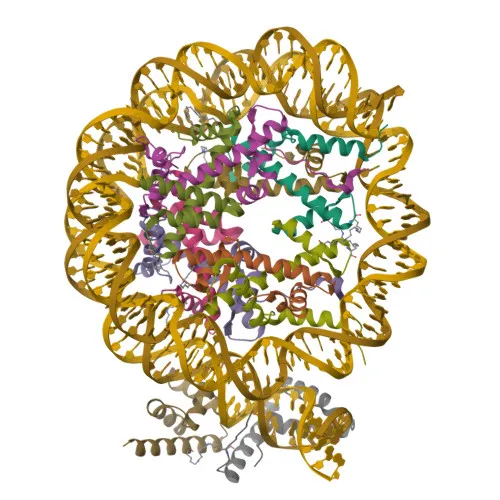
Histone H3 is a core component of the nucleosome, the fundamental repeating unit of chromatin. Together with histones H2A, H2B, and H4, it forms an octamer around which 147 base pairs of DNA are wrapped, compacting the genome and regulating DNA accessibility. This structure is essential for DNA-templated processes including transcription, replication, repair, and chromosomal stability.
The canonical histone H3.1 variant is encoded by multiple genes (e.g., HIST1H3A through HIST1H3J) and is deposited onto newly replicated DNA during S phase. In contrast, the H3.1t isoform (gene H3-4 / HIST3H3) is a testis-specific variant, expressed primarily in testicular cells and potentially involved in chromatin remodeling during spermatogenesis.
Histone H3 undergoes extensive post-translational modifications (PTMs) on its flexible N-terminal tail, forming a complex regulatory "histone code." Known PTMs include methylation, acetylation, phosphorylation, ADP-ribosylation, ubiquitination, and others. Methylation of lysine 4 (H3K4) is a key mark: dimethylation (H3K4me2) is associated with active and poised gene regulatory elements such as promoters and enhancers.
This antibody was raised against a synthetic peptide corresponding to the N-terminal tail (amino acids 1-100) of human histone H3, a region that includes the K4 residue and is highly conserved across species. The antibody specifically recognizes the dimethylated form of K4.
Histone H3 localizes to the nucleus and is a structural component of chromosomes.
Related references: PMID:16267050, PMID:17194708, PMID:24681537
Experimental Guidance and Technical Tips
- The immunogen encompasses the N-terminal tail of histone H3, ensuring recognition of the region containing the K4 residue. For methylation-specific detection, validate with appropriate peptide blocking assays or mutant histone controls.
- For Western blotting (WB), histone-enriched extracts or total cell lysates can be used. The expected band is approximately 15 kDa. Consider using a high-quality transfer membrane and extended blocking to minimize background.
- In chromatin immunoprecipitation (ChIP) and ChIP-seq, this antibody may be suitable for mapping H3K4me2 distribution. Include positive control loci (e.g., active promoters) and negative control loci (e.g., intergenic regions) to assess specificity. When performing ChIP-seq, library preparation and sequencing depth should be optimized according to the specific experimental design.
- For immunohistochemistry (IHC-P) and immunofluorescence (IF/ICC), antigen retrieval (e.g., heat-mediated citrate buffer pH 6.0) and permeabilization may improve detection. Test different fixation methods (e.g., formalin vs. methanol) as they can affect epitope availability.
- The antibody shows predicted cross-reactivity with human, mouse, rat, and other species due to high sequence conservation of the H3 N-terminus. If using a new species, consider sequence alignment to confirm epitope conservation and perform a positive control experiment.
- Methylation-specific antibodies can exhibit cross-reactivity with other methyl-lysine marks. To confirm specificity, include competitive peptide blocking experiments using dimethyl-K4 and other modified peptides.
- Optimal dilutions should be determined empirically for each assay.
CamelBio: Your One-Stop Sourcing Bridge
CamelBio is your one-stop partner for IVD raw materials, providing reliable access to this anti-dimethyl-Histone H3-K4 antibody and a wide portfolio of antibodies for epigenetics research and diagnostic development. From validated antibody pairs and optimized polyclonal/monoclonal antibodies to bulk ancillary reagents and rare-target raw-material sourcing, CamelBio supports your entire development process—from concept to clinic. Reach out to our team to explore tailored supply solutions for your next project.
REQUEST A QUOTE
Our professional team will reply to you within one business day. Please feel free to contact us!