Methylated Antibodies
DiMethyl-Histone H3-K36 Rabbit Monoclonal Antibody (Q16695/P68431) for WB, IHC, IP & ELISA
Item Number : CM0000237
Price varies based on specs and customizations
- Application
- WB, DB, IHC-P, IF/ICC, IP, ELISA
- Cross Reactivity
- Human, Mouse, Rat, Other (Wide Range Predicted)
- Protein Weight
- 15 kDa

Shipping:
Contact us to get shipping details Enjoy On-time Dispatch Guarantee.
Why Choose Us
Easy ordering process, quality products, and dedicated support for your business success.
Core Product Specifications and Parameters
| Parameter | Value |
|---|---|
| Product Name | DiMethyl-Histone H3-K36 Rabbit mAb |
| Remarks/Alias | H3t; H3.4; H3/g; H3FT; H3C16; HIST3H3; DiMethyl-Histone H3-K36 |
| Species | Human |
| GeneID (Human) | 8290/8350 |
| GeneID | 8290/8350 |
| Immunogen | Synthetic peptide: A synthetic dimethylated peptide around K36 of human Histone H3 (NP_003520.1) |
| Source | Rabbit |
| Category | Methylated Antibodies |
| Application | WB, DB, IHC-P, IF/ICC, IP, ELISA |
| Cross Reactivity | Human, Mouse, Rat, Other (Wide Range Predicted) |
| SWISS | Q16695/P68431 |
| Protein Weight | 15 kDa |
| Shipping | Ice bag |
Biological Background: Histone H3 Function and Localization
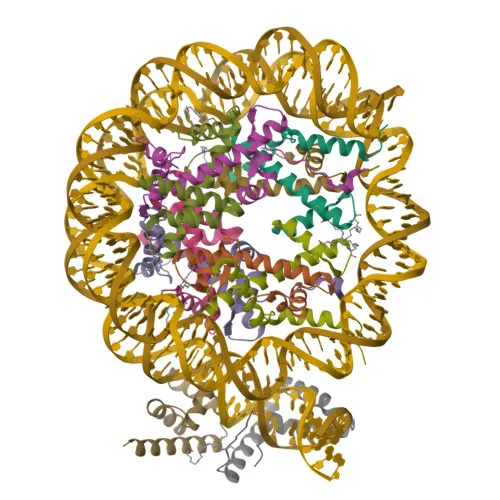
- Core nucleosome component: Histone H3 is essential for wrapping and compacting DNA into chromatin, which restricts access to DNA for transcription, repair, and replication. This central role influences transcription regulation, DNA repair, DNA replication, and chromosomal stability.
Related references: UniProt Q16695, UniProt P68431 - Subcellular localization: Histone H3 localizes to the nucleus and is a structural component of chromosomes, forming the nucleosome core particle.
Related references: UniProt Q16695, UniProt P68431 - Tissue specificity: The canonical Histone H3.1 (P68431) is ubiquitously expressed, while the Histone H3.1t variant (Q16695) is testis-specific.
Related references: UniProt Q16695, UniProt P68431 - Post‑translational modifications (PTMs): Histone H3 undergoes extensive PTMs, including methylation, acetylation, phosphorylation, citrullination, and ubiquitylation. These modifications form the “histone code” that regulates chromatin structure and gene expression. Dimethylation at lysine 36 (H3K36me2, corresponding to UniProt position 37) is associated with transcriptional elongation and is catalyzed by methyltransferases such as NSD1.
Related references: PMID:15983376
Experimental Guidance and Technical Tips
- For Western blotting (WB), a band at ~15 kDa is expected. Consider using nuclear‑enriched lysates for optimal detection and validate the lysis protocol for your sample type.
- In immunohistochemistry (IHC-P), test antigen‑retrieval conditions (e.g., citrate buffer pH 6.0 or EDTA pH 9.0) and optimize antibody dilution for your tissue and fixation method.
- For dot blot (DB) and ELISA applications, the antibody can be used to detect or quantify dimethylated H3K36 peptides; include appropriate peptide controls (unmodified and other methyl‑state peptides) to verify specificity.
- When using immunofluorescence (IF/ICC), permeabilization conditions and fixation may affect epitope accessibility; consider testing methanol vs. formaldehyde fixation.
- In immunoprecipitation (IP), use cross‑linking or native conditions depending on the target complex; validate stringency of washes to preserve the antibody‑antigen interaction.
- The antibody is predicted to cross‑react with a wide range of species; it is advisable to confirm specificity in your experimental system, particularly for non‑mammalian samples.
CamelBio: Your One-Stop Sourcing Bridge
CamelBio provides diagnostic manufacturers, laboratories, and research institutes with a one‑stop sourcing solution for IVD raw materials, including validated antibody pairs, optimized monoclonal/polyclonal antibodies, and bulk ancillary reagents. For target areas like DiMethyl‑Histone H3‑K36, which is critical in epigenetic research and cancer biomarker studies, CamelBio ensures seamless access to high‑quality materials and supports your project from concept to clinic.
REQUEST A QUOTE
Our professional team will reply to you within one business day. Please feel free to contact us!