Polyclonal Antibodies
DHRS4 Rabbit pAb - Q9BTZ2
Item Number : CM0018663
Price varies based on specs and customizations
- Application
- WB, ELISA
- Cross Reactivity
- Human, Mouse, Rat
- Protein Weight
- 30kDa

Shipping:
Contact us to get shipping details Enjoy On-time Dispatch Guarantee.
Why Choose Us
Easy ordering process, quality products, and dedicated support for your business success.
Core Product Specifications and Parameters
| Parameter | Specification |
|---|---|
| Product Name | DHRS4 Rabbit pAb |
| Remarks/Alias | CR; NRDR; PHCR; PSCD; SDR-SRL; SDR25C1; SDR25C2; SCAD-SRL; DHRS4 |
| Species | Human |
| GeneID (Human) | 10901 |
| GeneID | 10901 |
| Immunogen | Recombinant protein |
| Source | Rabbit |
| Category | Polyclonal Antibodies |
| Application | WB, ELISA |
| Cross Reactivity | Human, Mouse, Rat |
| SWISS | Q9BTZ2 |
| Protein Weight | 30kDa |
| Shipping | Ice bag |
Biological Background: DHRS4 Function and Localization
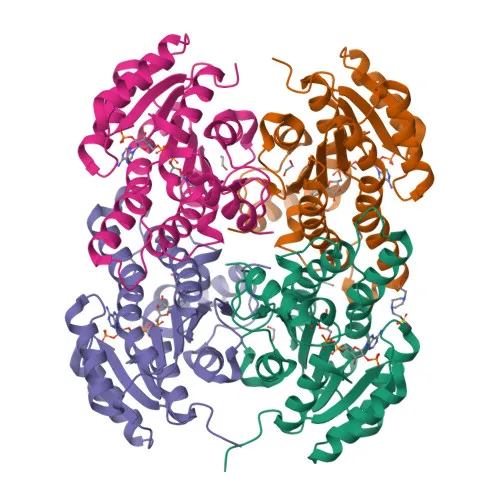
- DHRS4 (Dehydrogenase/reductase SDR family member 4) is a member of the short-chain dehydrogenase/reductase (SDR) family, also known as NADPH-dependent carbonyl reductase (CR), NADPH-dependent retinol dehydrogenase/reductase (NRDR), and short chain dehydrogenase/reductase family 25C member 2 (SDR25C2).
- The primary isoform (isoform 1) functions as an NADPH-dependent oxidoreductase that catalyzes the reduction of various carbonyl compounds, including ketosteroids, α-dicarbonyl compounds, aldehydes, aromatic ketones, and quinones. It exhibits stereoselectivity in reducing 3-ketosteroids to 3β-hydroxysteroids and benzil to R-benzoin, distinct from non-primate DHRS4 enzymes. Related references: PMID:18571493 PMID:19056333
- DHRS4 participates in the metabolism of 3β-hydroxysteroids, isatin, and xenobiotic carbonyl compounds, playing a role in detoxification pathways.
- An alternatively spliced isoform (isoform 2) may lack catalytic activity due to the absence of a functional catalytic site.
- Subcellularly, DHRS4 is localized to peroxisomes and the nucleus, suggesting roles in lipid metabolism and nuclear processes.
- The protein is predominantly expressed in the liver, with additional expression observed in normal cervix and some neoplastic cervical tissues, indicating tissue-specific regulatory functions.
- Post-translational modifications include acetylation and phosphorylation, which may modulate its enzymatic activity or subcellular distribution.
Experimental Guidance and Technical Tips
- The immunogen spans the full-length DHRS4 (amino acids 1–278), ensuring recognition of multiple epitopes; as a polyclonal antibody, it may detect endogenous DHRS4 across human, mouse, and rat samples in WB and ELISA applications.
- For Western blot, consider using a dilution range of 1:500–1:2000 and validate in the relevant sample system (e.g., liver or cervical tissue lysates).
- In ELISA, optimize coating antigen concentration and detection antibody dilution based on the specific assay format. Cross-reactivity with mouse and rat suggests utility for comparative studies; however, individual experimental validation is recommended.
CamelBio: Your One-Stop Sourcing Bridge
CamelBio offers a comprehensive range of IVD raw materials, including validated antibody pairs, optimized monoclonal and polyclonal antibodies, and bulk ancillary reagents. For researchers studying DHRS4-related xenobiotic metabolism, steroid biochemistry, or cancer biology, CamelBio can source specialized reagents and provide technical support to accelerate assay development from concept to clinic.
REQUEST A QUOTE
Our professional team will reply to you within one business day. Please feel free to contact us!