Polyclonal Antibodies
DECR1 Rabbit pAb - Q16698
Item Number : CM0012845
Price varies based on specs and customizations
- Application
- WB, ELISA
- Cross Reactivity
- Human, Mouse, Rat
- Protein Weight
- 36kDa

Shipping:
Contact us to get shipping details Enjoy On-time Dispatch Guarantee.
Why Choose Us
Easy ordering process, quality products, and dedicated support for your business success.
Core Product Specifications and Parameters
| Parameter | Value |
|---|---|
| Product Name | DECR1 Rabbit pAb |
| Remarks/Alias | DECR; NADPH; SDR18C1; DECR1 |
| Species | Human |
| GeneID (Human) | 1666 |
| GeneID | 1666 |
| Immunogen | Recombinant protein|Recombinant fusion protein containing a sequence corresponding to amino acids 35-335 of human DECR1 (NP_001350.1). |
| Source | Rabbit |
| Category | Polyclonal Antibodies |
| Application | WB, ELISA |
| Cross Reactivity | Human, Mouse, Rat |
| SWISS | Q16698 |
| Protein Weight | 36kDa |
| Shipping | Ice bag |
Biological Background: DECR1 Function and Localization
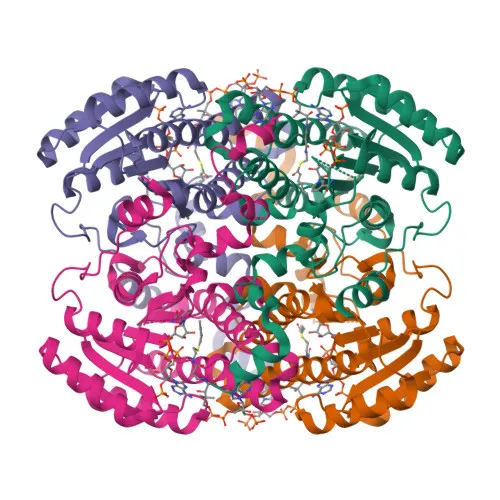
- DECR1 (2,4-dienoyl-CoA reductase, mitochondrial) is a member of the short-chain dehydrogenase/reductase family (SDR18C1), encoded by the DECR1 gene. Alternative splicing produces multiple isoforms.
- It functions as an auxiliary enzyme in mitochondrial beta-oxidation of unsaturated fatty acids. Together with enoyl-CoA delta isomerase 1 (ECI1) and Delta(3,5)-Delta(2,4)-dienoyl-CoA isomerase (ECH1), it enables reentrance of enoyl-CoA intermediates into the beta-oxidation cycle.
Related references:
PMID:26474213 - DECR1 catalyzes the NADP-dependent reduction of 2,4-dienoyl-CoA to yield trans-3-enoyl-CoA, a critical step in processing polyunsaturated fatty acids.
Related references:
PMID:15531764 - The enzyme acts primarily on polyunsaturated fatty acids and participates in metabolizing enoyl-CoA esters with double bonds at both even- and odd-numbered positions.
Related references:
PMID:15531764 - Mature DECR1 localizes to the mitochondrion after cleavage of its N-terminal transit peptide.
- Tissue expression is highest in heart, liver, and pancreas, followed by kidney, skeletal muscle, and lung.
- Post-translational modifications include acetylation and phosphorylation, as identified in proteomic studies.
Experimental Guidance and Technical Tips
- The immunogen used to generate this antibody corresponds to amino acids 35–335 of human DECR1, a region conserved across human, mouse, and rat. Researchers should verify cross-reactivity in their specific model systems.
- For Western blotting (WB), the predicted molecular weight is 36 kDa; consider using appropriate loading controls and blocking conditions to confirm band specificity.
- In ELISA applications, antibody and antigen titrations are recommended to establish optimal signal-to-noise ratios.
- As this is a polyclonal antibody, lot-to-lot variability may occur; always validate performance under your experimental conditions.
CamelBio: Your One-Stop Sourcing Bridge
CamelBio provides diagnostic manufacturers and research laboratories with a one-stop sourcing solution for IVD raw materials. For scientists studying fatty acid metabolism and mitochondrial beta-oxidation, this DECR1 polyclonal antibody is available alongside complementary products such as validated antibody pairs, recombinant proteins, and bulk ancillary reagents. Our team also specializes in the custom sourcing of rare targets, helping you streamline assay development from concept to clinic.
REQUEST A QUOTE
Our professional team will reply to you within one business day. Please feel free to contact us!