Polyclonal Antibodies
COP1 Rabbit Polyclonal Antibody for WB and ELISA - Q8NHY2
Item Number : CM0023210
Price varies based on specs and customizations
- Application
- WB, ELISA
- Cross Reactivity
- Human
- Protein Weight
- 80kDa

Shipping:
Contact us to get shipping details Enjoy On-time Dispatch Guarantee.
Why Choose Us
Easy ordering process, quality products, and dedicated support for your business success.
Core Product Specifications and Parameters
| Parameter | Value |
|---|---|
| Product Name | COP1 Rabbit pAb |
| Remarks/Alias | FAP78; RFWD2; CFAP78; RNF200; COP1 |
| Species | Human |
| Gene ID (Human) | 64326 |
| Gene ID | 64326 |
| Immunogen | Recombinant protein; Recombinant fusion protein containing a sequence corresponding to amino acids 582-731 of human COP1 (NP_071902.2) |
| Source | Rabbit |
| Category | Polyclonal Antibodies |
| Application | WB, ELISA |
| Cross Reactivity | Human |
| SWISS | Q8NHY2 |
| Protein Weight | 80kDa |
| Shipping | Ice bag |
Biological Background: COP1 Function and Localization
- COP1 (Constitutive photomorphogenesis protein 1 homolog) is an E3 ubiquitin-protein ligase that mediates ubiquitination and proteasomal degradation of target proteins, including JUN, p53, 14-3-3 sigma (SFN), MTA1, and CEBPA.
- It is a RING finger and WD repeat domain-containing protein, also known as RFWD2 or RNF200, that acts as the essential RING domain subunit in certain E3 complexes, but in the DCX DET1-COP1 complex, the catalytic subunit is RBX1.
- The protein is encoded by the COP1 gene in humans (Gene ID: 64326) and is a member of the COP/DET/FUS gene family, with alternative splicing generating multiple transcript variants.
- Subcellular localization includes nuclear speckles and the cytoplasm, indicating a dynamic distribution that may reflect its diverse functions.
- COP1 plays a critical role in regulating p53 by direct ubiquitination and degradation, thereby suppressing p53-dependent transcription and apoptosis, independent of MDM2.
- Tissue expression is ubiquitous at low levels, with higher expression observed in testis, placenta, skeletal muscle, and heart.
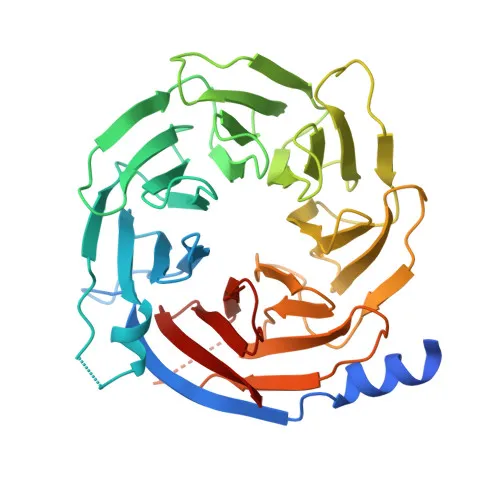
- Key structural features include a zinc-finger domain, coiled-coil regions, and WD repeats, which mediate protein-protein interactions and substrate recognition.
Experimental Guidance and Technical Tips
- The immunogen corresponds to the C-terminal region (aa 582-731) of human COP1, suggesting that the antibody may recognize full-length COP1 and possibly isoforms containing this region.
- For Western blot (WB), consider using whole-cell lysates from human cell lines known to express COP1, such as HeLa or HEK293, and validate with molecular weight ~80 kDa.
- For ELISA, the antibody may be suitable for detecting recombinant COP1 or native protein in sample matrices, but optimization of coating and detection conditions is recommended.
- Cross-reactivity has been demonstrated for human COP1; for other species, sequence homology analysis is advised before use.
- Because COP1 functions in ubiquitination complexes, co-immunoprecipitation experiments may be possible but require validation in the relevant cellular context.
CamelBio: Your One-Stop Sourcing Bridge
Whether you need validated antibody pairs, optimized polyclonal antibodies like this COP1 pAb, bulk ancillary reagents, or rare target raw-material sourcing for ubiquitination and cell survival studies, CamelBio streamlines your procurement and accelerates development from concept to clinic.
REQUEST A QUOTE
Our professional team will reply to you within one business day. Please feel free to contact us!