Polyclonal Antibodies
CLDN4 Rabbit Polyclonal Antibody for WB, IHC-P, ELISA - O14493
Item Number : CM0014896
Price varies based on specs and customizations
- Application
- WB, IHC-P, ELISA
- Cross Reactivity
- Human
- Protein Weight
- 22kDa

Shipping:
Contact us to get shipping details Enjoy On-time Dispatch Guarantee.
Why Choose Us
Easy ordering process, quality products, and dedicated support for your business success.
Core Product Specifications and Parameters
| Parameter | Value |
|---|---|
| Product Name | CLDN4 Rabbit pAb |
| Remarks/Alias | CPER; CPE-R; CPETR; CPETR1; WBSCR8; hCPE-R; CLDN4 |
| Species | Human |
| GeneID (Human) | 1364 |
| GeneID | 1364 |
| Immunogen | Synthetic peptide corresponding to a sequence within amino acids 109-209 of human CLDN4 (NP_001296.1) |
| Source | Rabbit |
| Category | Polyclonal Antibodies |
| Application | WB, IHC-P, ELISA |
| Cross Reactivity | Human |
| SWISS | O14493 |
| Protein Weight | 22kDa |
| Shipping | Ice bag |
Biological Background: Claudin-4 Function and Localization
-
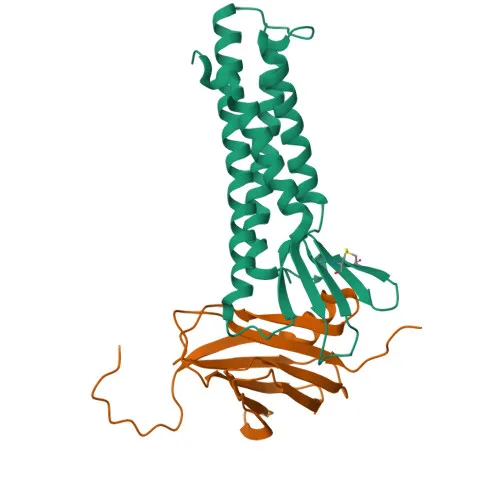
Claudin-4 is a 22 kDa integral membrane protein belonging to the claudin family of tight junction components. It is also known as the Clostridium perfringens enterotoxin receptor (CPE-R or CPE-receptor) and is encoded by the CLDN4 gene (also referred to as CPER, CPETR1, WBSCR8).
-
Claudin-4 functions by associating with other claudins to regulate tight junction structural and functional strand dynamics. It cannot form tight junction strands on its own but may coassemble with CLDN8 into strands containing anion-selective channels that confer paracellular chloride permeability, particularly in renal collecting ducts. It integrates into CLDN3 strands to modulate localized tight junction barrier properties and disrupts the strand assembly of channel-forming CLDN2 and CLDN15, inhibiting cation conductance.
Related references: PMID:35773259 PMID:36008380 -
The protein localizes specifically to the tight junction region of cell–cell contacts and is embedded in the cell membrane.
-
Claudin-4 contains four transmembrane helices, two extracellular loops, and a short intracellular C-terminal tail. The extracellular loops are critical for claudin–claudin interactions and pore formation.
-
Key post-translational modifications include phosphorylation (indicated by the “Phosphoprotein” keyword) and a conserved disulfide bond that stabilizes its tertiary structure.
-
Claudin-4 is classified under transport proteins with chloride channel and ion channel activities, playing a role in paracellular ion selectivity.
-
The gene is located within the Williams-Beuren syndrome chromosomal region (7q11.23), though CLDN4 itself is not directly implicated in the syndrome’s pathology; it is named for its genomic location.
Experimental Guidance and Technical Tips
- This rabbit polyclonal antibody was generated against a synthetic peptide spanning amino acids 109–209 of human CLDN4 (NP_001296.1). This region lies within the second extracellular loop and part of the fourth transmembrane domain, which are important for claudin interactions and enterotoxin binding.
- The antibody is suitable for Western blot (WB), immunohistochemistry on paraffin-embedded sections (IHC-P), and ELISA, as indicated by the supplier. For Western blot, expect a specific band at approximately 22 kDa under reducing conditions.
- For IHC-P, antigen retrieval methods and antibody titration should be optimized for the tissue type of interest. Consider using positive control tissues with known high CLDN4 expression, such as kidney, intestine, or ovarian epithelium.
- The antibody’s cross-reactivity is listed as human; no cross-reactivity data with other species are provided. Therefore, when working with non-human samples, validate specificity empirically.
- As with any polyclonal antibody, lot-to-lot variability may occur. It is recommended to include appropriate positive and negative controls in each experiment.
CamelBio: Your One-Stop Sourcing Bridge
CamelBio serves as a comprehensive sourcing partner for IVD raw materials, providing diagnostic manufacturers and research laboratories with reliable access to validated antibodies, antigens, and ancillary reagents. This CLDN4 rabbit polyclonal antibody supports tight junction and epithelial barrier research, and CamelBio can assist with bulk supply, customized antibody panels, and complementary targets in the claudin family. Let CamelBio streamline your supply chain from concept to clinical application.
REQUEST A QUOTE
Our professional team will reply to you within one business day. Please feel free to contact us!