Polyclonal Antibodies
CDK5RAP3 Rabbit Polyclonal Antibody for WB and ELISA - Q96JB5
Item Number : CM0018565
Price varies based on specs and customizations
- Application
- WB, ELISA
- Cross Reactivity
- Human
- Protein Weight
- 57kDa

Shipping:
Contact us to get shipping details Enjoy On-time Dispatch Guarantee.
Why Choose Us
Easy ordering process, quality products, and dedicated support for your business success.
Core Product Specifications and Parameters
| Parameter | Value |
|---|---|
| Product Name | CDK5RAP3 Rabbit pAb |
| Remarks/Alias | C53; IC53; LZAP; HSF-27; MST016; PP1553; OK/SW-cl.114; CDK5RAP3 |
| Species | Human |
| Gene ID (Human) | 80279 |
| Gene ID | 80279 |
| Immunogen | Recombinant fusion protein containing a sequence corresponding to amino acids 1-300 of human CDK5RAP3 (NP_788276.1). |
| Source | Rabbit |
| Category | Polyclonal Antibodies |
| Application | WB, ELISA |
| Cross Reactivity | Human |
| SWISS | Q96JB5 |
| Protein Weight | 57kDa |
| Shipping | Ice bag |
Biological Background: CDK5RAP3 Function and Localization
- CDK5 regulatory subunit-associated protein 3 (CDK5RAP3), also known as C53, IC53, LZAP, HSF-27, MST016, PP1553, or OK/SW-cl.114, is a multifunctional adaptor protein encoded by the CDK5RAP3 gene.
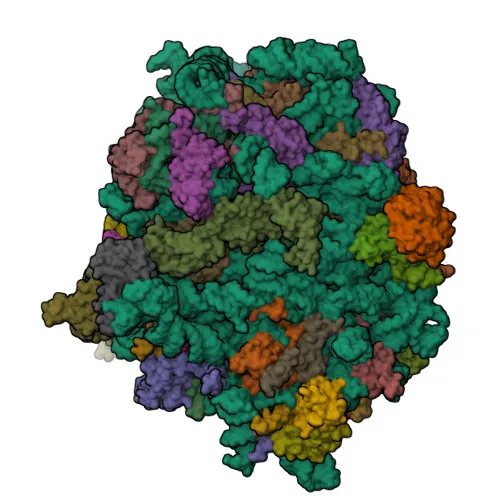
- It acts as a substrate adapter of E3 ligase complexes mediating ufmylation, the covalent attachment of the ubiquitin-like modifier UFM1 to target proteins, and is involved in critical processes such as ribosome recycling and reticulophagy (ER-phagy).
Related references: PMID:23152784, PMID:30635284, PMID:32851973, PMID:37595036 - Within the ribosome-associated UREL complex, CDK5RAP3 promotes mono-ufmylation of the 60S ribosomal protein RPL26/uL24 at Lys-134, weakening the interaction between post-termination 60S subunits and SEC61 translocons, thereby facilitating the release and recycling of large ribosomal subunits from the endoplasmic reticulum membrane.
Related references: PMID:38383785, PMID:38383789, PMID:36121123 - CDK5RAP3 also functions in transcriptional regulation by negatively controlling NF-kappa-B-mediated gene transcription through modulation of RELA phosphorylation, and plays a role in mitotic G2/M transition and DNA damage checkpoints.
Related references: PMID:17785205, PMID:20228063, PMID:15790566, PMID:19223857 - Through interaction with CDKN2A/ARF and MDM2, CDK5RAP3 may induce p53/TP53 ubiquitination, stabilization, and activation, thereby promoting G1 cell cycle arrest and inhibiting cell proliferation.
Related references: PMID:16173922 - The protein localizes to the endoplasmic reticulum membrane, cytoplasm, nucleus, and centrosome/cytoskeleton, and is ubiquitously expressed in tissues including heart, brain, placenta, lung, liver, skeletal muscle, kidney, and pancreas; isoform 3 shows expression in kidney, liver, skeletal muscle, and placenta.
Related references: PMID:10721722, PMID:12054757, PMID:12737517 - Additional functions include potential involvement in nuclear envelope rupture during apoptosis and regulation of MAPK14 activity via modulation of its dephosphorylation by PPM1D/WIP1.
Related references: PMID:23478299, PMID:21283629 - In the context of microbial infection, CDK5RAP3 may be negatively regulated by a mutant form of the hepatitis B virus large envelope protein (pre-s2) to promote mitotic entry.
Experimental Guidance and Technical Tips
- For western blotting, the antibody may detect a band around 57 kDa corresponding to full-length CDK5RAP3; using appropriate human positive control lysates (e.g., from cell lines or tissues known to express CDK5RAP3) and negative controls is advisable to confirm specificity.
- As a polyclonal antibody raised against the N-terminal 1-300 amino acid region of human CDK5RAP3, cross-reactivity with splice variants or paralogs that contain this region cannot be excluded; validation in the relevant experimental system is recommended.
- The antibody is recommended for WB and ELISA as per the manufacturer's application listing; for other techniques such as IHC or IF, feasibility and optimal working conditions should be determined empirically.
- Given the involvement of CDK5RAP3 in ufmylation and cell cycle regulation, consider complex analysis or co-immunoprecipitation experiments with relevant binding partners if the research focus extends to these pathways.
- Store the antibody as recommended upon receipt (shipped on ice bags); reiterative freeze-thaw cycles should be avoided to maintain performance.
CamelBio: Your One-Stop Sourcing Bridge
CamelBio serves as a comprehensive sourcing partner for IVD raw materials, offering diagnostic developers and researchers streamlined access to high-quality reagents like this CDK5RAP3 rabbit polyclonal antibody, which targets a critical ufmylation adaptor and cell cycle regulator. With expertise in antibody development, bulk ancillary reagent supply, and custom raw material procurement for rare or emerging targets, CamelBio supports end-to-end assay development and scale-up needs. Whether you require validated antibody pairs, optimized monoclonal or polyclonal antibodies, or specialized biochemicals, our one-stop platform simplifies the path from concept to clinic.
REQUEST A QUOTE
Our professional team will reply to you within one business day. Please feel free to contact us!