Monoclonal Antibodies
CDK1 Rabbit Monoclonal Antibody for WB, IHC-P, IF/ICC, ELISA - P06493
Item Number : CM0005064
Price varies based on specs and customizations
- Application
- WB, IHC-P, IF/ICC, ELISA
- Cross Reactivity
- Human, Mouse, Rat
- Protein Weight
- 34kDa

Shipping:
Contact us to get shipping details Enjoy On-time Dispatch Guarantee.
Why Choose Us
Easy ordering process, quality products, and dedicated support for your business success.
Core Product Specifications and Parameters
| Parameter | Value |
|---|---|
| Product Name | CDK1 Rabbit mAb |
| Remarks/Alias | CDC2; CDC28A; P34CDC2; CDK1 |
| Species | Human |
| GeneID | 983 |
| Immunogen | Synthetic peptide |
| Source | Rabbit |
| Category | Monoclonal Antibodies |
| Application | WB, IHC-P, IF/ICC, ELISA |
| Cross Reactivity | Human, Mouse, Rat |
| SWISS | P06493 |
| Protein Weight | 34kDa |
| Shipping | Ice bag |
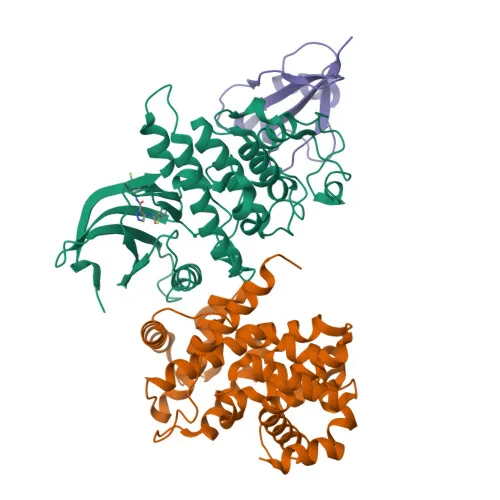
Biological Background: CDK1 Function and Localization
-
CDK1 is a serine/threonine kinase essential for cell cycle regulation, promoting G2/M transition and mitotic progression through phosphorylation of numerous substrates (PubMed:16407259, PubMed:16933150, PubMed:17459720). Related references: PMID:16407259 PMID:16933150 PMID:17459720
-
It phosphorylates lamins (LMNA, LMNB1, LMNB2) to trigger nuclear envelope breakdown at mitotic onset (PubMed:2188730, PubMed:2344612, PubMed:37788673). Related references: PMID:2188730 PMID:2344612 PMID:37788673
-
CDK1 activity is positively regulated by the CDK7/cyclin H/MAT1 CAK complex and negatively regulated by WEE1- and PKMYT1-mediated phosphorylation, particularly in response to DNA damage (PubMed:41100585, PubMed:20360007, PubMed:20395957). Related references: PMID:41100585 PMID:20360007 PMID:20395957
-
The kinase localizes to multiple subcellular compartments including the nucleus, cytoplasm, centrosome, and mitotic spindle, reflecting its diverse functions.
-
CDK1 phosphorylates key proteins involved in apoptosis (BCL2L1, CASP8), transcription (FOXO1, EZH2), and microtubule dynamics (beta-tubulins, NEDD1), linking cell cycle control to cell fate decisions (PubMed:18356527, PubMed:19917720, PubMed:20937773, PubMed:20935635, PubMed:16371510, PubMed:19509060). Related references: PMID:18356527 PMID:19917720 PMID:20937773 PMID:20935635 PMID:16371510 PMID:19509060
-
Additionally, CDK1 acts as a receptor for hepatitis C virus entry into hepatocytes.
-
Found in breast cancer tissues, highlighting its relevance in tumor biology.
Experimental Guidance and Technical Tips
- The immunogen sequence (a.a. 198-297) lies within the kinase domain; ensure the epitope is accessible in your assay format.
- For western blotting (WB), a band at ~34 kDa is expected. Use appropriate loading controls and validate detection in lysates from proliferating cells or tissues where CDK1 is expressed.
- In immunohistochemistry (IHC-P) and immunofluorescence (IF/ICC), standard antigen retrieval and permeabilization methods are recommended. CDK1 typically shows nuclear and cytoplasmic staining, with mitotic enrichment.
- For ELISA, this monoclonal antibody can be used as a detection reagent; pairing with a suitable capture antibody is advised. Validate with recombinant CDK1 or cell lysates.
- The antibody is reported to cross-react with mouse and rat CDK1; however, align the immunogen sequence with your target species and validate in your specific model system.
CamelBio: Your One-Stop Sourcing Bridge
CamelBio provides diagnostic manufacturers, laboratories, and research institutes with one-stop access to high-quality IVD raw materials, including validated monoclonal antibodies like this anti-CDK1 clone for oncology and cell cycle applications. We supply bulk quantities of antibodies, ancillary reagents, and can source rare-target raw materials to accelerate your assay development from concept to clinic.
Product Datasheet
CDK1 Rabbit Monoclonal Antibody for WB, IHC-P, IF/ICC, ELISA - P06493
REQUEST A QUOTE
Our professional team will reply to you within one business day. Please feel free to contact us!