Polyclonal Antibodies
CD160 Rabbit pAb for WB and ELISA - O95971
Item Number : CM0028577
Price varies based on specs and customizations
- Application
- WB, ELISA
- Cross Reactivity
- Human, Mouse, Rat
- Protein Weight
- 20kDa

Shipping:
Contact us to get shipping details Enjoy On-time Dispatch Guarantee.
Why Choose Us
Easy ordering process, quality products, and dedicated support for your business success.
Core Product Specifications and Parameters
| Parameter | Value |
|---|---|
| Product Name | CD160 Rabbit pAb |
| Remarks/Alias | NK1, BY55, NK28, CD160 |
| Species | Human |
| Gene ID (Human) | 11126 |
| Gene ID | 11126 |
| Immunogen | Recombinant protein, Recombinant fusion protein containing a sequence corresponding to amino acids 1-181 of human CD160 (NP_008984.1) |
| Source | Rabbit |
| Category | Polyclonal Antibodies |
| Application | WB, ELISA |
| Cross Reactivity | Human, Mouse, Rat |
| SWISS | O95971 |
| Protein Weight | 20kDa |
| Shipping | Ice bag |
Biological Background: CD160 Function and Localization
- CD160 is a receptor on immune cells that exists in both GPI-anchored and transmembrane forms, mediating stimulatory or inhibitory signals through PI3K in NK cells and through LCK/CD247 in T cells. Related references: PMID:11978774 · PMID:17307798 · PMID:19109136
- It functions as a receptor for classical and non-classical MHC class I molecules. In acute viral infection, it recognizes HLA-C to trigger NK cell cytotoxicity; on CD8+ T cells, it binds HLA-A2-B2M/viral peptide complexes to provide costimulation. Related references: PMID:12486241 · PMID:9973372
- During chronic viral infection, persistent antigen stimulation may cause CD160 to progressively inhibit TCR signaling in memory CD8+ T cells, contributing to T cell exhaustion. Related references: PMID:25255144
- On endothelial cells, CD160 recognizes HLA-G and controls angiogenesis in immune-privileged sites. Related references: PMID:16809620
- CD160 engages in bidirectional signaling with TNFRSF14: it down-regulates CD28 costimulation on activated CD4+ T cells (restricting memory/alloantigen responses) and provides stimulatory signals to NK cells (by similarity). Related references: PMID:18193050
- The protein is expressed predominantly in NK cells, cytotoxic T lymphocytes (including both alpha-beta and gamma-delta subsets), memory/effector CD8+ T cells, endothelial cells, and at lower levels in monocytes and B cells. A specific isoform (isoform 3) is exclusive to activated NK cells. Related references: PMID:11978774 · PMID:18193050 · PMID:25255144 · PMID:9743336 · PMID:16809620 · PMID:23761635 · PMID:19109136
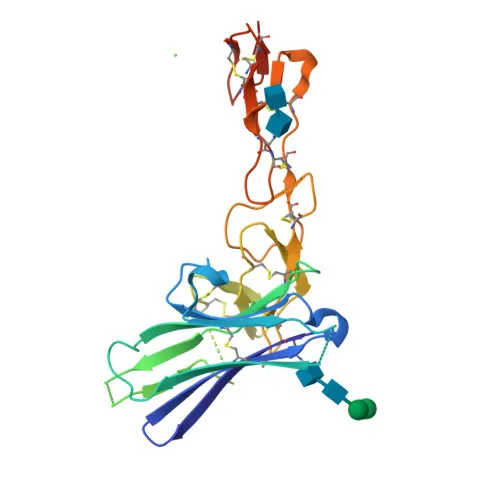
- Structurally, CD160 is a GPI-anchored glycoprotein with an immunoglobulin domain and disulfide bonds; a soluble form can be released by activated lymphocytes to potentially limit effector functions.
Experimental Guidance and Technical Tips
- The immunogen covers the N-terminal extracellular region (residues 1-181) of human CD160, suggesting recognition of the ligand-binding domain. When performing WB, consider that the ~20 kDa band may represent the unglycosylated backbone; mature GPI-anchored and soluble forms can exhibit higher molecular weights due to glycosylation and anchor modifications.
- For ELISA applications, the antibody may detect both membrane-bound and soluble CD160; optimizing the coating format and using appropriate recombinant standards is recommended.
- Cross-reactivity with mouse and rat has been reported, but epitope conservation should be verified in the experimental system of interest—especially if using genetically modified models.
- As a polyclonal antibody, lot-to-lot consistency should be assessed with positive and negative control lysates or recombinant protein; include appropriate secondary antibody controls.
- For functional studies, note that CD160 can mediate both costimulatory and inhibitory outcomes depending on the cellular context; parallel readouts of immune activation markers are advised.
CamelBio: Your One-Stop Sourcing Bridge
CamelBio is a dedicated one-stop platform for IVD raw materials, empowering diagnostic developers with validated antibodies, optimized pairs, and bulk ancillary reagents. This CD160 polyclonal antibody exemplifies our capability to supply research-use reagents for immune checkpoint and lymphocyte receptor studies. Beyond individual catalog items, we offer tailored solutions—from rare-target antibody generation to conjugated monoclonals and custom antigen production—supporting your entire assay development pipeline from proof-of-concept to scalable manufacturing.
REQUEST A QUOTE
Our professional team will reply to you within one business day. Please feel free to contact us!