Polyclonal Antibodies
Caveolin-1 Polyclonal Antibody (Rabbit) for WB, IF-P, IHC-P, ELISA - Q03135
Item Number : CM0023732
Price varies based on specs and customizations
- Application
- WB, IF-P, IHC-P, ELISA
- Cross Reactivity
- Human, Mouse, Rat
- Protein Weight
- 20kDa

Shipping:
Contact us to get shipping details Enjoy On-time Dispatch Guarantee.
Why Choose Us
Easy ordering process, quality products, and dedicated support for your business success.
Core Product Specifications and Parameters
| Parameter | Value |
|---|---|
| Product Name | Caveolin-1 Rabbit pAb |
| Remarks/Alias | CGL3; PPH3; BSCL3; LCCNS; VIP21; MSTP085; Caveolin-1 |
| Species | Human |
| Gene ID (Human) | 857 |
| Gene ID | 857 |
| Immunogen | Recombinant fusion protein containing a sequence corresponding to amino acids 1-80 of human Caveolin-1 (NP_001744.2) |
| Source | Rabbit |
| Category | Polyclonal Antibodies |
| Application | WB, IF-P, IHC-P, ELISA |
| Cross Reactivity | Human, Mouse, Rat |
| SWISS | Q03135 |
| Protein Weight | 20kDa |
| Shipping | Ice bag |
Biological Background: Caveolin-1 Function and Localization
- Caveolin-1 acts as a scaffolding protein within caveolar membranes. Related references: PMID:11751885
- It mediates the recruitment of CAVIN proteins (CAVIN1/2/3/4) to caveolae. Related references: PMID:19262564
- Caveolin-1 binds to DPP4, inducing T-cell proliferation and NF-kappa-B activation in a T-cell receptor/CD3-dependent manner. Related references: PMID:17287217
- The protein negatively regulates TGFB1-mediated activation of SMAD2/3 by promoting internalization and degradation of TGFBR1 from membrane rafts. Related references: PMID:25893292
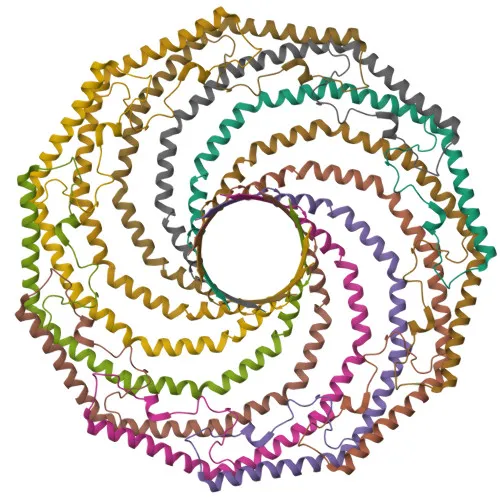
- Caveolin-1 forms a stable heterooligomeric complex with CAV2, targets lipid rafts to drive caveolae formation, and interacts directly with G protein alpha subunits to potentially regulate their activity.
- Subcellular localization includes the Golgi apparatus membrane, cell membrane, caveolae, membrane rafts, trans-Golgi network, and cytoplasm.
- Expressed prominently in skeletal muscle, liver, stomach, lung, kidney, heart, and brain; post-translational modifications include acetylation, palmitoylation, phosphorylation, and ubiquitination, and it is linked to congenital generalized lipodystrophy and diabetes mellitus.
Experimental Guidance and Technical Tips
- The immunogen encompasses amino acids 1-80 at the N-terminus of human Caveolin-1; consider sequence alignment to assess epitope conservation across species and isoforms.
- For Western blot analysis, a band around 20 kDa is expected; validate in samples expressing Caveolin-1 and include positive and negative controls.
- For immunofluorescence (IF-P) and immunohistochemistry (IHC-P), optimize fixation and permeabilization protocols to balance membrane and cytoplasmic signal detection.
- ELISA applications may require coating with recombinant protein or cell lysates; include appropriate standard curves and blanks.
- Validate cross-reactivity in the relevant model systems (human, mouse, rat) using appropriate cell lines or tissues.
CamelBio: Your One-Stop Sourcing Bridge
CamelBio is your one-stop IVD raw-material sourcing partner, offering validated antibody pairs, optimized monoclonal and polyclonal antibodies, bulk ancillary reagents, and rare target sourcing. For research on caveolae biology, membrane trafficking, and signaling pathways involving Caveolin-1, we supply high-quality antibodies and related reagents to support assay development and manufacturing. Let CamelBio accelerate your project from concept to clinic with reliable, integrated raw-material solutions.
Product Datasheet
Caveolin-1 Polyclonal Antibody (Rabbit) for WB, IF-P, IHC-P, ELISA - Q03135
REQUEST A QUOTE
Our professional team will reply to you within one business day. Please feel free to contact us!