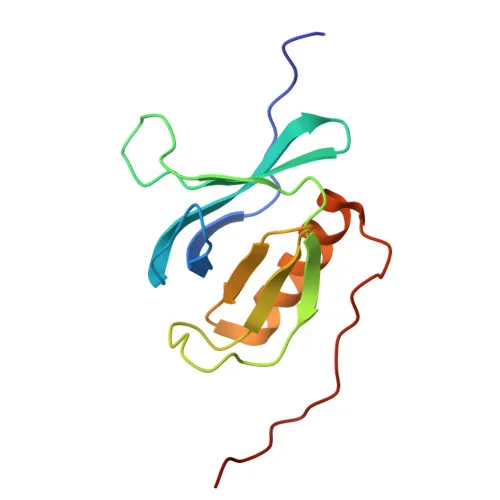
Polyclonal Antibodies
CADPS Rabbit Polyclonal Antibody for IHC-P, ELISA - Q9ULU8
Item Number : CM0022499
Price varies based on specs and customizations
- Application
- IHC-P, ELISA
- Cross Reactivity
- Human
- Protein Weight
- 153kDa

Shipping:
Contact us to get shipping details Enjoy On-time Dispatch Guarantee.
Why Choose Us
Easy ordering process, quality products, and dedicated support for your business success.
Core Product Specifications and Parameters
| Parameter | Value |
|---|---|
| Product Name | CADPS Rabbit pAb |
| Remarks/Alias | CAPS; CAPS1; CADPS1; UNC-31; CADPS |
| Species | Human |
| GeneID (Human) | 8618 |
| GeneID | 8618 |
| Immunogen | Recombinant fusion protein containing a sequence corresponding to amino acids 1020-1100 of human CADPS (NP_899630.1) |
| Source | Rabbit |
| Category | Polyclonal Antibodies |
| Application | IHC-P, ELISA |
| Cross Reactivity | Human |
| SWISS | Q9ULU8 |
| Protein Weight | 153kDa |
| Shipping | Ice bag |
Biological Background: CADPS Function and Localization
- CADPS (Calcium-dependent secretion activator 1), also known as CAPS-1 or CAPS1, is a calcium-binding protein encoded by the CADPS gene (GeneID: 8618). It belongs to the CAPS family and is highly conserved across species.
- It functions primarily in the Ca²⁺-dependent exocytosis of large dense-core vesicles (DCVs) containing neurotransmitters and neuropeptides, acting at a prefusion step to facilitate vesicle-membrane fusion. It may also participate in small synaptic vesicle exocytosis.
- CADPS interacts with phosphatidylinositol 4,5-bisphosphate (PtdIns(4,5)P2) at the membrane, and its activity is critical for catecholamine loading into DCVs and the biogenesis/maintenance of mature secretory vesicles.
- Subcellularly, CADPS localizes to the synapse, cytoplasmic vesicles, secretory vesicles, and specifically the membrane of neuronal dense core vesicles, consistent with its role in regulated secretion.
- Tissue specificity: highly expressed in neural and endocrine secretory tissues, including brain (cerebellum, cerebral cortex, medulla, occipital lobe, frontal/temporal lobes, putamen) and pancreas; lower expression in heart and fetal tissues.
- The protein undergoes alternative splicing and is phosphorylated (phosphoprotein). Its molecular weight is approximately 153 kDa (predicted 152.8 kDa), and it is annotated with keywords: calcium, lipid-binding, metal-binding, protein transport, exocytosis, and synapse.
Experimental Guidance and Technical Tips
- Since this antibody is a rabbit polyclonal raised against a recombinant fragment (aa 1020-1100), it may recognize multiple epitopes on the C-terminal region of human CADPS. For IHC-P, consider using human brain or pancreatic tissue sections as positive controls, given the high expression in these tissues.
- For ELISA applications, the immunogen fragment itself can serve as a positive control coating antigen to assess antibody titer and specificity.
- Cross-reactivity is reported for human CADPS; if working with other species, validate reactivity due to sequence homology in this region.
- The protein has a predicted molecular weight of ~153 kDa; in western blot applications (though not listed), one may observe a band around this size, but confirm the suitability of this antibody in your system.
CamelBio: Your One-Stop Sourcing Bridge
CamelBio offers a comprehensive portfolio of IVD raw materials, including validated polyclonal antibodies like this anti-CADPS pAb for neuroscience and endocrine research. We support manufacturers with optimized antibody pairs, bulk reagent supply, and custom sourcing for rare targets, streamlining the transition from discovery to diagnostics.
REQUEST A QUOTE
Our professional team will reply to you within one business day. Please feel free to contact us!