Monoclonal Antibodies
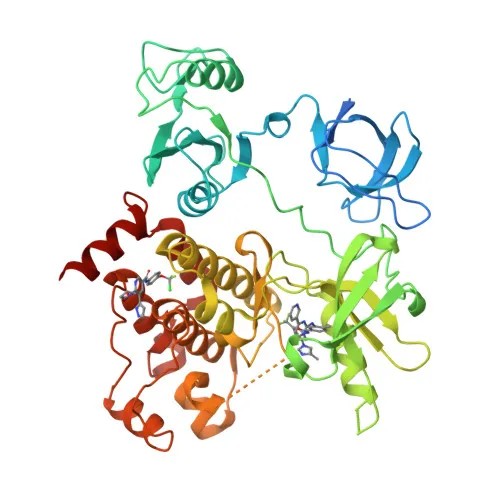
c-Abl (ABL1) Rabbit Monoclonal Antibody for WB, ELISA - P00519
Item Number : CM0007670
Price varies based on specs and customizations
- Application
- WB, ELISA
- Cross Reactivity
- Human
- Protein Weight
- 123kDa

Shipping:
Contact us to get shipping details Enjoy On-time Dispatch Guarantee.
Why Choose Us
Easy ordering process, quality products, and dedicated support for your business success.
Core Product Specifications and Parameters
| Parameter | Value |
|---|---|
| Product Name | c-Abl Rabbit mAb |
| Remarks/Alias | ABL; JTK7; p150; c-ABL; v-abl; CHDSKM; c-ABL1; BCR-ABL; bcr/abl; c-Abl |
| Species | Human |
| GeneID (Human) | 25 |
| GeneID | 25 |
| Immunogen | Recombinant fusion protein containing a sequence corresponding to amino acids 1000-1130 of human c-Abl (NP_005148.2). |
| Source | Rabbit |
| Category | Monoclonal Antibodies |
| Application | WB, ELISA |
| Cross Reactivity | Human |
| SWISS | P00519 |
| Protein Weight | 123kDa |
| Shipping | Ice bag |
Biological Background: c-Abl Function and Localization
- c-Abl (Tyrosine-protein kinase ABL1) is a widely expressed non-receptor tyrosine kinase involved in cell growth, survival, and differentiation. It localizes to the cytoplasm, cytoskeleton, nucleus, and mitochondria.
- ABL1 regulates cell adhesion and motility by phosphorylating key adaptor proteins such as BCAR1, CRK, and NEDD9. Related references: PMID:22810897
- Under oxidative stress, ABL1 translocates to mitochondria where it mediates dysfunction and cell death, partly through phosphorylation of PRKD2 at Tyr-717. Related references: PMID:28428613
- In the nucleus, ABL1 participates in DNA damage response and apoptosis by phosphorylating DNA repair factors (DDB1, RAD51, WRN) and proapoptotic proteins (TP73, CASP9).
- ABL1 regulates receptor endocytosis and autophagy: it promotes EGFR endocytosis, modulates B-cell receptor trafficking, and positively regulates lysosomal function in autophagy.
- Pathogens exploit ABL1 signaling to reorganize the host actin cytoskeleton; ABL1 phosphorylates microbial effectors like Vaccinia A36R and H. pylori CagA.
- Additionally, ABL1 positively regulates T-cell migration and homing, and controls its own activity through autocatalysis and ABI1 phosphorylation.
Experimental Guidance and Technical Tips
- The immunogen is a recombinant protein corresponding to the C-terminal region (amino acids 1000–1130) of human c-Abl. This region may be present in known isoforms and fusion variants (e.g., BCR-ABL); cross-reactivity should be assessed in relevant models.
- For Western blotting, a band of approximately 123 kDa is expected. Consider using appropriate positive controls (e.g., K562 cells) and validate detection sensitivity in your sample system.
- This antibody is recommended for ELISA; optimal coating antigen concentration and detection antibodies should be empirically determined for your assay format.
- Since ABL1 is a kinase involved in multiple signaling pathways, include phosphatase inhibitors during sample preparation to preserve phosphorylation-dependent epitopes if relevant.
CamelBio: Your One-Stop Sourcing Bridge
CamelBio is your dedicated partner for IVD raw materials, providing seamless access to products, technical services, and consulting from concept to clinic. This c-Abl monoclonal antibody supports oncology and cell signaling research, complementing our portfolio of validated monoclonal/polyclonal antibodies, bulk ancillary reagents, and rare-target sourcing. For customized raw-material solutions, CamelBio solves your toughest procurement challenges.
REQUEST A QUOTE
Our professional team will reply to you within one business day. Please feel free to contact us!
Related Articles
Engineering the Weakest Link: Recombinant Antibodies for Reliable Multi-Analyte Biosensors
Learn how engineered recombinant antibodies improve multi-analyte biosensors through uniform recognition, oriented surfaces, avidity, and wider dynamic range.
From Molecular Binding to Manufacturing Discipline: How Reliable ELISA Kits Are Engineered
Explore the four operational mechanisms that govern ELISA kit performance, from passive coating and washing to signal generation and scalable IVD manufacturing.