Polyclonal Antibodies
BRE Rabbit Polyclonal Antibody - Q9NXR7
Item Number : CM0016366
Price varies based on specs and customizations
- Application
- WB, IF/ICC, IF-P, ELISA
- Cross Reactivity
- Human, Mouse, Rat
- Protein Weight
- 44kDa

Shipping:
Contact us to get shipping details Enjoy On-time Dispatch Guarantee.
Why Choose Us
Easy ordering process, quality products, and dedicated support for your business success.
Core Product Specifications and Parameters
| Parameter | Value |
|---|---|
| Product Name | BRE Rabbit pAb |
| Remarks/Alias | BRE; BRCC4; BRCC45 |
| Species | Human |
| GeneID (human) | 9577 |
| GeneID | 9577 |
| Immunogen | Recombinant fusion protein containing a sequence corresponding to amino acids 51-229 of human BRE (NP_954661.1) |
| Source | Rabbit |
| Category | Polyclonal Antibodies |
| Application | WB, IF/ICC, IF-P, ELISA |
| Cross Reactivity | Human, Mouse, Rat |
| SWISS | Q9NXR7 |
| Protein Weight | 44kDa |
| Shipping | Ice bag |
Biological Background: BRE Function and Localization
-
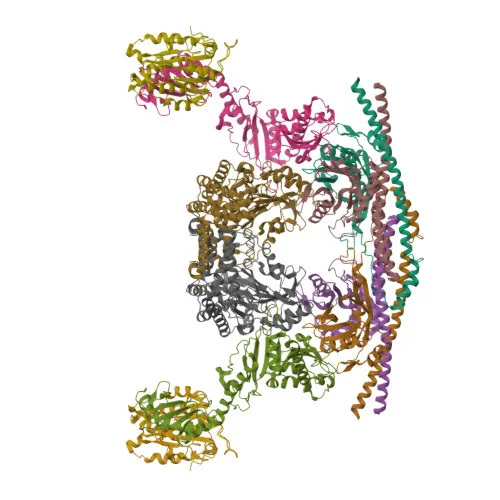
BRE, also known as BRCC45 or BRCC4, is a core component of both the BRCA1-A and BRISC complexes, functioning as an adapter that bridges BABAM1/NBA1 to the rest of the complex to maintain structural integrity and modulate E3 ubiquitin ligase activity (PubMed:19261748, PubMed:21282113).
Related references:
PMID:19261748 PMID:21282113 -
Within the BRCA1-A complex, BRE participates in the DNA damage response by recognizing 'Lys-63'-linked ubiquitinated histones H2A and H2AX at double-strand breaks, and contributing to the complex's deubiquitinase activity that specifically removes these ubiquitin marks (PubMed:17525341, PubMed:19261746, PubMed:19261748).
Related references:
PMID:17525341 PMID:19261746 PMID:19261748 -
As part of the BRISC complex, BRE is required for deubiquitinating 'Lys-63'-linked ubiquitin on substrates such as NUMA1 to ensure normal mitotic spindle assembly and proper microtubule attachment to kinetochores (PubMed:19214193, PubMed:25283148, PubMed:26195665).
Related references:
PMID:19214193 PMID:25283148 PMID:26195665 -
The BRISC complex also plays a role in interferon signaling by deubiquitinating the interferon receptor IFNAR1, which enhances receptor stability and cell surface expression; this activity down-regulates the cellular response to bacterial lipopolysaccharide (PubMed:24075985).
Related references:
PMID:24075985 -
BRE may function as a death receptor-associated anti-apoptotic protein that inhibits the mitochondrial apoptotic pathway, and it may regulate TNF signaling through indirect interactions with TNFRSF1A (PubMed:15465831).
Related references:
PMID:15465831 -
BRE is a ubiquitously expressed protein localizing to both the cytoplasm and nucleus, with highest expression levels observed in placenta; it undergoes acetylation and phosphorylation, and alternative splicing produces multiple isoforms.
Experimental Guidance and Technical Tips
- The immunogen (aa 51-229) targets a central region of BRE; consider verifying cross-reactivity in human, mouse, and rat samples by Western blotting, where a band of approximately 44 kDa is expected.
- For immunofluorescence applications, optimize fixation and permeabilization conditions to detect BRE in both nuclear and cytoplasmic compartments.
- When using ELISA, include a recombinant protein standard (e.g., the immunogen) to generate a calibration curve.
CamelBio: Your One-Stop Sourcing Bridge
CamelBio provides diagnostic manufacturers and research institutes with streamlined access to IVD raw materials and technical support. Our offerings include validated antibody pairs, optimized polyclonal antibodies like this anti-BRE, bulk ancillary reagents, and sourcing of rare target proteins—facilitating your DNA damage and apoptosis research needs.
REQUEST A QUOTE
Our professional team will reply to you within one business day. Please feel free to contact us!