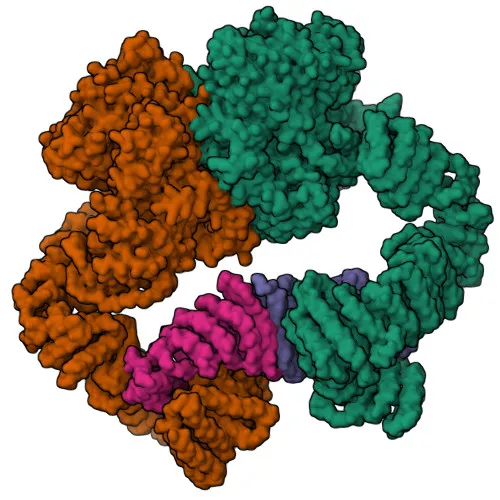
Polyclonal Antibodies
ATR Rabbit Polyclonal Antibody for WB, ELISA - Q13535
Item Number : CM0024774
Price varies based on specs and customizations
- Application
- WB, ELISA
- Cross Reactivity
- Human
- Protein Weight
- 301kDa

Shipping:
Contact us to get shipping details Enjoy On-time Dispatch Guarantee.
Why Choose Us
Easy ordering process, quality products, and dedicated support for your business success.
Core Product Specifications and Parameters
| Parameter | Value |
|---|---|
| Product Name | ATR Rabbit pAb |
| Remarks/Alias | FRP1; MEC1; SCKL; FCTCS; SCKL1; ATR |
| Species | Human |
| GeneID (human) | 545 |
| GeneID | 545 |
| Immunogen | Recombinant protein |
| Source | Rabbit |
| Category | Polyclonal Antibodies |
| Application | WB, ELISA |
| Cross Reactivity | Human |
| SWISS | Q13535 |
| Protein Weight | 301kDa |
| Shipping | Ice bag |
Biological Background: ATR Function and Localization
- ATR is a serine/threonine kinase that acts as a sensor of DNA damage and replication stress, activating checkpoint signaling upon genotoxic insults such as ionizing radiation, UV, or replication fork stalling. Related references: PMID:10597277, PMID:10608806, PMID:10859164
- It phosphorylates multiple downstream targets including BRCA1, CHEK1, RPA2, and p53/TP53, leading to inhibition of DNA replication and mitosis and promotion of DNA repair, recombination, and apoptosis. Related references: PMID:11114888, PMID:11418864, PMID:11865061
- ATR phosphorylates histone H2AX at Ser-139 at DNA damage sites, a key event in the DNA damage response. Related references: PMID:11673449
- It is required for FANCD2 ubiquitination and is critical for maintaining fragile site stability and proper centrosome duplication. Related references: PMID:15314022, PMID:12526805
- ATR restricts CDK1 activity during S phase, regulating the S-G2 transition and preventing premature mitotic entry. Related references: PMID:30139873
- The protein localizes to the nucleus, chromosomes, and nuclear envelope, where it senses mechanical stress and mediates checkpoint signaling via CHEK1 phosphorylation. Related references: PMID:25083873
- In response to DNA damage, ATR promotes nuclear envelope rupture by phosphorylating lamin A/C at Ser-282, and it is also involved in micronuclei envelope rupture via Ser-395 phosphorylation, triggering the cGAS-STING innate immune pathway. Related references: PMID:37832547, PMID:37788673
- ATR is ubiquitously expressed with highest levels in testis; isoform 2 shows restricted expression in pancreas, placenta, and liver.
Experimental Guidance and Technical Tips
- The immunogen is a recombinant fragment corresponding to amino acids 400–650 of human ATR; consider verifying cross-reactivity in other species if required.
- For Western blot, the large molecular weight (301 kDa) may require optimized transfer conditions (e.g., low methanol or wet transfer) and extended electrophoresis for proper resolution.
- ATR protein levels and phosphorylation status are regulated by DNA damage; consider appropriate treatment controls (e.g., UV or replication stress inducers) to assess antibody performance.
CamelBio: Your One-Stop Sourcing Bridge
CamelBio offers a comprehensive one-stop platform for IVD raw material sourcing, including validated antibody pairs and bulk reagents. This anti-ATR polyclonal antibody supports research into DNA damage signaling and checkpoint pathways, and CamelBio can assist with custom procurement of related ancillary reagents. Contact us to streamline your supply chain from concept to clinic.
REQUEST A QUOTE
Our professional team will reply to you within one business day. Please feel free to contact us!