Monoclonal Antibodies
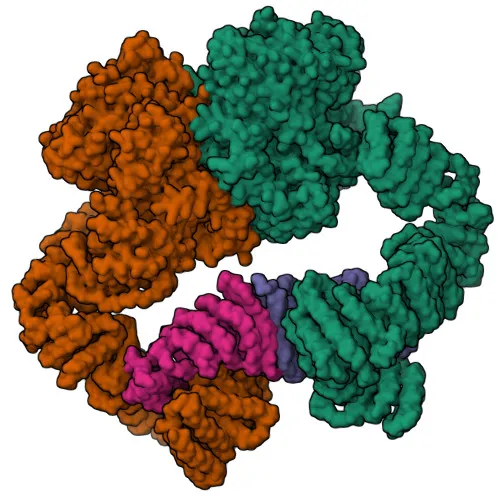
ATR Rabbit Monoclonal Antibody for WB, IF/ICC, ELISA - Q13535
Item Number : CM0005019
Price varies based on specs and customizations
- Application
- WB, IF/ICC, ELISA
- Cross Reactivity
- Human
- Protein Weight
- 301kDa

Shipping:
Contact us to get shipping details Enjoy On-time Dispatch Guarantee.
Why Choose Us
Easy ordering process, quality products, and dedicated support for your business success.
Core Product Specifications and Parameters
| Parameter | Value |
|---|---|
| Product Name | ATR Rabbit mAb |
| Remarks/Alias | FRP1, MEC1, SCKL, FCTCS, SCKL1, ATR |
| Species | Human |
| GeneID | 545 |
| Immunogen | Synthetic peptide corresponding to a sequence within amino acids 400-500 of human ATR (NP_001175.2) |
| Source | Rabbit |
| Category | Monoclonal Antibodies |
| Application | WB, IF/ICC, ELISA |
| Cross Reactivity | Human |
| SWISS | Q13535 |
| Protein Weight | 301kDa |
| Shipping | Ice bag |
Biological Background: ATR Function and Localization
- ATR is a serine/threonine-protein kinase that functions as a DNA damage sensor, activating checkpoint signaling upon genotoxic stresses including ionizing radiation, UV, and replication stalling. Related references: PMID:10597277, PMID:10608806, PMID:10859164
- It recognizes the [ST]-Q consensus motif and phosphorylates key substrates such as BRCA1, CHEK1, MCM2, RAD17, and p53/TP53, collectively inhibiting DNA replication and mitosis while promoting repair, recombination, and apoptosis. Related references: PMID:11114888, PMID:11418864, PMID:11865061
- ATR phosphorylates histone variant H2AX at Ser-139 at DNA damage sites, a hallmark of the DNA damage response. Related references: PMID:11673449
- It is required for FANCD2 ubiquitination and is critical for maintaining fragile site stability and regulating centrosome duplication. Related references: PMID:15314022, PMID:12526805
- ATR acts as a regulator of the S-G2 transition by restricting CDK1 activity during S-phase to prevent premature mitotic entry. Related references: PMID:30139873
- At the nuclear envelope, ATR functions as a mechanical stress sensor, mediates DNA damage-induced nuclear envelope rupture via LMNA phosphorylation, and triggers innate immune activation through micronuclei rupture and the cGAS-STING pathway. Related references: PMID:25083873, PMID:37832547, PMID:37788673
- ATR is ubiquitously expressed with highest levels in testis; an alternative isoform 2 is detected in pancreas, placenta, and liver.
Experimental Guidance and Technical Tips
- The immunogen corresponds to a region within amino acids 400-500 of human ATR; consider using this sequence region for competitive or control experiments.
- For Western blot (WB), note the large protein size (~301 kDa); optimize transfer conditions for high-molecular-weight proteins (e.g., low-acrylamide gels, extended transfer times).
- For immunofluorescence (IF/ICC), validate nuclear and nuclear envelope localization patterns consistent with ATR's subcellular distribution.
- For ELISA, ensure peptide or recombinant protein coating; confirm antibody specificity with appropriate controls.
- Cross-reactivity is reported for human; if extending to other species, verify sequence homology in the immunogen region.
CamelBio: Your One-Stop Sourcing Bridge
At CamelBio, we understand that developing reliable IVD assays requires high-quality raw materials. Our anti-ATR monoclonal antibody is part of a comprehensive portfolio supporting DNA damage and cell cycle research. Whether you need validated antibody pairs, optimized monoclonal/polyclonal antibodies, bulk ancillary reagents, or assistance with rare target sourcing, our team is ready to streamline your procurement process from research to diagnostic application.
REQUEST A QUOTE
Our professional team will reply to you within one business day. Please feel free to contact us!