Monoclonal Antibodies
ATAD2 Rabbit mAb for WB, ELISA - Q6PL18
Item Number : CM0003444
Price varies based on specs and customizations
- Application
- WB, ELISA
- Cross Reactivity
- Human
- Protein Weight
- 159kDa

Shipping:
Contact us to get shipping details Enjoy On-time Dispatch Guarantee.
Why Choose Us
Easy ordering process, quality products, and dedicated support for your business success.
Core Product Specifications and Parameters
| Parameter | Value |
|---|---|
| Product Name | ATAD2 Rabbit mAb |
| Remarks/Alias | ANCCA; CT137; PRO2000; ATAD2 |
| Species | Human |
| Gene ID (Human) | 29028 |
| Immunogen | Synthetic Peptide: A synthetic peptide corresponding to a sequence within amino acids 1-100 of human ATAD2 (Q6PL18) |
| Source | Rabbit |
| Category | Monoclonal Antibodies |
| Application | WB, ELISA |
| Cross Reactivity | Human |
| SWISS | Q6PL18 |
| Protein Weight | 159kDa |
| Shipping | Ice bag |
Biological Background: ATAD2 Function and Localization
- ATAD2, also known as ANCCA (AAA nuclear coregulator cancer-associated protein), is an ATPase family AAA domain-containing protein that may function as a transcriptional coactivator for the estrogen receptor ESR1, regulating genes like CCND1, MYC, and E2F1.
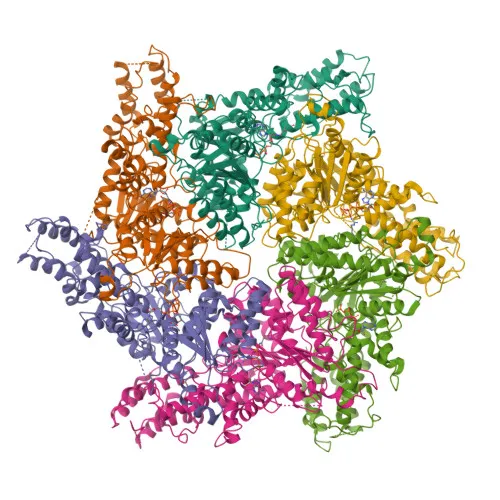
- It contains a bromodomain that likely facilitates binding to acetylated histones, and an AAA+ ATPase domain, suggesting roles in chromatin remodeling and histone hyperacetylation.
- ATAD2 is implicated in estrogen-induced cell proliferation and cell cycle progression in breast cancer cells, making it a potential therapeutic target.
- The protein localizes to the nucleus, consistent with its role in transcription regulation and chromatin interaction.
- Post-translational modifications include phosphorylation, ubiquitination (Ubl conjugation), and isopeptide bond formation, which may modulate its activity and stability.
- Tissue specificity: Highly expressed in estrogen receptor-positive breast tumors and osteosarcoma tumors, underscoring its relevance in cancer biology.
- Alternative splicing generates multiple isoforms, though the canonical sequence corresponds to a molecular weight of ~158.6 kDa.
Experimental Guidance and Technical Tips
- For Western Blot, consider using whole cell lysates from ER-positive breast cancer cell lines (e.g., MCF-7) to detect endogenous ATAD2 at approximately 159 kDa. Validate antibody specificity using appropriate controls and optimize loading amounts.
- In ELISA, the synthetic peptide immunogen (amino acids 1-100) can serve as a positive control to confirm antibody binding. Titrate the antibody and peptide concentrations for optimal signal-to-noise ratio.
- Due to the reported human specificity, cross-reactivity with other species has not been characterized; validate in your model system if needed.
- Given the large protein size, ensure sufficient protein transfer and membrane blocking in Western Blot protocols. Consider using low-fluorescence PVDF membranes for detection.
CamelBio: Your One-Stop Sourcing Bridge
CamelBio serves as a comprehensive sourcing partner for IVD raw materials, providing validated antibody pairs, optimized monoclonal antibodies, and bulk ancillary reagents for diagnostic developers and research labs. For targets like ATAD2, which are critical in cancer and transcriptional regulation research, CamelBio can facilitate access to rare-target raw materials and customized production, streamlining your journey from concept to clinic. Whether you need consistent lot-to-lot performance or technical consulting, our one-stop platform supports your assay development needs.
REQUEST A QUOTE
Our professional team will reply to you within one business day. Please feel free to contact us!