Methylated Antibodies
Asymmetric DiMethyl-Histone H4-R3 (P62805) Rabbit Polyclonal Antibody for WB, IHC-P, ELISA
Item Number : CM0000276
Price varies based on specs and customizations
- Application
- WB, IHC-P, ELISA
- Cross Reactivity
- Human, Mouse, Rat, Other (Wide Range Predicted)
- Protein Weight
- 11kDa

Shipping:
Contact us to get shipping details Enjoy On-time Dispatch Guarantee.
Why Choose Us
Easy ordering process, quality products, and dedicated support for your business success.
Core Product Specifications and Parameters
| Parameter | Value |
|---|---|
| Product Name | Asymmetric DiMethyl-Histone H4-R3 Rabbit pAb |
| Remarks/Alias | H4; H4/n; H4C1; H4C2; H4C3; H4C4; H4C5; H4C6; H4C8; H4C9; H4F2; H4FN; FO108; H4-16; H4C11; H4C12; H4C13; H4C15; H4C16; HIST2H4; HIST2H4A; Asymmetric DiMethyl-Histone H4-R3 |
| Species | Human |
| GeneID (Human) | H4 |
| GeneID | 8359 |
| Immunogen | Synthetic peptide; A synthetic asymmetric dimethylated peptide around R3 of human HIST2H4A (NP_003529.1) |
| Source | Rabbit |
| Category | Methylated Antibodies |
| Application | WB, IHC-P, ELISA |
| Cross Reactivity | Human, Mouse, Rat, Other (Wide Range Predicted) |
| SWISS | P62805 |
| Protein Weight | 11kDa |
| Shipping | Ice bag |
Biological Background: Histone H4 Function and Localization
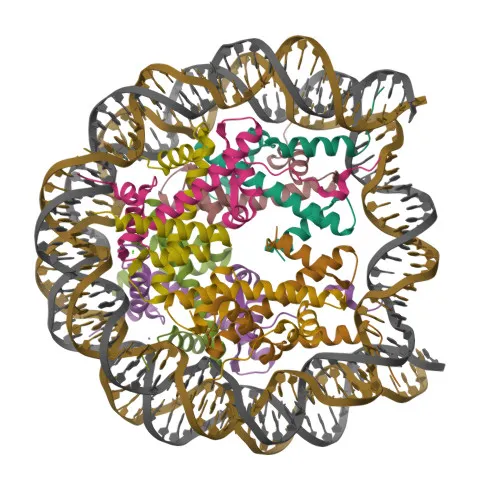
Histone H4 is a core component of the nucleosome, the fundamental unit of chromatin. Together with histones H2A, H2B, and H3, it forms an octamer around which DNA is wrapped, compacting the genome and regulating access to the genetic material. This structural role is essential for transcription regulation, DNA repair, DNA replication, and chromosomal stability. The functions of histones are highly regulated by a complex array of post-translational modifications (PTMs), collectively referred to as the "histone code," which alter chromatin dynamics and protein interactions.
Asymmetric dimethylation of histone H4 at arginine 3 (H4R3me2a) is a specific PTM catalyzed by protein arginine methyltransferase 1 (PRMT1). This modification occurs on the flexible N-terminal tail of H4 and has been implicated in transcriptional activation and epigenetic regulation. The modification creates a docking site for effector proteins that interpret the methylation mark, thereby influencing gene expression patterns.
Related references: PMID:11387442, PMID:11448779, PMID:15345777
Histone H4 is predominantly localized to the nucleus and is associated with chromosomes throughout the cell cycle. Its highly conserved sequence across eukaryotes underscores its fundamental biological importance. In addition to asymmetric dimethylation, the N-terminal tail of H4 undergoes many other modifications, including acetylation, phosphorylation, and symmetric dimethylation, which collectively orchestrate chromatin function.
This antibody specifically recognizes the asymmetric dimethylation mark at R3, enabling detailed study of this epigenetic modification in various biological contexts.
Experimental Guidance and Technical Tips
- The immunogen is a synthetic peptide carrying the asymmetric dimethyl-R3 modification. To confirm antibody specificity, consider performing peptide competition assays using both methylated and unmethylated peptides.
- For Western blotting, a standard histone extraction protocol is recommended to enrich for chromatin-bound proteins. The predicted molecular weight of histone H4 is ~11 kDa. Run SDS-PAGE under appropriate conditions (e.g., 15% gel) for optimal resolution of low-molecular-weight histones.
- In immunohistochemistry (paraffin), antigen retrieval may be necessary. Optimize the retrieval method and antibody dilution using appropriate positive and negative tissue controls.
- This antibody is predicted to cross-react with human, mouse, rat, and other species. However, cross-reactivity in your specific experimental system should be verified using available controls.
- As with any polyclonal antibody, lot-to-lot consistency should be assessed for critical quantitative assays. Consider including a loading control such as total histone H4 or a housekeeping protein.
CamelBio: Your One-Stop Sourcing Bridge
CamelBio provides diagnostic manufacturers, labs, and research institutes with one-stop access to IVD raw materials, technical services, and consulting—covering every stage from concept to clinic. For epigenetic research targeting histone H4 modifications, CamelBio can supply validated antibody pairs, optimized monoclonal and polyclonal antibodies, bulk ancillary reagents, and rare target raw-material sourcing. Whether you need a reliable partner for assay development or large-scale production, CamelBio streamlines your procurement process with a comprehensive portfolio of high-quality IVD materials.
REQUEST A QUOTE
Our professional team will reply to you within one business day. Please feel free to contact us!