Methylated Antibodies
Asymmetric DiMethyl-Histone H3-R2 Rabbit Polyclonal Antibody (Q16695/P68431) for WB and ELISA
Item Number : CM0000243
Price varies based on specs and customizations
- Application
- WB, ELISA
- Cross Reactivity
- Human, Mouse, Rat, Other (Wide Range Predicted)
- Protein Weight
- 15kDa

Shipping:
Contact us to get shipping details Enjoy On-time Dispatch Guarantee.
Why Choose Us
Easy ordering process, quality products, and dedicated support for your business success.
Core Product Specifications and Parameters
| Parameter | Value |
|---|---|
| Product Name | Asymmetric DiMethyl-Histone H3-R2 Rabbit pAb |
| Remarks/Alias | H3/A; H3C2; H3C3; H3C4; H3C6; H3C7; H3C8; H3FA; H3C10; H3C11; H3C12; HIST1H3A; Asymmetric DiMethyl-Histone H3-R2 |
| Species | Human |
| GeneID (human) | H3 |
| GeneID | 8290/8350 |
| Immunogen | A synthetic asymmetric dimethylated peptide around R2 of human Histone H3 (NP_003520.1) |
| Source | Rabbit |
| Category | Methylated Antibodies |
| Application | WB, ELISA |
| Cross Reactivity | Human, Mouse, Rat, Other (Wide Range Predicted) |
| SWISS | Q16695/P68431 |
| Protein Weight | 15kDa |
| Shipping | Ice bag |
Biological Background: Histone H3 Function and Localization
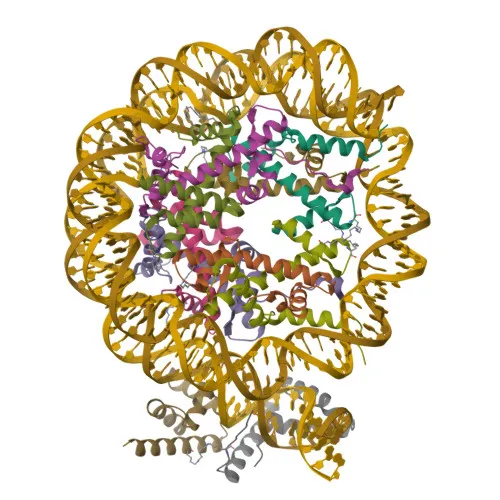
- Histone H3 is a core component of the nucleosome, essential for compacting DNA into chromatin and regulating gene expression, DNA repair, replication, and chromosomal stability. Related references: UniProt Q16695, UniProt P68431.
- Post-translational modifications of histone H3, particularly on its N-terminal tail, form a “histone code” that governs chromatin dynamics. Asymmetric dimethylation at arginine 2 (H3R2me2a) is catalyzed by protein arginine methyltransferase 6 (PRMT6). This modification is implicated in transcriptional regulation and chromatin structure. Related references: PMID:17898714, PMID:18077460, PMID:18079182.
- Histone H3 localizes to the nucleus and associates with chromosomes throughout the cell cycle.
- Two major variants are recognized: the replication-dependent H3.1 (encoded by genes such as HIST1H3A, P68431) and the testis-specific H3.1t (H3-4, Q16695), which is expressed in testicular cells.
- The immunogen corresponds to a peptide with asymmetric dimethylation at the first arginine after initiator methionine removal (position 3 in the full-length protein), ensuring specific recognition of the H3R2me2a mark.
Experimental Guidance and Technical Tips
- Confirm antibody specificity by using non-methylated or symmetrically dimethylated peptide competitors in your assay.
- For western blot (WB), whole-cell lysates typically show a band at approximately 15 kDa. Optimize primary antibody dilution and consider loading controls such as total H3 or pan-histone H3 antibodies.
- In ELISA, use the immunizing peptide as a positive control and test against peptides with different modifications to verify selectivity.
- Due to high histone H3 sequence conservation, cross-reactivity is predicted with many species; however, validate reactivity in your specific sample system.
CamelBio: Your One-Stop Sourcing Bridge
CamelBio offers diagnostic manufacturers, laboratories, and research institutes a comprehensive one-stop sourcing platform for IVD raw materials, from concept to clinic. For researchers studying epigenetic modifications and chromatin biology, we provide high-quality antibodies like this Asymmetric DiMethyl-Histone H3-R2 pAb, along with validated antibody pairs, optimized monoclonals/polyclonals, bulk ancillary reagents, and customized rare-target sourcing. Partner with us to streamline your procurement and accelerate your diagnostic development workflow.
REQUEST A QUOTE
Our professional team will reply to you within one business day. Please feel free to contact us!