Methylated Antibodies
Asymmetric DiMethyl-Histone H3-R2 (Q16695/P68431) Rabbit Polyclonal Antibody for WB, IF/ICC, ELISA
Item Number : CM0000271
Price varies based on specs and customizations
- Application
- WB, IF/ICC, ELISA
- Cross Reactivity
- Human, Mouse, Rat, Other (Wide Range Predicted)
- Protein Weight
- 15 kDa

Shipping:
Contact us to get shipping details Enjoy On-time Dispatch Guarantee.
Why Choose Us
Easy ordering process, quality products, and dedicated support for your business success.
Core Product Specifications and Parameters
| Parameter | Details |
|---|---|
| Product Name | Asymmetric DiMethyl-Histone H3-R2 Rabbit pAb |
| Remarks/Alias | H3t; H3.4; H3/g; H3FT; H3C16; HIST3H3; Asymmetric DiMethyl-Histone H3-R2 |
| Species | Human |
| GeneID (human) | H3 |
| GeneID | 8290/8350 |
| Immunogen | A synthetic asymmetric dimethylated peptide around R2 of human histone H3 (NP_003520.1) |
| Source | Rabbit |
| Category | Methylated Antibodies |
| Application | WB, IF/ICC, ELISA |
| Cross Reactivity | Human, Mouse, Rat, Other (Wide Range Predicted) |
| SWISS | Q16695/P68431 |
| Protein Weight | 15 kDa |
| Shipping | Ice bag |
Biological Background: Histone H3 Function and Localization
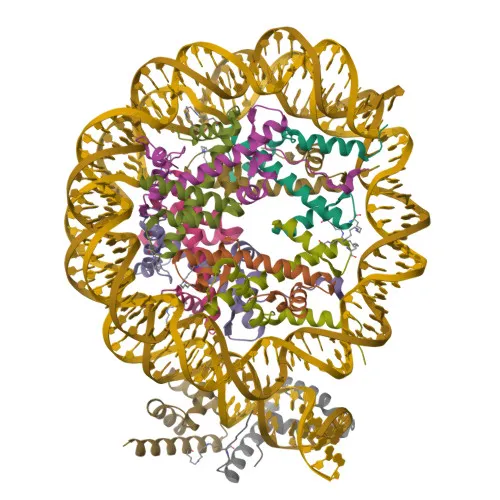
Histone H3 is a core component of the nucleosome, wrapping and compacting DNA into chromatin to limit accessibility for transcription, DNA repair, DNA replication, and maintain chromosomal stability. The highly regulated post-translational modifications (PTMs) of histones, collectively known as the histone code, together with nucleosome remodeling, govern chromatin dynamics and gene expression.
Asymmetric dimethylation of arginine 2 (H3R2me2a) is a critical PTM catalyzed primarily by PRMT6. This modification influences transcriptional outcomes by modulating the binding of effector proteins and crosstalk with adjacent marks such as H3K4me3. Related references: PMID:17898714, PMID:18077460, PMID:18079182
Subcellularly, histone H3 localizes to the nucleus and chromosomes. The H3.1t variant (Q16695) is specifically expressed in testicular cells, while the canonical H3.1 (P68431) is widely distributed across tissues. Both share the conserved function of organizing chromatin architecture.
Experimental Guidance and Technical Tips
- For Western blot (WB), consider using whole-cell lysates from human, mouse, or rat cell lines. A single band at ~15 kDa is expected.
- For immunofluorescence/immunocytochemistry (IF/ICC), fixation and permeabilization conditions may influence detection; validation in the relevant sample system is recommended.
- For ELISA, the synthetic asymmetric dimethylated peptide used as immunogen can serve as a positive control. Antibody specificity should be confirmed against unmodified and symmetrically dimethylated peptides.
- Since the antibody targets a specific post-translational modification, avoid harsh stripping buffers that may remove the modification when reprobing blots.
- Cross-reactivity with a wide range of species is predicted; however, testing in the desired species is advisable.
CamelBio: Your One-Stop Sourcing Bridge
CamelBio offers diagnostic manufacturers, laboratories, and research institutes a one-stop sourcing solution for IVD raw materials, including validated antibody pairs, optimized monoclonal and polyclonal antibodies, and bulk ancillary reagents. For epigenetics research and histone modification studies, we can assist in sourcing highly specific antibodies like the Asymmetric DiMethyl-Histone H3-R2 Rabbit pAb, along with complementary reagents for your entire workflow. From concept to clinic, our technical and supply chain expertise accelerates your development of robust diagnostic assays.
REQUEST A QUOTE
Our professional team will reply to you within one business day. Please feel free to contact us!