Methylated Antibodies
Asymmetric DiMethyl-Histone H3 (R17) Rabbit Polyclonal Antibody – Q16695/P68431 | WB, IHC-P, IF/ICC, ELISA
Item Number : CM0000384
Price varies based on specs and customizations
- Application
- WB, IHC-P, IF/ICC, ELISA
- Cross Reactivity
- Human, Mouse, Rat, Other (Wide Range Predicted)
- Protein Weight
- 15kDa

Shipping:
Contact us to get shipping details Enjoy On-time Dispatch Guarantee.
Why Choose Us
Easy ordering process, quality products, and dedicated support for your business success.
Core Product Specifications and Parameters
| Parameter | Value |
|---|---|
| Product Name | Asymmetric DiMethyl-Histone H3-R17 Rabbit pAb |
| Remarks/Alias | H3/A; H3C2; H3C3; H3C4; H3C6; H3C7; H3C8; H3FA; H3C10; H3C11; H3C12; HIST1H3A; Asymmetric DiMethyl-Histone H3-R17 |
| Species | Human |
| GeneID (Human) | H3 |
| GeneID | 8290/8350 |
| Immunogen | Synthetic peptide: A synthetic asymmetric dimethylated peptide around R17 of human Histone H3 (NP_003520.1) |
| Source | Rabbit |
| Category | Methylated Antibodies |
| Application | WB, IHC-P, IF/ICC, ELISA |
| Cross Reactivity | Human, Mouse, Rat, Other (Wide Range Predicted) |
| SWISS | Q16695/P68431 |
| Protein Weight | 15kDa |
| Shipping | Ice bag |
Biological Background: Histone H3 Function and Localization
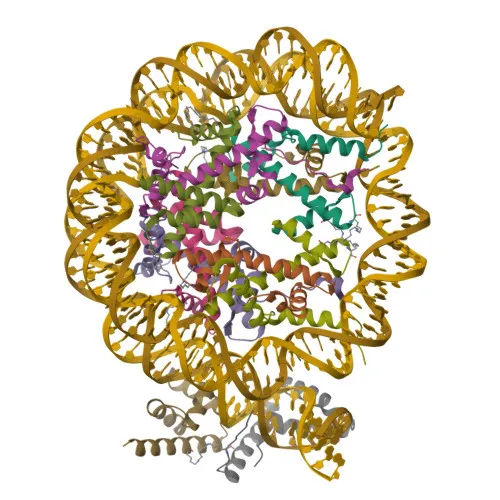
Histone H3 is a core component of the nucleosome, which wraps and compacts DNA into chromatin. This packaging limits DNA accessibility to the cellular machineries required for processes such as transcription, DNA repair, DNA replication, and chromosomal stability. Histones therefore play a central role in the regulation of gene expression and genome integrity. Related references: UniProtKB Q16695 / P68431
The function of histones is heavily regulated by a diverse set of post-translational modifications (PTMs), often referred to as the “histone code.” These PTMs include acetylation, methylation, phosphorylation, and ubiquitination, among others, and they orchestrate nucleosome remodeling and the recruitment of effector proteins. Among these modifications, arginine methylation—particularly asymmetric dimethylation—is a key epigenetic mark associated with transcriptional activation and silencing.
Histone H3 exists as multiple isoforms. The replication-dependent H3.1 (P68431) is expressed broadly across tissues, while H3.1t (Q16695) is specifically expressed in testicular cells, suggesting specialized roles in spermatogenesis. Both isoforms localize to the nucleus and chromosomes.
The asymmetric dimethylation of histone H3 at arginine 17 (R17; position 18 in the precursor sequence including the initiator methionine) is catalyzed by the protein arginine methyltransferase CARM1 (PRMT4). This modification has been implicated in transcriptional regulation and is a well-studied marker of active chromatin states. Related references: PMID:15345777, PMID:15471871, PMID:16497732
This antibody specifically recognizes histone H3 when it is asymmetrically dimethylated at R17. It does not detect unmodified H3 or other methylation states such as symmetric dimethylated or monomethylated arginine at this site, making it a valuable tool for studying CARM1-mediated signaling and epigenetic regulation.
Experimental Guidance and Technical Tips
- The immunogen is a synthetic peptide designed around the asymmetric dimethylarginine at R17 of human histone H3. When performing western blotting (WB) or immunohistochemistry (IHC-P), consider using cell or tissue lysates known to express this modification (e.g., HeLa cells or mouse testis) as positive controls.
- As this antibody is predicted to have wide cross-reactivity beyond human, mouse, and rat, it may be suitable for detecting the modification in other species. However, validation in the relevant sample system is recommended.
- For ELISA, ensure the coating antigen contains the asymmetric dimethyl-R17 epitope, as the antibody will not recognize unmodified or differently methylated peptides.
- Since the antibody is a polyclonal, lot-to-lot variability is a consideration; include appropriate negative controls (e.g., unmodified H3 peptide) to confirm specificity.
CamelBio: Your One-Stop Sourcing Bridge
CamelBio offers diagnostic manufacturers and research laboratories a streamlined one-stop sourcing solution for IVD raw materials, from validated antibody pairs to bulk ancillary reagents. This anti-asymmetric dimethyl-Histone H3-R17 rabbit polyclonal antibody supports your epigenetic research and assay development needs with robust detection of a key histone modification. Our supply capabilities also encompass optimized monoclonal and polyclonal antibodies, rare target raw-material sourcing, and custom development to help accelerate your projects from concept to clinic.
REQUEST A QUOTE
Our professional team will reply to you within one business day. Please feel free to contact us!