Monoclonal Antibodies
APC Rabbit anti-Mouse CD272/BTLA Monoclonal Antibody for Flow Cytometry - Q7TSA3
Item Number : CM0004665
Price varies based on specs and customizations
- Application
- FC
- Cross Reactivity
- Mouse
- Protein Weight
- 22kDa/34kDa

Shipping:
Contact us to get shipping details Enjoy On-time Dispatch Guarantee.
Why Choose Us
Easy ordering process, quality products, and dedicated support for your business success.
Core Product Specifications and Parameters
| Parameter | Value |
|---|---|
| Product Name | APC Rabbit anti-Mouse CD272/BTLA mAb |
| Remarks/Alias | A630002H24 |
| Species | Mouse |
| Gene ID (Human) | 151888 |
| Gene ID (Mouse) | 208154 |
| Immunogen | Recombinant protein |
| Source | Rabbit |
| Category | Monoclonal Antibodies |
| Application | FC |
| Cross Reactivity | Mouse |
| SWISS | Q7TSA3 |
| Protein Weight | 22kDa/34kDa |
| Shipping | Ice bag |
Biological Background: B- and T-lymphocyte attenuator Function and Localization
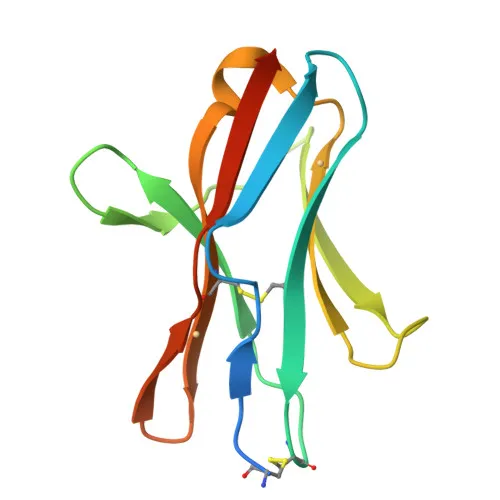
- B- and T-lymphocyte attenuator (BTLA), also known as B- and T-lymphocyte-associated protein, is encoded by the Btla gene and belongs to the immunoglobulin superfamily.
- BTLA functions as an inhibitory receptor on lymphocytes that negatively regulates antigen receptor signaling through recruitment of phosphatases PTPN6/SHP-1 and PTPN11/SHP-2 (PubMed:12796776, PubMed:14652006). Related references: PMID:12796776 PMID:14652006
- BTLA interacts with TNFRSF14 (HVEM) in both cis (on the same cell) and trans (on other cells). Cis interactions help maintain a resting state in naive T cells, while trans interactions provide survival signals to effector T cells during adaptive immune responses (PubMed:19915044). Related references: PMID:19915044
- BTLA localizes to the cell membrane, consistent with its role as a transmembrane receptor.
- BTLA is expressed predominantly in splenic T and B cells, as well as in macrophages, NK cells, and dendritic cells, with weak expression in somatic tissues. A polymorphic tissue distribution is observed between mouse strains.
- The protein undergoes post-translational modifications including glycosylation and phosphorylation, and contains a signal peptide, disulfide bonds, and immunoglobulin-like domains.
- Alternative splicing generates multiple isoforms, which may contribute to functional diversity.
Experimental Guidance and Technical Tips
- The immunogen used (amino acids 30-176 of mouse BTLA) covers the extracellular domain, which is ideal for generating antibodies that recognize the native cell surface receptor.
- This APC-conjugated antibody is suitable for flow cytometry (FC) to detect BTLA on live cells. Consider optimizing antibody concentration through titration to achieve optimal staining.
- For intracellular staining, permeabilization may be required if detecting total BTLA; however, validation in the relevant sample system is recommended.
CamelBio: Your One-Stop Sourcing Bridge
CamelBio provides diagnostic manufacturers, labs, and research institutes with one-stop access to IVD raw materials, including validated antibody pairs, monoclonal/polyclonal antibodies, and bulk ancillary reagents. For researchers studying immune checkpoint regulation, we offer tailored sourcing solutions for rare targets like CD272/BTLA. Contact us to streamline your supply chain from discovery to clinic.
Product Datasheet
APC Rabbit anti-Mouse CD272/BTLA Monoclonal Antibody for Flow Cytometry - Q7TSA3
REQUEST A QUOTE
Our professional team will reply to you within one business day. Please feel free to contact us!