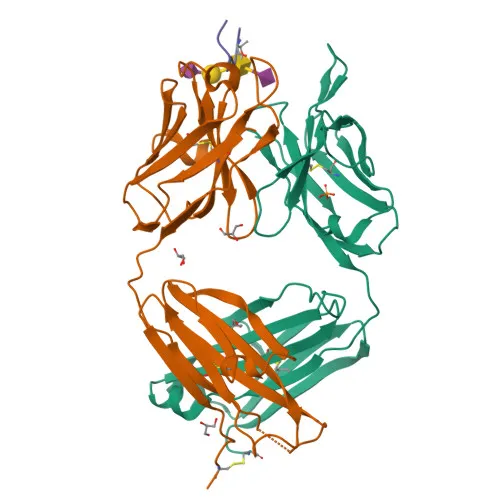
Monoclonal Antibodies
APC Rabbit anti-Human Podoplanin Monoclonal Antibody for Flow Cytometry - Q86YL7
Item Number : CM0005802
Price varies based on specs and customizations
- Application
- FC
- Cross Reactivity
- Human
- Protein Weight
- 17kDa

Shipping:
Contact us to get shipping details Enjoy On-time Dispatch Guarantee.
Why Choose Us
Easy ordering process, quality products, and dedicated support for your business success.
Core Product Specifications and Parameters
| Parameter | Value |
|---|---|
| Product Name | APC Rabbit anti-Human Podoplanin mAb |
| Remarks/Alias | T1A; GP36; GP40; Gp38; OTS8; T1A2; TI1A; D2-40; T1A-2; AGGRUS; HT1A-1; PA2.26 |
| Species | Human |
| GeneID (human) | 10630 |
| GeneID | 10630 |
| Immunogen | Recombinant fusion protein containing a sequence corresponding to amino acids 21-123 of Human Podoplanin (NP_006465.4) |
| Source | Rabbit |
| Category | Monoclonal Antibodies |
| Application | FC |
| Cross Reactivity | Human |
| SWISS | Q86YL7 |
| Protein Weight | 17kDa |
| Shipping | Ice bag |
Biological Background: Podoplanin Function and Localization
- Podoplanin (PDPN), also known as Aggrus, Gp36, T1-alpha, and PA2.26 antigen, is a type I transmembrane sialoglycoprotein encoded by the PDPN gene.
- It mediates cell adhesion and migration by interacting with partners such as CLEC1B, CD9, MSN, EZR, and CD44, playing critical roles in blood/lymphatic vessel separation, platelet aggregation, and epithelial-mesenchymal transition (EMT). Related references: PMID:14522983 PMID:15231832 PMID:17222411 PMID:18541721 PMID:17046996 PMID:21376833 PMID:20962267
- Podoplanin promotes tumor cell invasion by controlling invadopodia stability and ECM degradation through RHOC-ROCK-LIMK-CFL1 signaling. Related references: PMID:25486435
- It is localized to the plasma membrane and various cell projections including lamellipodia, filopodia, microvilli, ruffles, and invadopodia; also found in membrane rafts and cytosol.
- Post-translational modifications include extensive O-glycosylation and sialylation; alternative splicing generates multiple isoforms.
- Highly expressed in placenta, lung, skeletal muscle, and brain; weak expression in kidney and liver; upregulated in colorectal tumors and a subset of oral squamous cell carcinomas.
Experimental Guidance and Technical Tips
- The immunogen corresponds to the extracellular domain (amino acids 21-123) of human podoplanin, ensuring recognition of native membrane-bound PDPN.
- This APC-conjugated antibody is designed for flow cytometry; consider titrating for optimal staining signal-to-background ratio.
- For cell adhesion/migration functional studies, validate the antibody's specificity in the relevant cell system (e.g., tumor cells or activated platelets).
- Since podoplanin is highly glycosylated, treatment with deglycosylation enzymes may alter the detection signal if the epitope is carbohydrate-dependent.
CamelBio: Your One-Stop Sourcing Bridge
CamelBio is your one-stop partner for IVD raw materials, offering validated antibody pairs, optimized monoclonal/polyclonal antibodies, bulk ancillary reagents, and rare target sourcing. This APC-conjugated anti-podoplanin mAb supports cancer and cell biology research. Contact us to streamline your procurement and development needs.
Product Datasheet
APC Rabbit anti-Human Podoplanin Monoclonal Antibody for Flow Cytometry - Q86YL7
REQUEST A QUOTE
Our professional team will reply to you within one business day. Please feel free to contact us!