Monoclonal Antibodies
APC Anti-CD158a/KIR2DL1 Monoclonal Antibody for FC - P43626
Item Number : CM0010467
Price varies based on specs and customizations
- Application
- FC
- Cross Reactivity
- Human
- Protein Weight
- 39kDa

Shipping:
Contact us to get shipping details Enjoy On-time Dispatch Guarantee.
Why Choose Us
Easy ordering process, quality products, and dedicated support for your business success.
Core Product Specifications and Parameters
| Parameter | Value |
|---|---|
| Product Name | APC Rabbit anti-Human CD158a/KIR2DL1 mAb |
| Remarks/Alias | NKAT; NKAT1; p58.1; CD158A; KIR221; NKAT-1; KIR-K64; KIR2DL3 |
| Species | Human |
| Gene ID (Human) | 3802 |
| Gene ID | 3802 |
| Immunogen | Recombinant fusion protein containing a sequence corresponding to amino acids 22-245 of human CD158a/KIR2DL1 (NP_055033.2). |
| Source | Rabbit |
| Category | Monoclonal Antibodies |
| Application | FC |
| Cross Reactivity | Human |
| SWISS | P43626 |
| Protein Weight | 39kDa |
| Shipping | Ice bag |
Biological Background: CD158a/KIR2DL1 Function and Localization
- CD158a/KIR2DL1 is a killer cell immunoglobulin-like receptor (KIR) also known as NKAT-1, p58.1, and CD158A, belonging to the immunoglobulin superfamily.
- It functions as an inhibitory receptor on natural killer (NK) cells, recognizing specific HLA-C alleles (such as w4 and w6) and suppressing NK cell-mediated cytotoxicity to prevent lysis of target cells.
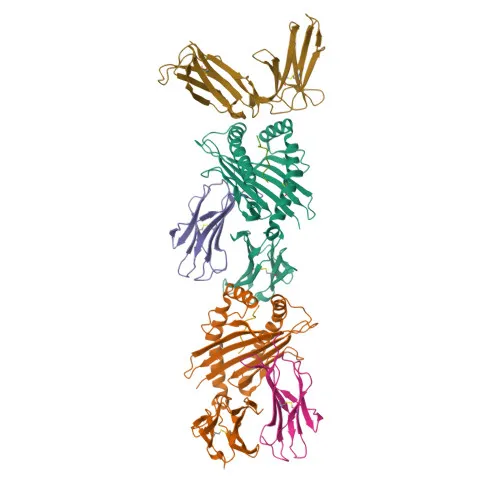
- The receptor is a type I transmembrane glycoprotein composed of two extracellular immunoglobulin-like domains (D1 and D2), a transmembrane helix, and a cytoplasmic tail containing ITIM motifs for inhibitory signaling.
- KIR2DL1 is a member of the polymorphic KIR gene family on chromosome 19, which includes both activating and inhibitory receptors that fine-tune innate immune responses.
- Subcellular localization is primarily at the cell membrane, where it interacts with MHC class I molecules on target cells.
- Alternative splicing generates multiple isoforms, and the protein undergoes post-translational modifications including disulfide bond formation and N-linked glycosylation.
- Expression is largely restricted to NK cells, though trace expression may be found on subsets of T cells.
Experimental Guidance and Technical Tips
- The immunogen corresponds to the extracellular region (aa 22-245), encompassing the two immunoglobulin-like domains, suggesting the antibody likely recognizes an epitope in this region.
- Given the APC conjugate and specificity for human CD158a, consider titrating the antibody for optimal resolution in flow cytometry, especially for rare NK cell subsets.
- For flow cytometry, stain live cells in appropriate buffer; avoid fixation that may alter epitope conformation unless validated in the relevant sample system.
- Cross-reactivity with other KIR family members (e.g., KIR2DL3) should be assessed if simultaneous staining is planned, as sequence homology exists.
- Although rated for human reactivity, verify performance in the exact cell type (e.g., primary NK cells, NK cell lines) and experimental conditions.
CamelBio: Your One-Stop Sourcing Bridge
CamelBio provides diagnostic manufacturers and researchers with integrated access to high-quality IVD raw materials, including validated antibody pairs, optimized monoclonal/polyclonal antibodies, and bulk ancillary reagents. Our portfolio supports immune profiling and NK cell studies with reliable anti-KIR reagents like this CD158a/KIR2DL1 monoclonal antibody. We streamline sourcing from lead identification to clinical assay development, helping you accelerate diagnostic workflows.
REQUEST A QUOTE
Our professional team will reply to you within one business day. Please feel free to contact us!