Polyclonal Antibodies
AP3B1 Rabbit Polyclonal Antibody for WB, IHC-P, ELISA - O00203
Item Number : CM0027171
Price varies based on specs and customizations
- Application
- WB, IHC-P, ELISA
- Cross Reactivity
- Human, Mouse, Rat
- Protein Weight
- 121kDa

Shipping:
Contact us to get shipping details Enjoy On-time Dispatch Guarantee.
Why Choose Us
Easy ordering process, quality products, and dedicated support for your business success.
Core Product Specifications and Parameters
| Parameter | Value |
|---|---|
| Product Name | AP3B1 Rabbit pAb |
| Remarks/Alias | PE; HPS; HPS2; ADTB3; ADTB3A; AP3B1 |
| Species | Human |
| GeneID (human) | 8546 |
| GeneID | 8546 |
| Immunogen | Recombinant fusion protein containing a sequence corresponding to amino acids 895-1094 of human AP3B1 (NP_003655.3). |
| Source | Rabbit |
| Category | Polyclonal Antibodies |
| Application | WB, IHC-P, ELISA |
| Cross Reactivity | Human, Mouse, Rat |
| SWISS | O00203 |
| Protein Weight | 121kDa |
| Shipping | Ice bag |
Biological Background: AP3B1 Function and Localization
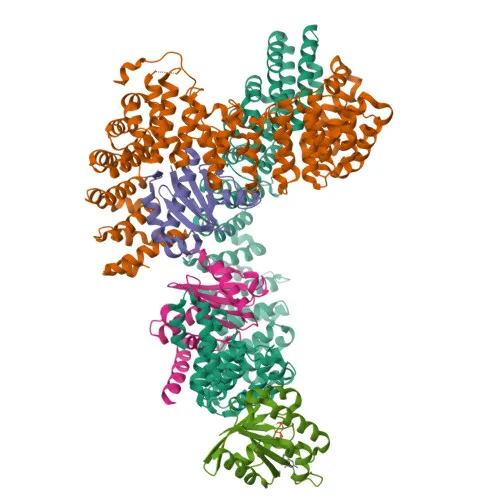
- AP3B1 encodes the AP-3 complex subunit beta-1, also known as beta-3A-adaptin, which is a large subunit of the adaptor protein complex 3 (AP-3).
- AP-3 functions as a non-clathrin- and clathrin-associated adaptor complex in the late-Golgi/trans-Golgi network (TGN) and endosomes, mediating clathrin recruitment to membranes and recognition of sorting signals within cytosolic tails of transmembrane cargoes.
- The complex is critically involved in sorting a subset of transmembrane proteins targeted to lysosomes and lysosome-related organelles.
- In concert with the BLOC-1 complex, AP-3 is required for targeting cargos into vesicles assembled at cell bodies for delivery into neurites and nerve terminals.
- Subcellularly, AP-3 localizes to cytoplasmic vesicles, clathrin-coated vesicle membranes, and the Golgi apparatus.
- AP3B1 is ubiquitously expressed across tissues.
- Mutations in AP3B1 are associated with Hermansky-Pudlak syndrome type 2 (HPS2), characterized by albinism and bleeding diathesis.
- The protein is subject to phosphorylation, and multiple isoforms exist due to alternative splicing.
Experimental Guidance and Technical Tips
- For Western blot, the predicted molecular weight is approximately 121 kDa; use an appropriate gel percentage (e.g., 8% SDS-PAGE) and optimize transfer conditions for high-molecular-weight proteins.
- In immunohistochemistry (IHC-P), antigen retrieval methods may be required to unmask the epitope; validate staining with known positive and negative tissue controls.
- As a polyclonal antibody, it may recognize multiple isoforms or other AP-3 adaptor beta subunits; confirm specificity in your experimental system using appropriate knockdown or knockout models.
- The immunogen corresponds to amino acids 895–1094 of human AP3B1, a region with potential sequence conservation across species; cross-reactivity with mouse and rat is expected based on reported reactivity.
- Include recommended controls (e.g., lysate from cells with high AP3B1 expression, peptide blocking) to verify signal specificity in your assays.
CamelBio: Your One-Stop Sourcing Bridge
CamelBio supports diagnostic and research communities with comprehensive access to IVD raw materials, technical services, and consulting. For AP3B1, a key adaptor protein implicated in lysosomal trafficking and Hermansky-Pudlak syndrome, we offer validated antibody reagents and can assist in sourcing monoclonal/polyclonal antibodies, bulk ancillary reagents, and customized raw-material solutions tailored to your assay development pipeline. Let CamelBio bridge your concept-to-clinic journey with reliable supply and expert support.
REQUEST A QUOTE
Our professional team will reply to you within one business day. Please feel free to contact us!