Polyclonal Antibodies
AOC1 Rabbit Polyclonal Antibody for WB, IF/ICC, ELISA - P19801
Item Number : CM0029314
Price varies based on specs and customizations
- Application
- WB, IF/ICC, ELISA
- Cross Reactivity
- Human, Mouse, Rat
- Protein Weight
- 85kDa

Shipping:
Contact us to get shipping details Enjoy On-time Dispatch Guarantee.
Why Choose Us
Easy ordering process, quality products, and dedicated support for your business success.
Core Product Specifications and Parameters
| Parameter | Value |
|---|---|
| Product Name | AOC1 Rabbit pAb |
| Remarks/Alias | ABP; DAO; KAO; ABP1; DAO1; AOC1 |
| Species | Human |
| GeneID | 26 (human) |
| Immunogen | Recombinant fusion protein containing a sequence corresponding to amino acids 20-300 of human AOC1 (NP_001082.2) |
| Source | Rabbit |
| Category | Polyclonal Antibodies |
| Application | WB, IF/ICC, ELISA |
| Cross Reactivity | Human, Mouse, Rat |
| SWISS | P19801 |
| Protein Weight | 85kDa |
| Shipping | Ice bag |
Biological Background: AOC1 Function and Localization
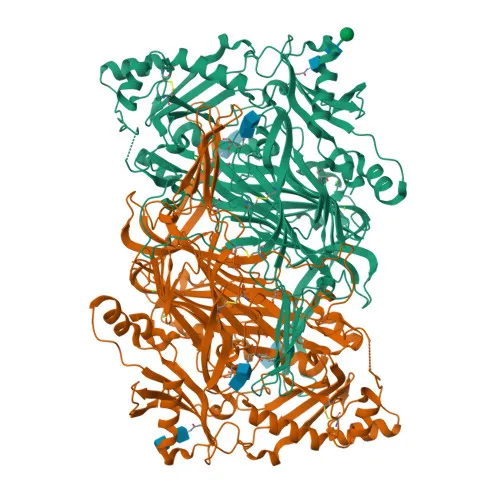
- AOC1 encodes diamine oxidase (DAO), a copper-containing amine oxidase also known as histaminase, amiloride-binding protein 1 (ABP1), and kidney amine oxidase (KAO).
- It catalyzes the oxidative deamination of primary amines to aldehydes, producing hydrogen peroxide and ammonia; this activity is central to histamine metabolism and polyamine catabolism. Related references: PMID:12072962, PMID:19764817, PMID:239684
- The enzyme preferentially oxidizes histamine and 1-methylhistamine, linking it to allergic and immune response regulation, and can also act on cadaverine, putrescine, spermidine, and spermine.
- Subcellular localization: AOC1 is secreted into the extracellular space and associates with the cell membrane, consistent with its role in extracellular amine clearance.
- Tissue specificity: Widely expressed with higher levels in placenta and kidney, reflecting its importance in local histamine degradation.
- Post-translational modifications include glycosylation, disulfide bond formation, and the generation of a copper-bound TPQ cofactor, which are essential for enzymatic activity.
- Alternative splicing produces multiple transcript variants, potentially influencing enzyme localization or substrate affinity.
Experimental Guidance and Technical Tips
- The immunogen corresponds to the N-terminal region (aa 20–300) of human AOC1; verify reactivity in your target species or sample type before large-scale experiments.
- For Western blot (WB), a band near 85 kDa is expected under reducing conditions; include appropriate loading controls and validate molecular weight markers.
- In immunofluorescence (IF/ICC), test the antibody on known AOC1-expressing cells (e.g., placental or kidney cell lines) with appropriate fixation and permeabilization protocols.
- For ELISA, consider pairing with a detection antibody against a different epitope to improve specificity; optimize coating antigen and blocking conditions.
- Cross-reactivity with mouse and rat enables comparative studies across species; however, perform a species-specific validation when switching models.
CamelBio: Your One-Stop Sourcing Bridge
As a dedicated IVD raw-material partner, CamelBio streamlines the sourcing of critical reagents such as anti-AOC1 antibodies for allergy, immune response, and amine metabolism research. We offer validated antibody pairs, bulk polyclonal and monoclonal antibodies, ancillary reagents, and rare-target sourcing—empowering diagnostic manufacturers and labs to accelerate development from concept to clinic.
REQUEST A QUOTE
Our professional team will reply to you within one business day. Please feel free to contact us!