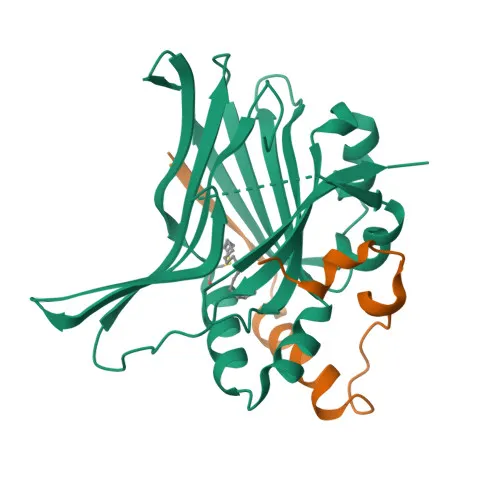
Monoclonal Antibodies
Anti-YAP1 Rabbit Monoclonal Antibody for WB, IHC-P, IF/ICC, IP, ELISA - P46937
Item Number : CM0003472
Price varies based on specs and customizations
- Application
- WB, IHC-P, IF/ICC, IP, ELISA
- Cross Reactivity
- Human, Mouse, Rat
- Protein Weight
- 36 kDa-54 kDa

Shipping:
Contact us to get shipping details Enjoy On-time Dispatch Guarantee.
Why Choose Us
Easy ordering process, quality products, and dedicated support for your business success.
Core Product Specifications and Parameters
| Parameter | Value |
|---|---|
| Product Name | [KO Validated] YAP1 Rabbit mAb |
| Remarks/Alias | YAP, YKI, COB1, YAP2, YAP-1, YAP65, P1 |
| Species | Human |
| GeneID (Human) | 10413 |
| GeneID | 10413 |
| Immunogen | Recombinant fusion protein containing a sequence corresponding to amino acids 155-504 of human YAP1 (NP_001123617.1). |
| Source | Rabbit |
| Category | Monoclonal Antibodies |
| Application | WB, IHC-P, IF/ICC, IP, ELISA |
| Cross Reactivity | Human, Mouse, Rat |
| SWISS | P46937 |
| Protein Weight | 36 kDa-54 kDa |
| Shipping | Ice bag |
Biological Background: YAP1 Function and Localization
- YAP1 (Yes-associated protein 1), also known as YAP, YAP65, or Yorkie homolog, is a transcriptional coactivator and corepressor. It serves as a critical downstream effector of the Hippo signaling pathway, which controls organ size and suppresses tumor formation by restricting proliferation and promoting apoptosis. Related references: PMID:17974916, PMID:18280240, PMID:18579750
- In the canonical Hippo pathway, a kinase cascade involving STK3/MST2 and STK4/MST1 with the scaffold SAV1 phosphorylates and activates the LATS1/2 kinases in complex with MOB1. Active LATS1/2 then phosphorylates YAP1, sequestering it in the cytoplasm and preventing its nuclear translocation, thereby inhibiting target gene expression. Related references: PMID:18158288, PMID:26598551, PMID:34404733
- YAP1 modulates transcription primarily by interacting with TEAD family transcription factors. This interaction regulates genes controlling cell growth, anchorage-independent growth, and the induction of epithelial-mesenchymal transition (EMT). Related references: PMID:18579750
- YAP1 plays a role in mechanotransduction: it regulates tissue tension and 3D tissue shape by controlling the cortical actomyosin network. It acts via ARHGAP18, a Rho GTPase-activating protein that suppresses F-actin polymerization. Related references: PMID:25778702
- Additionally, YAP1 suppresses ciliogenesis by functioning as a transcriptional corepressor for TEAD4, downregulating the target genes AURKA and PLK1. Related references: PMID:25849865
- YAP1 synergizes with WBP2 to enhance the activity of the progesterone receptor (PGR). Related references: PMID:16772533
- It can also activate the C-terminal fragment (CTF) of ERBB4 (isoform 3).
- Subcellular localization includes cytoplasm, nucleus, tight junctions, and the cell membrane. YAP1 isoforms resulting from alternative splicing exhibit tissue-specific expression: increased levels are observed in some liver and prostate cancers, while isoforms lacking the transactivation domain are found in striatal neurons of Huntington disease patients. The protein is subject to phosphorylation and ubiquitination, and its molecular weight ranges from 36 to 54 kDa (canonical sequence ~54.5 kDa).
Experimental Guidance and Technical Tips
- The immunogen for this antibody covers amino acids 155–504 of human YAP1, a region encompassing the TEAD-binding domain and part of the transcription activation domain. This design is predicted to recognize total YAP1 protein and may allow cross-reactivity with mouse and rat orthologs due to high sequence conservation in this segment.
- For Western blotting (WB), consider using whole-cell lysates from human, mouse, or rat cell lines; YAP1 typically migrates as multiple bands between 36 and 54 kDa.
- For immunohistochemistry (IHC-P) and immunofluorescence (IF/ICC), validate the antibody in tissues or cell types known to express YAP1, such as liver or prostate cancer samples. Note that nuclear/cytoplasmic localization patterns may vary depending on Hippo pathway activity.
- For immunoprecipitation (IP) and ELISA, optimize antibody concentration and buffer conditions experimentally, as performance may vary with sample type and target abundance.
CamelBio: Your One-Stop Sourcing Bridge
CamelBio serves as a comprehensive sourcing partner for IVD raw materials, supporting diagnostic manufacturers, laboratories, and research institutes from concept to clinic. The YAP1 target is central to cancer biology and developmental signaling research, and we can supply validated antibody pairs, these optimized monoclonal antibodies in bulk, ancillary reagents, and assist in locating rare-target raw materials. Let us help streamline your procurement with reliable, research‑grade products and specialized technical support.
Product Datasheet
Anti-YAP1 Rabbit Monoclonal Antibody for WB, IHC-P, IF/ICC, IP, ELISA - P46937
REQUEST A QUOTE
Our professional team will reply to you within one business day. Please feel free to contact us!