Monoclonal Antibodies
Anti-Y14/RBM8A Rabbit Monoclonal Antibody for WB, ELISA - Q9Y5S9
Item Number : CM0002514
Price varies based on specs and customizations
- Application
- WB, ELISA
- Cross Reactivity
- Human, Mouse, Rat
- Protein Weight
- 20kDa

Shipping:
Contact us to get shipping details Enjoy On-time Dispatch Guarantee.
Why Choose Us
Easy ordering process, quality products, and dedicated support for your business success.
Core Product Specifications and Parameters
| Parameter | Value |
|---|---|
| Product Name | Y14/RBM8A Rabbit mAb |
| Remarks/Alias | TAR; Y14; RBM8; ZNRP; RBM8B; ZRNP1; BOV-1A; BOV-1B; BOV-1C; MDS014; DEL1q21.1; C1DELq21.1; Y14/RBM8A |
| Species | Human |
| GeneID (Human) | 9939 |
| GeneID | 9939 |
| Immunogen | Synthetic Peptide|A synthetic peptide corresponding to a sequence within amino acids 1-100 of human Y14/RBM8A (Q9Y5S9). |
| Source | Rabbit |
| Category | Monoclonal Antibodies |
| Application | WB, ELISA |
| Cross Reactivity | Human, Mouse, Rat |
| SWISS | Q9Y5S9 |
| Protein Weight | 20kDa |
| Shipping | Ice bag |
Biological Background: Y14/RBM8A Function and Localization
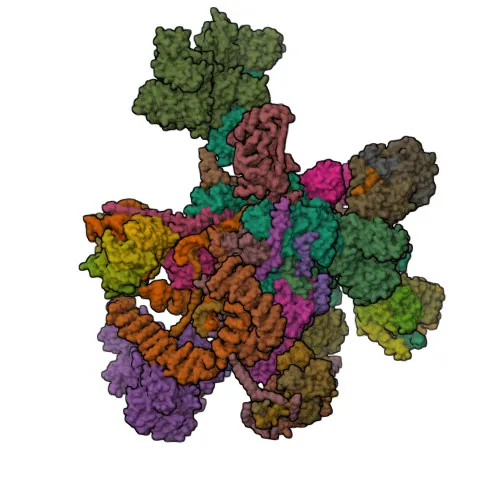
- Y14/RBM8A, also called RNA-binding protein 8A or BOV-1, is a core component of the exon junction complex (EJC) and is required for pre-mRNA splicing as part of the spliceosome. Related references: PMID:28502770 PMID:29301961
- It forms a heterodimer with MAGOH, which inhibits the ATPase activity of EIF4A3, thereby trapping the ATP-bound EJC core onto spliced mRNA in a stable conformation.
- The MAGOH-RBM8A heterodimer interacts with PYM1 to facilitate EJC disassembly in the cytoplasm, enhancing translation of EJC-bearing spliced mRNAs by recruiting them to the ribosomal 48S preinitiation complex.
- As part of the EJC, RBM8A is involved in nonsense-mediated mRNA decay (NMD) and influences post-transcriptional processes including nuclear export, subcellular localization, and translation efficiency.
- Y14/RBM8A is localized in the nucleus, nuclear speckles, and cytoplasm, reflecting its dynamic roles in mRNA metabolism.
- The protein is ubiquitously expressed across tissues, consistent with its fundamental function in mRNA processing.
- Post-translational modifications include acetylation, phosphorylation, and isopeptide bond formation (Ubl conjugation), with alternative splicing generating multiple isoforms.
Experimental Guidance and Technical Tips
- The immunogen corresponds to amino acids 1–100 of human RBM8A, targeting an N-terminal region; verify recognition of known isoforms or splice variants in your sample system.
- For Western blotting, the expected protein weight is ~20 kDa; consider using 12–15% SDS-PAGE gels and appropriate molecular weight markers.
- Validated species reactivity includes human, mouse, and rat; cross-reactivity in other species should be tested if required.
- In ELISA, the antibody may be used as a capture or detection reagent; optimal working concentrations must be determined empirically.
- Include positive controls such as HeLa, HEK293, or other cell lines with confirmed RBM8A expression; loading controls should be chosen accordingly.
- This antibody is suitable for research applications investigating the exon junction complex, spliceosome, or NMD pathways; performance in other assays requires further validation.
CamelBio: Your One-Stop Sourcing Bridge
CamelBio provides diagnostic manufacturers and research laboratories with reliable access to IVD raw materials like monoclonal antibodies, covering targets involved in RNA biology and post-transcriptional regulation. Our portfolio includes validated antibody pairs, optimized monoclonal/polyclonal antibodies, and bulk ancillary reagents to support assay development. For rare or custom targets such as Y14/RBM8A, our sourcing services connect you with the materials needed from concept to clinical application.
REQUEST A QUOTE
Our professional team will reply to you within one business day. Please feel free to contact us!