Monoclonal Antibodies
Anti-Xanthine Dehydrogenase/Oxidase (XDH) Monoclonal Antibody for WB, IHC-P, ELISA - P47989
Item Number : CM0007100
Price varies based on specs and customizations
- Application
- WB, IHC-P, ELISA
- Cross Reactivity
- Human, Mouse, Rat
- Protein Weight
- 146kDa

Shipping:
Contact us to get shipping details Enjoy On-time Dispatch Guarantee.
Why Choose Us
Easy ordering process, quality products, and dedicated support for your business success.
Core Product Specifications and Parameters
| Parameter | Value |
|---|---|
| Product Name | Xanthine Oxidase (XDH) Rabbit PolymAb® |
| Remarks/Alias | XO; XOR; XAN1 |
| Species | Human |
| GeneID (human) | 7498 |
| GeneID | 7498 |
| Immunogen | Synthetic peptide|A synthetic peptide corresponding to a sequence within amino acids 1000-1100 of human Xanthine Oxidase (XDH). (NP_000370.2). |
| Source | Rabbit |
| Category | Monoclonal Antibodies |
| Application | WB, IHC-P, ELISA |
| Cross Reactivity | Human, Mouse, Rat |
| SWISS | P47989 |
| Protein Weight | 146kDa |
| Shipping | Ice bag |
Biological Background: Xanthine Dehydrogenase/Oxidase Function and Localization
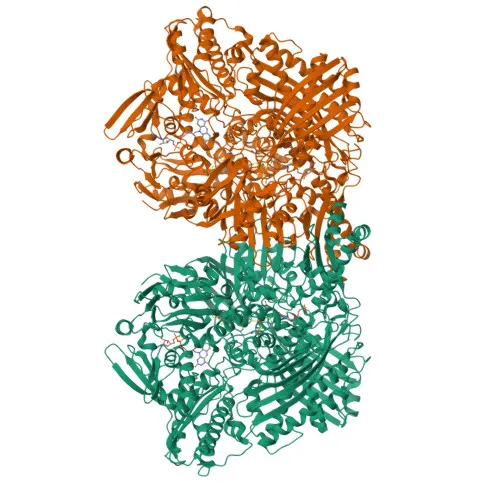
- Xanthine dehydrogenase/oxidase (XDH, also known as XO, XOR, XAN1) is a key enzyme in purine degradation, catalyzing the sequential oxidation of hypoxanthine to xanthine and xanthine to uric acid.
- Contributes to the generation of reactive oxygen species (ROS) during oxidative reactions, which may play roles in signaling and oxidative stress.
- Exhibits low oxidase activity towards aldehydes in vitro.
- Subcellular localization includes cytoplasm, peroxisomes, and a secreted form; expression is detected in milk at the protein level.
- Contains 2Fe-2S clusters, FAD, a molybdenum cofactor, and an NAD-binding domain, classifying it as a complex oxidoreductase.
- Genetic mutations in XDH are associated with xanthinuria type I, a disorder of purine metabolism.
- The protein has a predicted molecular weight of approximately 146 kDa, consistent with the observed product weight.
Experimental Guidance and Technical Tips
- The immunogen targets a C-terminal region (aa 1000–1100) that is likely conserved between dehydrogenase and oxidase forms; epitope accessibility may be influenced by sample preparation.
- For Western blot, consider using positive control lysates from human liver or milk, and validate the observed ~146 kDa band.
- In IHC-P, optimization of antigen retrieval is recommended; expect cytoplasmic and peroxisomal staining patterns depending on tissue context.
- For ELISA formats, confirm specificity with recombinant XDH protein or native enzyme under standard assay conditions.
- Given reported cross-reactivity with mouse and rat, verify detection in the relevant species and tissue types to ensure suitability for your model system.
CamelBio: Your One-Stop Sourcing Bridge
CamelBio connects diagnostic manufacturers and research labs to premium IVD raw materials like this anti-Xanthine Dehydrogenase/Oxidase monoclonal antibody, supporting purine metabolism and oxidative stress investigations. Beyond individual antibodies, we offer validated antibody pairs, optimized monoclonal and polyclonal reagents, and bulk ancillary materials, along with sourcing for rare targets—streamlining development from concept to clinic.
REQUEST A QUOTE
Our professional team will reply to you within one business day. Please feel free to contact us!
Related Articles
ROX in Real-Time PCR: The Optical Trade-Off Behind Precision and Multiplexing
Understand how ROX normalization corrects qPCR signal variation, how optics consume channels, and how to choose the right master mix.
From Fluorescence to Diagnostic Truth: Choosing Passive Reference Dyes for qPCR Master Mixes
Learn how passive reference dyes stabilize qPCR signals, improve diagnostic reproducibility, and guide ROX formulation across instrument platforms.