Polyclonal Antibodies
Anti-WWP2 Rabbit Polyclonal Antibody for WB and ELISA - O00308
Item Number : CM0024031
Price varies based on specs and customizations
- Application
- WB, ELISA
- Cross Reactivity
- Human
- Protein Weight
- 99kDa

Shipping:
Contact us to get shipping details Enjoy On-time Dispatch Guarantee.
Why Choose Us
Easy ordering process, quality products, and dedicated support for your business success.
Core Product Specifications and Parameters
| Parameter | Value |
|---|---|
| Product Name | WWP2 Rabbit pAb |
| Remarks/Alias | AIP2, WWp2-like, WWP2 |
| Species | Human |
| Gene ID | 11060 (human) |
| Immunogen | Recombinant fusion protein containing a sequence corresponding to amino acids 151-400 of human WWP2 (NP_001257383.1) |
| Source | Rabbit |
| Category | Polyclonal Antibodies |
| Application | WB, ELISA |
| Cross Reactivity | Human |
| SWISS | O00308 |
| Protein Weight | 99kDa |
| Shipping | Ice bag |
Biological Background: WWP2 Function and Localization
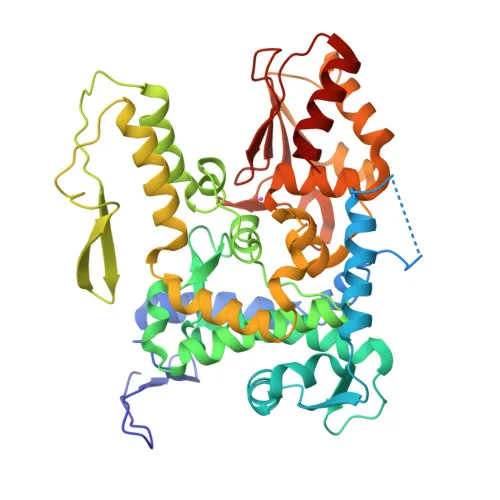
- WWP2, also known as NEDD4-like E3 ubiquitin-protein ligase WWP2, Atrophin-1-interacting protein 2 (AIP2), or WW domain-containing protein 2, is a member of the HECT-type E3 ubiquitin ligase family. The gene undergoes alternative splicing, generating multiple isoforms.
- Functions as an E3 ubiquitin ligase, accepting ubiquitin from an E2 enzyme and transferring it to specific substrates. It catalyzes polyubiquitination via Lys-63 linkages, predominantly targeting substrates for proteasomal degradation.
- In embryonic stem cells, WWP2 ubiquitinates and promotes degradation of the pluripotency factor POU5F1 (OCT4), thereby contributing to the regulation of stem cell maintenance and differentiation.
- Also ubiquitinates EGR2 in T-cells, leading to its proteasomal degradation and inhibition of activation-induced cell death, highlighting a role in immune regulation.
- Localizes primarily to the nucleus, consistent with its function in regulating nuclear transcription factors and chromatin-associated proteins.
- Detected across a broad range of tissues including heart, brain, placenta, lung, liver, muscle, kidney, pancreas, spleen, and peripheral blood leukocytes.
- Classified as a phosphoprotein and involved in host-virus interactions, underscoring its regulatory complexity.
Experimental Guidance and Technical Tips
- The immunogen corresponds to the internal region (aa 151-400) of human WWP2, encompassing part of the catalytic HECT domain. This design may facilitate detection of both full-length and certain truncated or alternatively spliced isoforms in Western blot.
- For Western blot analysis, optimize antibody dilution (e.g., 1:500–1:2000) and incubation conditions using appropriate positive control lysates (e.g., human cell lines expressing WWP2).
- Since this is a polyclonal antibody, batch-to-batch variability may exist; include appropriate controls such as recombinant protein or siRNA knockdown/knockout lysates to confirm specificity.
- In ELISA applications, consider using the recombinant immunogen or purified protein as a coating antigen, and titrate the antibody to establish optimal signal-to-noise ratios.
- Cross-reactivity is confirmed for human; reactivity with other species has not been tested and should be validated if required for your experimental system.
CamelBio: Your One-Stop Sourcing Bridge
CamelBio streamlines your IVD development by supplying validated raw materials for ubiquitination and protein degradation research. From this anti-WWP2 polyclonal antibody and matched antigen pairs to optimized ancillary reagents, we support every stage from research to manufacturing. Our one-stop sourcing model accelerates diagnostic kit development for E3 ligase targets, helping you move from concept to clinic with confidence.
REQUEST A QUOTE
Our professional team will reply to you within one business day. Please feel free to contact us!