Polyclonal Antibodies
Anti-WWP1 Rabbit Polyclonal Antibody for WB, ELISA - Q9H0M0
Item Number : CM0028114
Price varies based on specs and customizations
- Application
- WB, ELISA
- Cross Reactivity
- Human, Mouse, Rat
- Protein Weight
- 105kDa

Shipping:
Contact us to get shipping details Enjoy On-time Dispatch Guarantee.
Why Choose Us
Easy ordering process, quality products, and dedicated support for your business success.
Core Product Specifications and Parameters
| Parameter | Value |
|---|---|
| Product Name | WWP1 Rabbit pAb |
| Remarks/Alias | AIP5; Tiul1; hSDRP1; WWP1 |
| Species | Human |
| GeneID (Human) | 11059 |
| GeneID | 11059 |
| Immunogen | Recombinant protein|Recombinant fusion protein containing a sequence corresponding to amino acids 1-260 of human WWP1 (NP_008944.1). |
| Source | Rabbit |
| Category | Polyclonal Antibodies |
| Application | WB, ELISA |
| Cross Reactivity | Human, Mouse, Rat |
| SWISS | Q9H0M0 |
| Protein Weight | 105kDa |
| Shipping | Ice bag |
Biological Background: WWP1 Function and Localization
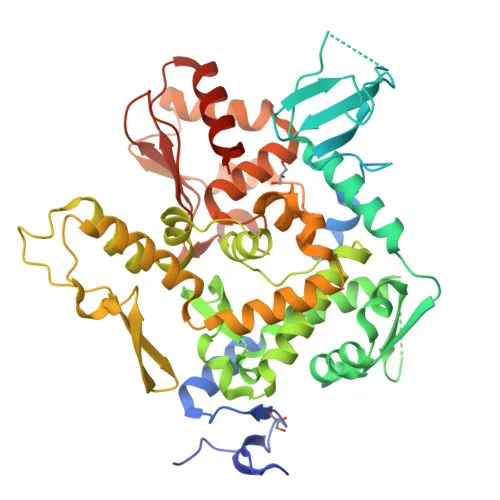
- WWP1 is a member of the NEDD4-like family of HECT-type E3 ubiquitin ligases, also known as AIP5, Tiul1, and hSDRP1, that catalyzes ubiquitin transfer to substrate proteins.
- It functions as an E3 ubiquitin-protein ligase, accepting ubiquitin from an E2 enzyme and directly transferring it to substrates, leading to proteasomal degradation or non-proteolytic signaling.
- Key ubiquitination targets include ERBB4, KLF2, KLF5, TP63, TGFBR1, SMAD6, SMAD7, and SMAD2, linking WWP1 to growth factor signaling, transcription regulation, and TGF-beta pathways.
- In the Hippo signaling pathway, WWP1 monoubiquitinates AMOTL2 at the Crumbs complex, facilitating LATS2 activation and subsequent YAP1 phosphorylation and nuclear exclusion, thereby repressing YAP1-driven transcription. Related references: PMID:34404733
- Subcellularly, WWP1 localizes to the cytoplasm, cell membrane, nucleus, and cell junctions, enabling versatile participation in diverse signaling hubs.
- It is widely expressed in tissues such as heart, placenta, pancreas, kidney, liver, skeletal muscle, bone marrow, and fetal brain; isoform 1 and 5 predominate, with isoform 5 elevated in testis and bone marrow.
- The protein is subject to alternative splicing and is classified under the keywords Transferase and Ubl conjugation pathway.
Experimental Guidance and Technical Tips
- For Western blotting, consider using whole cell lysates from human, mouse, or rat tissues/cells, as the antibody is expected to detect a band at approximately 105kDa. Validate the antibody in the relevant sample system and optimize loading and detection conditions.
- For ELISA, consider using a recombinant WWP1 protein as the standard. Titration of both capture and detection reagents is recommended to establish optimal assay performance.
- As a polyclonal antibody, batch-to-batch consistency should be verified for critical applications. Pre-adsorption or affinity purification may be considered to enhance specificity if needed.
CamelBio: Your One-Stop Sourcing Bridge
CamelBio empowers diagnostic manufacturers, laboratories, and research institutes with one-stop access to IVD raw materials, including validated antibody pairs, optimized monoclonal and polyclonal antibodies, and bulk ancillary reagents. For targets like WWP1, a key E3 ubiquitin ligase involved in cancer and signaling pathways, CamelBio can source tailored raw materials and provide technical consulting to accelerate your assay development from concept to clinic. Reach out to explore customized solutions for your next IVD project.
REQUEST A QUOTE
Our professional team will reply to you within one business day. Please feel free to contact us!