Polyclonal Antibodies
Anti-WRN Rabbit Polyclonal Antibody for WB, ELISA - Q14191
Item Number : CM0025599
Price varies based on specs and customizations
- Application
- WB, ELISA
- Cross Reactivity
- Human
- Protein Weight
- 162kDa

Shipping:
Contact us to get shipping details Enjoy On-time Dispatch Guarantee.
Why Choose Us
Easy ordering process, quality products, and dedicated support for your business success.
Core Product Specifications and Parameters
| Parameter | Value |
|---|---|
| Product Name | WRN Rabbit pAb |
| Remarks/Alias | RECQ3; RECQL2; RECQL3; WRN |
| Species | Human |
| GeneID (human) | 7486 |
| GeneID | 7486 |
| Immunogen | Recombinant fusion protein containing a sequence corresponding to amino acids 1223-1432 of human WRN (NP_000544.2) |
| Source | Rabbit |
| Category | Polyclonal Antibodies |
| Application | WB, ELISA |
| Cross Reactivity | Human |
| SWISS | Q14191 |
| Protein Weight | 162kDa |
| Shipping | Ice bag |
Biological Background: WRN Function and Localization
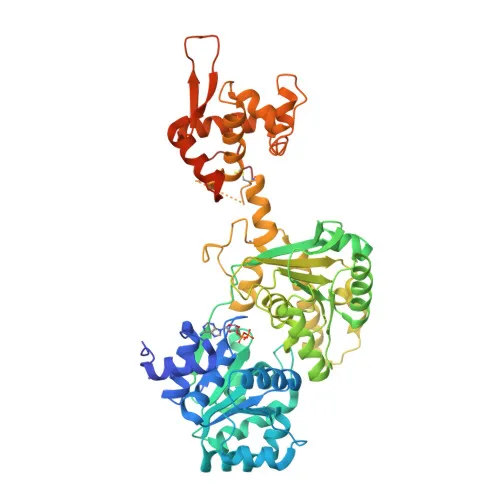
- WRN encodes a multifunctional enzyme with magnesium and ATP-dependent 3'–5' DNA helicase activity on partially duplex substrates and 3'–5' exonuclease activity on dsDNA with a 5'-overhang (no activity on ssDNA or blunt dsDNA). Related references: PMID:9224595, PMID:9288107, PMID:9611231, PMID:11863428
- The protein preferentially binds and unwinds alternative DNA secondary structures like replication forks, Holliday junctions, and G-quadruplex DNA (e.g., d(CGG)n repeats), facilitating replication fork progression and preventing genome instability. Related references: PMID:10212265
- WRN is critical for DNA double-strand break repair after gamma-irradiation and for the formation of DNA replication focal centers; its depletion leads to chromosomal breaks and severe genome instability. Related references: PMID:9224595, PMID:9288107, PMID:9611231, PMID:33199508
- The protein localizes predominantly to the nucleus, including the nucleolus, nucleoplasm, and chromosomal regions, consistent with its DNA metabolism functions.
- WRN undergoes multiple post-translational modifications (acetylation, phosphorylation, ubiquitination) that likely regulate its helicase/exonuclease activities and protein–protein interactions.
- Mutations in WRN cause Werner syndrome, an autosomal recessive premature aging disorder characterized by genomic instability and cancer predisposition.
Experimental Guidance and Technical Tips
- The immunogen (aa 1223–1432) resides in the C‑terminal region outside the conserved helicase domain, potentially reducing cross‑reactivity with other RecQ family members.
- For Western blotting, expect a band near 162 kDa; use a high‑molecular‑weight marker and a low‑percentage gel (e.g., 6% SDS‑PAGE) for optimal separation.
- Validate antibody specificity in relevant human cell lines (e.g., HeLa, HEK293) using a knockdown control or a known positive lysate.
- In ELISA, optimize coating with the recombinant immunogen or full‑length WRN protein, and consider a competitive format for higher specificity.
CamelBio: Your One-Stop Sourcing Bridge
CamelBio supports diagnostic manufacturers and research laboratories with end-to-end IVD raw-material sourcing, including validated antibody pairs, optimized monoclonal and polyclonal antibodies, and bulk ancillary reagents. This anti-WRN polyclonal antibody is suited for studies in DNA repair, genome stability, and Werner syndrome. We also specialize in sourcing rare-target raw materials to accelerate your assay development.
REQUEST A QUOTE
Our professional team will reply to you within one business day. Please feel free to contact us!