Polyclonal Antibodies
Anti-WRAP53 Rabbit Polyclonal Antibody for WB, ELISA - Q9BUR4
Item Number : CM0020653
Price varies based on specs and customizations
- Application
- WB, ELISA
- Cross Reactivity
- Mouse
- Protein Weight
- 59kDa

Shipping:
Contact us to get shipping details Enjoy On-time Dispatch Guarantee.
Why Choose Us
Easy ordering process, quality products, and dedicated support for your business success.
Core Product Specifications and Parameters
| Parameter | Value |
|---|---|
| Product Name | WRAP53 Rabbit pAb |
| Remarks/Alias | DKCB3; TCAB1; WDR79; WRAP53 |
| Species | Human |
| GeneID (Human) | 55135 |
| GeneID | 55135 |
| Immunogen | Recombinant fusion protein containing a sequence corresponding to amino acids 62-160 of human WRAP53 (NP_060551.2) |
| Source | Rabbit |
| Category | Polyclonal Antibodies |
| Application | WB, ELISA |
| Cross Reactivity | Mouse |
| SWISS | Q9BUR4 |
| Protein Weight | 59kDa |
| Shipping | Ice bag |
Biological Background: WRAP53 Function and Localization
-
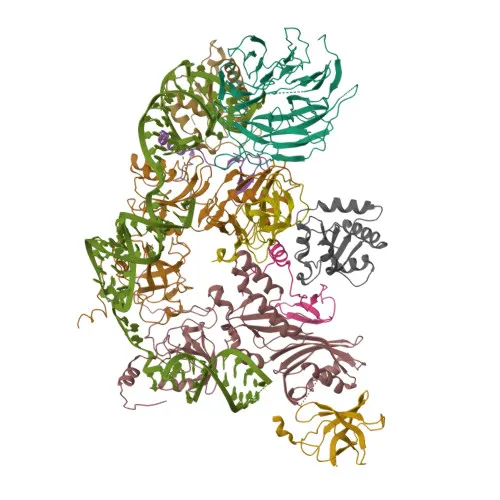
WRAP53 (Telomerase Cajal body protein 1, TCAB1, WDR79) is an RNA chaperone that plays a key role in telomere maintenance and RNA localization to Cajal bodies. Related references: PMID:29695869, PMID:29804836
-
It specifically recognizes and binds the Cajal body box (CAB box) present in small Cajal body RNAs (scaRNAs) and telomerase RNA template component (TERC), controlling TERC CR4/CR5 domain folding critical for telomerase activity. Related references: PMID:19285445, PMID:20351177, PMID:29804836
-
As an essential component of the telomerase holoenzyme complex, WRAP53 is required for stimulating telomerase catalytic activity, delivering TERC to telomeres during S phase, and ensuring chromosome end replication. Related references: PMID:19179534, PMID:20351177, PMID:26170453, PMID:27525486, PMID:29804836
-
Beyond telomere biology, WRAP53 is required for Cajal body formation by mediating localization of scaRNAs to these nuclear subdomains. Related references: PMID:19285445, PMID:21072240
-
Upon DNA damage, WRAP53 is phosphorylated by ATM and relocalizes to DNA double-strand breaks, where it promotes both homologous recombination (HR) and non-homologous end joining (NHEJ) by recruiting the ubiquitin ligase RNF8. Related references: PMID:25512560, PMID:27715493
-
WRAP53 localizes predominantly to the nucleus, Cajal bodies, and telomeres, consistent with its multifaceted roles in RNA trafficking, telomere homeostasis, and DNA repair.
-
Ubiquitously expressed in all human tissues, WRAP53 belongs to the WD repeat protein family and harbors multiple WD40 domains for protein interactions.
-
Clinically, WRAP53 mutations are associated with dyskeratosis congenita, emphasizing its importance in telomere-related disorders.
Experimental Guidance and Technical Tips
- The immunogen (amino acids 62-160 of human WRAP53) targets a region conserved in mouse, supporting the reported cross-reactivity; however, validation in the relevant sample system is recommended.
- For Western blotting, endogenous WRAP53 can be detected at approximately 59 kDa in whole cell lysates from human or mouse cell lines; including appropriate positive and negative controls (e.g., siRNA knockdown) may help confirm specificity.
- In ELISA applications, consider optimizing coating antigen and antibody dilutions; recombinant WRAP53 protein or cell lysates may serve as antigens.
- Because WRAP53 undergoes phosphorylation upon DNA damage, using phosphatase inhibitors in lysis buffers may be important to preserve the modification state, if relevant to the experimental context.
- As a polyclonal antibody, lot-to-lot consistency should be monitored; requesting a retention lot for long-term studies is advisable.
- Cross-reactivity with other WD repeat proteins cannot be excluded; verifying band identity via mass spectrometry or genetic ablation is suggested for critical experiments.
CamelBio: Your One-Stop Sourcing Bridge
CamelBio provides diagnostic manufacturers, laboratories, and research institutes with one-stop access to IVD raw materials, technical services, and consulting—supporting every stage from concept to clinic. Our WRAP53 rabbit polyclonal antibody is a valuable tool for exploring telomere dynamics, Cajal body function, and DNA damage pathways in human and mouse samples via WB and ELISA. Beyond this antibody, CamelBio offers validated antibody pairs, optimized monoclonal/polyclonal antibodies, bulk ancillary reagents, and specialized rare-target sourcing to streamline your assay development and procurement needs.
REQUEST A QUOTE
Our professional team will reply to you within one business day. Please feel free to contact us!