Polyclonal Antibodies
Anti-WHRN Rabbit Polyclonal Antibody for WB, ELISA - Q9P202
Item Number : CM0015537
Price varies based on specs and customizations
- Application
- WB, ELISA
- Cross Reactivity
- Human, Mouse
- Protein Weight
- 97kDa

Shipping:
Contact us to get shipping details Enjoy On-time Dispatch Guarantee.
Why Choose Us
Easy ordering process, quality products, and dedicated support for your business success.
Core Product Specifications and Parameters
| Parameter | Value |
|---|---|
| Product Name | WHRN Rabbit pAb |
| Remarks/Alias | WI; CIP98; USH2D; DFNB31; PDZD7B; WHRN |
| Species | Human |
| Gene ID (Human) | 25861 |
| Gene ID | 25861 |
| Immunogen | Recombinant fusion protein containing a sequence corresponding to amino acids 708-907 of human WHRN (NP_056219.3) |
| Source | Rabbit |
| Category | Polyclonal Antibodies |
| Application | WB, ELISA |
| Cross Reactivity | Human, Mouse |
| SWISS | Q9P202 |
| Protein Weight | 97kDa |
| Shipping | Ice bag |
Biological Background: Whirlin Function and Localization
- Whirlin is encoded by the WHRN gene, also known as DFNB31, and is an alternatively spliced protein associated with autosomal recessive deafness type 31.
- As a member of the USH2 complex, whirlin is essential for hearing and vision; it is required for the elongation and maintenance of stereocilia in inner ear hair cells.
- In the retina, whirlin maintains the periciliary membrane complex, which plays a role in regulating intracellular protein transport in photoreceptors.
- The protein localizes to the cytoplasm, stereocilia, growth cones, photoreceptor inner segments, and synapses.
- Clinically, mutations in WHRN are linked to deafness, Usher syndrome, and retinitis pigmentosa, underscoring its critical role in neurosensory function.
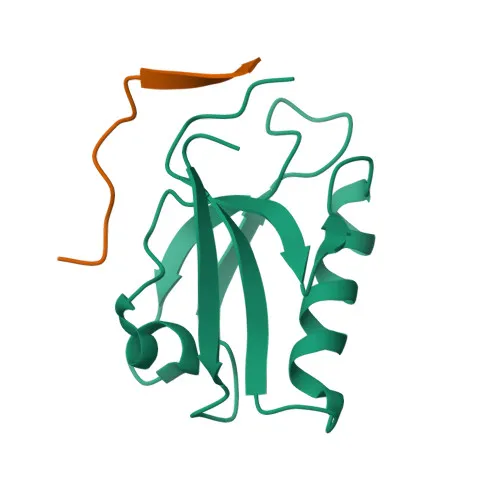
- Post-translational modifications include phosphorylation, and the protein has been structurally characterized (3D-structure).
- The full-length human whirlin has a predicted molecular weight of approximately 97 kDa (UniProt: 96558 Da).
Experimental Guidance and Technical Tips
- The immunogen corresponds to the C-terminal region (amino acids 708-907) of human whirlin; consider that this antibody may detect full-length protein and isoforms containing this segment.
- For WB applications, validate the antibody with appropriate positive controls such as transfected cells or tissues known to express whirlin (e.g., inner ear, retina).
- Given cross-reactivity with mouse, this antibody is suitable for mouse model studies; ensure sample preparation is optimized for detection in these species.
- In ELISA, pair the antibody with a suitable detection system; note that specific dilutions should be empirically determined.
CamelBio: Your One-Stop Sourcing Bridge
CamelBio serves as your dedicated one-stop sourcing partner for IVD raw materials, offering validated antibody pairs, optimized polyclonal antibodies, and bulk ancillary reagents for research on hearing and vision disorders. Our WHRN Rabbit pAb is positioned to support investigations into hair cell biology, Usher syndrome, and related sensory deficits. Reach out to explore custom sourcing options or technical consultation tailored to your diagnostic and research programs.
REQUEST A QUOTE
Our professional team will reply to you within one business day. Please feel free to contact us!