Monoclonal Antibodies
Anti-WEE1 Monoclonal Antibody for IHC-P, ELISA - P30291
Item Number : CM0007328
Price varies based on specs and customizations
- Application
- IHC-P, ELISA
- Cross Reactivity
- Mouse
- Protein Weight
- 72kDa

Shipping:
Contact us to get shipping details Enjoy On-time Dispatch Guarantee.
Why Choose Us
Easy ordering process, quality products, and dedicated support for your business success.
Core Product Specifications and Parameters
| Parameter | Value |
|---|---|
| Product Name | WEE1 Rabbit mAb |
| Remarks/Alias | WEE1A, WEE1hu, WEE1 |
| Species | Human |
| Gene ID (Human) | 7465 |
| Gene ID | 7465 |
| Immunogen | A synthetic peptide corresponding to a sequence within amino acids 1-100 of human WEE1 (NP_003381.1) |
| Source | Rabbit |
| Category | Monoclonal Antibodies |
| Application | IHC-P, ELISA |
| Cross Reactivity | Mouse |
| SWISS | P30291 |
| Protein Weight | 72kDa |
| Shipping | Ice bag |
Biological Background: WEE1 Function and Localization
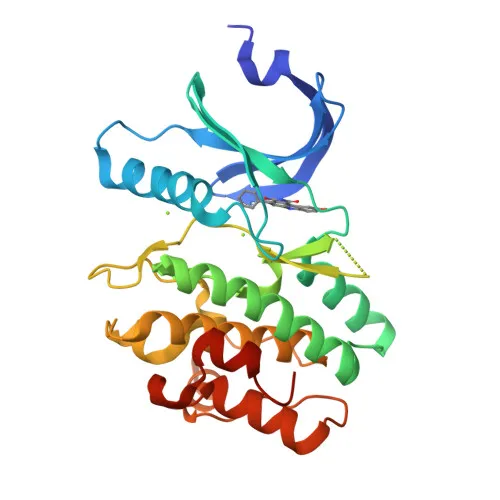
- WEE1 (Wee1-like protein kinase) is a nuclear tyrosine kinase that acts as a critical negative regulator of the G2/M cell cycle transition by phosphorylating and inhibiting the cyclin B1-CDK1 complex.
Related references: PMID:15070733, PMID:7743995, PMID:8348613, PMID:8428596 - It specifically phosphorylates CDK1 on tyrosine-15, preventing premature mitotic entry; its activity peaks during S and G2 phases and declines as cells enter mitosis, correlating with its hyperphosphorylation and subsequent degradation.
- WEE1 localizes primarily to the nucleus, where it safeguards the genome by ensuring proper timing of mitotic entry.
- The protein contains conserved kinase, ATP-binding, and metal-binding domains typical of tyrosine kinases, and its activity is modulated by phosphorylation and ubiquitination.
- Alternative names for WEE1 include WEE1A, WEE1hu, and Wee1A kinase; the human gene identifier is 7465.
- UniProt keywords associated with WEE1 encompass cell cycle, mitosis, nucleus, kinase, phosphoprotein, alternative splicing, and ubiquitin conjugation, reflecting its regulatory functions.
- The human WEE1 protein has a predicted molecular weight of ~71.6 kDa (UniProt) and is consistent with the 72 kDa product.
Experimental Guidance and Technical Tips
- The immunogen used is a synthetic peptide corresponding to amino acids 1-100 of human WEE1 (NP_003381.1). This N-terminal region may be suitable for detecting both full-length and splice variants, but validation in the relevant sample system is advised.
- For IHC-P applications, consider testing a range of antibody dilutions and antigen retrieval methods, as the staining pattern is expected to be nuclear; the antibody’s cross-reactivity with mouse WEE1 may facilitate studies in mouse models.
- For ELISA, optimization of coating antigen and detection conditions is recommended; pairing with a suitable capture or detection antibody can enhance assay sensitivity.
- Since WEE1 protein levels fluctuate during the cell cycle, synchronizing cell cultures and timing sample collection appropriately may improve detection consistency.
CamelBio: Your One-Stop Sourcing Bridge
CamelBio supports diagnostic manufacturers and researchers with a comprehensive range of IVD raw materials, including validated monoclonal antibodies like this anti-WEE1 clone for cell cycle and mitosis research. Beyond single antibodies, we offer optimized antibody pairs, bulk ancillary reagents, and customized sourcing solutions to accelerate your assay development from concept to clinic.
REQUEST A QUOTE
Our professional team will reply to you within one business day. Please feel free to contact us!