Polyclonal Antibodies
Anti-von Willebrand Factor (VWF) Rabbit Polyclonal Antibody for WB/IHC-P/ELISA - P04275
Item Number : CM0013555
Price varies based on specs and customizations
- Application
- WB, IHC-P, ELISA
- Cross Reactivity
- Human
- Protein Weight
- 309kDa

Shipping:
Contact us to get shipping details Enjoy On-time Dispatch Guarantee.
Why Choose Us
Easy ordering process, quality products, and dedicated support for your business success.
Core Product Specifications and Parameters
| Parameter | Value |
|---|---|
| Product Name | von Willebrand factor (VWF) Rabbit pAb |
| Remarks/Alias | VWD; F8VWF; von Willebrand factor (VWF) |
| Species | Human |
| GeneID (Human) | 7450 |
| GeneID | 7450 |
| Immunogen | Recombinant fusion protein containing a sequence corresponding to amino acids 2645-2813 of human von Willebrand factor (VWF) (NP_000543.2) |
| Source | Rabbit |
| Category | Polyclonal Antibodies |
| Application | WB, IHC-P, ELISA |
| Cross Reactivity | Human |
| SWISS | P04275 |
| Protein Weight | 309kDa |
| Shipping | Ice bag |
Biological Background: von Willebrand factor Function and Localization
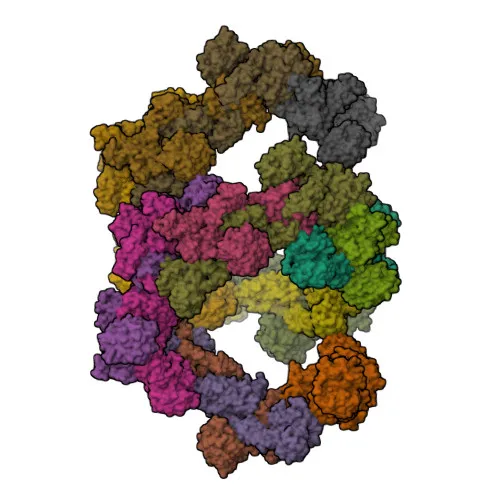
- von Willebrand factor (VWF) is a multimeric plasma glycoprotein critical for hemostasis, serving as a molecular bridge between sub-endothelial collagen and platelet GPIb-IX-V receptor to promote platelet adhesion at vascular injury sites.
- VWF also functions as a chaperone for coagulation factor VIII, stabilizing its heterodimeric structure and protecting it from premature clearance from plasma.
- Encoded by the VWF gene (GeneID: 7450) on chromosome 12, the protein is synthesized as a 2813-amino acid preproprotein that undergoes extensive post-translational processing, including glycosylation and multimerization.
- The protein is secreted and localizes extracellularly, where it forms part of the extracellular matrix and circulates in plasma.
- VWF contains multiple functional domains, including A domains that mediate interactions with platelet glycoprotein Ib and collagen.
- Mutations in the VWF gene are associated with von Willebrand disease (VWD), a bleeding disorder characterized by defective platelet adhesion and reduced factor VIII levels.
- Alternative splicing of the VWF transcript generates multiple isoforms, though the functional significance of many variants remains under investigation.
Experimental Guidance and Technical Tips
- The immunogen corresponds to amino acids 2645-2813, a C-terminal region of VWF. This sequence may detect all major isoforms in denaturing Western blot (WB) applications.
- For IHC-P, antigen retrieval methods and antibody dilution should be optimized, as VWF is abundantly expressed in vascular endothelium and platelets.
- In ELISA, consider pairing this polyclonal antibody with a capture antibody targeting a non-overlapping epitope to avoid competition.
- Due to the high molecular weight (309 kDa) of mature VWF, use low-percentage (5–6%) SDS-PAGE gels and extended transfer times to ensure efficient detection.
- Given VWF's multimeric nature, reducing agents (e.g., DTT) are recommended to resolve monomeric forms in WB; non-reducing conditions may reveal multimeric ladders.
CamelBio: Your One-Stop Sourcing Bridge
CamelBio provides diagnostic manufacturers and laboratories with streamlined access to validated IVD raw materials, including this anti-VWF rabbit polyclonal antibody for hemostasis assay development. Our comprehensive portfolio covers antibodies, antigens, and ancillary reagents for blood coagulation and platelet function research. For rare targets or custom sourcing, our technical team assists with procurement and consulting to accelerate your diagnostic development pipeline.
REQUEST A QUOTE
Our professional team will reply to you within one business day. Please feel free to contact us!