Polyclonal Antibodies
Anti-VIPR1 Polyclonal Antibody for WB, ELISA - P32241
Item Number : CM0014721
Price varies based on specs and customizations
- Application
- WB, ELISA
- Cross Reactivity
- Human
- Protein Weight
- 52kDa

Shipping:
Contact us to get shipping details Enjoy On-time Dispatch Guarantee.
Why Choose Us
Easy ordering process, quality products, and dedicated support for your business success.
Core Product Specifications and Parameters
| Parameter | Value |
|---|---|
| Product Name | VIPR1 Rabbit pAb |
| Remarks/Alias | II; HVR1; RDC1; V1RG; VIPR; VIRG; VAPC1; VPAC1; VPAC1R; VIP-R-1; VPCAP1R; PACAP-R2; PACAP-R-2; VIPR1 |
| Species | Human |
| GeneID (human) | 7433 |
| GeneID | 7433 |
| Immunogen | Recombinant protein|Recombinant fusion protein containing a sequence corresponding to amino acids 31-150 of human VIPR1 (NP_004615.2). |
| Source | Rabbit |
| Category | Polyclonal Antibodies |
| Application | WB, ELISA |
| Cross Reactivity | Human |
| SWISS | P32241 |
| Protein Weight | 52kDa |
| Shipping | Ice bag |
Biological Background: VIPR1 Function and Localization
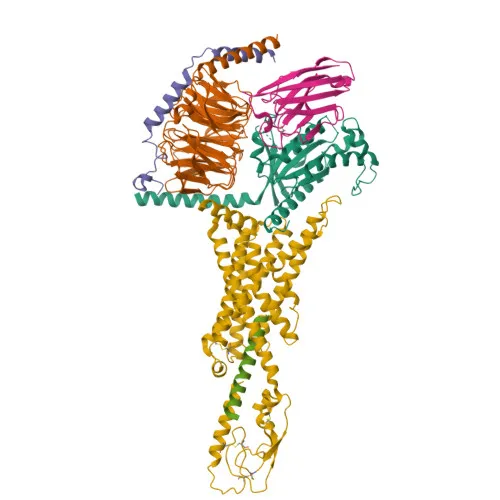
- Vasoactive intestinal polypeptide receptor 1 (VIPR1), also known as the VPAC1 receptor or PACAP type II receptor, is a G protein-coupled receptor activated by the neuropeptides vasoactive intestinal peptide (VIP) and pituitary adenylate cyclase-activating polypeptide (PACAP). It binds VIP and PACAP27 with high affinity and, to a lesser extent, PACAP38, leading to activation of the cAMP-dependent signaling pathway.
Related references:
PMID:35477937
PMID:36385145
PMID:8179610 - The VIPR1 gene generates multiple isoforms through alternative splicing, contributing to functional diversity.
- VIPR1 is localized predominantly to the cell membrane and belongs to the class A rhodopsin-like GPCR family, featuring seven transmembrane helices.
- Key structural motifs include disulfide bonds and N-linked glycosylation sites, which are critical for receptor folding, trafficking, and ligand binding.
- Tissue expression: highly expressed in lung, HT-29 colonic epithelial cells, and Raji B-lymphoblasts; moderate in brain, heart, kidney, liver, and placenta; not detected in CD4+ or CD8+ T-cells but present in certain T-cell lines (HARRIS, HuT 78, Jurkat, SUP-T1).
- VIPR1 mediates diverse physiological processes, including smooth muscle relaxation, immune modulation, and circadian rhythm regulation, via G protein coupling and adenylate cyclase activation.
- The receptor has been structurally characterized (3D-structure) and is subject to post-translational modifications such as proteolytic cleavage (signal peptide) and glycosylation.
Experimental Guidance and Technical Tips
- The immunogen (aa 31–150) corresponds to the N-terminal extracellular domain of VIPR1; consider that the antibody may recognize the receptor in its native conformation as well as under denaturing conditions.
- For Western Blot, validate the antibody under both reducing and non-reducing conditions due to the presence of disulfide bonds that may influence electrophoretic mobility. The predicted molecular weight is ~52 kDa (UniProt: 51.5 kDa), but glycosylation may lead to band shifts.
- In ELISA, use the recombinant protein (aa 31–150) or a peptide standard to confirm specificity, and titrate the antibody to establish optimal working concentrations.
- Cross-reactivity has been confirmed for human VIPR1; reactivity with other species or closely related receptors (e.g., VIPR2) should be evaluated if experimental models differ.
CamelBio: Your One-Stop Sourcing Bridge
CamelBio supports diagnostic manufacturers and research laboratories with reliable access to IVD raw materials and technical services. For GPCR targets like VIPR1, we offer optimized polyclonal antibodies, validated antibody pairs, and bulk ancillary reagents to streamline your assay development. Our sourcing network also covers rare targets, enabling seamless procurement from discovery to clinical application.
REQUEST A QUOTE
Our professional team will reply to you within one business day. Please feel free to contact us!